

- India,
- 21-Dec-2025 08:58 AM IST


Noida and Greater Noida, satellite cities adjoining Delhi, are currently experiencing a challenging confluence of weather and environmental conditions, while the region is under a triple assault of increasing cold, dense fog, and severely deteriorating air quality, collectively impacting daily life and posing significant health risks to residents. The early morning and late-night hours are particularly affected, with visibility dropping drastically on roads, while the air remains thick with pollutants.
Escalating Cold and Dense Fog Conditions
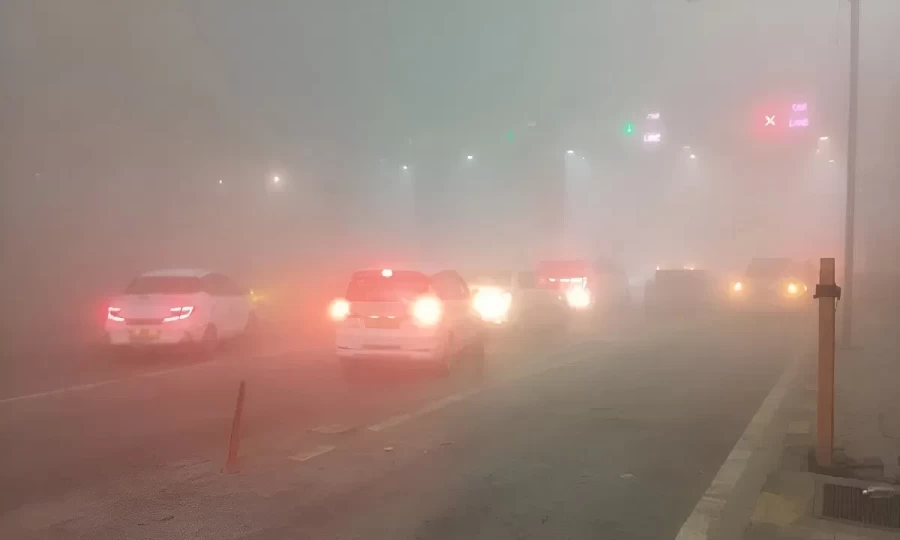
The mercury has been steadily dropping across Noida and Greater Noida, intensifying the winter chill. The lack of adequate sunshine during the day, coupled with cold winds, has led to a noticeable dip in temperatures. Adding to the woes is the persistent dense fog that blankets the area during the early morning and late evening, severely reducing visibility to less than 50 meters in many parts. This phenomenon is particularly pronounced on major arteries such as the Noida-Greater Noida Expressway, Yamuna Expressway, and other city roads, forcing commuters to drive at extremely slow speeds, while the Meteorological Department has predicted that westerly winds will commence from Monday, further contributing to a drop in temperature and an increase in the intensity of the cold wave.
Alarming Air Quality Index (AQI) Levels
Compounding the challenges of cold and fog is the alarming level of air pollution. The combination of dense fog and cold air traps pollutant particles close to the ground, preventing their dispersion and leading to a continuous deterioration of air quality. Currently, Noida's Air Quality Index (AQI) has been recorded between 430 and 450, categorizing it from 'very poor' to 'severe'. Greater Noida fares even worse, with its AQI surpassing 450, firmly placing it in the 'severe' category. Air at this level is considered extremely detrimental to health, posing immediate and long-term risks to all residents.
Significant Health Implications for Vulnerable Groups
The severe AQI has a disproportionately adverse effect on vulnerable. Populations, including children, the elderly, and individuals suffering from respiratory ailments. The fine particulate matter suspended in the air can penetrate deep into the lungs, leading to a range of health issues. Residents are reporting symptoms such as eye irritation, sore throats, difficulty breathing, and headaches. Health experts strongly advise against venturing outdoors during the morning. And evening hours when pollution levels are typically at their peak. For those who must go out, wearing high-quality masks is recommended, while maintaining good hydration and a nutritious diet is also suggested to bolster the body's immune response against these environmental stressors.
Administrative Response and Yellow Alert
Dense fog has Importantly disrupted traffic flow and heightened the risk of accidents across the region. With visibility often falling below 50 meters, drivers face considerable challenges in navigating roads safely. The district administration and traffic police have issued urgent advisories to motorists, urging them to use fog lights, maintain a safe distance from other vehicles, and adhere strictly to speed limits. They've also appealed to the public to avoid unnecessary travel and to exercise extreme caution if travel is unavoidable.
Utilizing public transport could be a safer alternative during these hazardous conditions. In response to the prevailing severe weather and pollution conditions, the Gautam Buddh Nagar district administration has issued a 'Yellow Alert' for dense fog. District Disaster Expert Omkar Chaturvedi confirmed that the situation is under continuous monitoring. The administration has called upon all citizens to cooperate and adhere to the guidelines issued regarding weather and pollution.
Plus, authorities have indicated that if the situation deteriorates further, stricter measures under the Graded Response Action Plan (GRAP) may be implemented, while these measures could include restrictions on construction activities or the closure of schools. Residents are advised to stay informed through local news and weather updates and take necessary precautions for their safety and well-being.
