

- India,
- 25-Dec-2025 10:50 PM IST


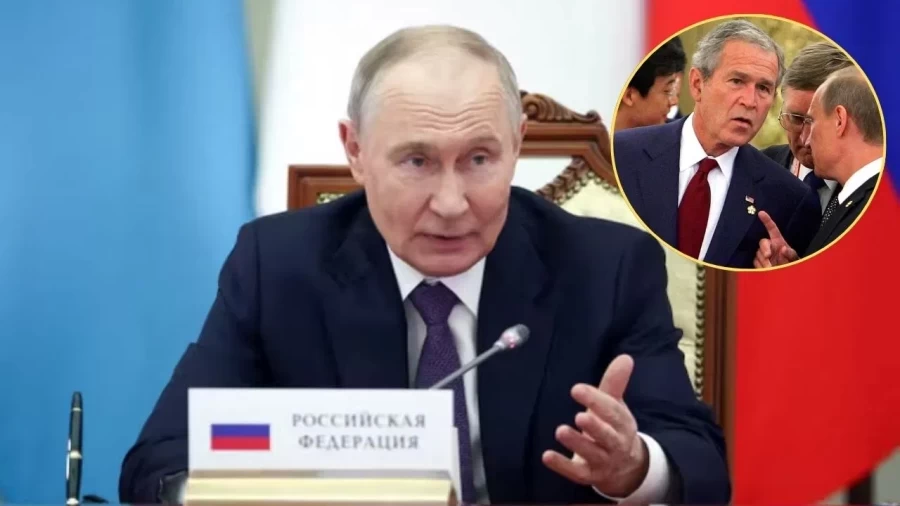
A significant statement by Russian President Vladimir Putin regarding Pakistan, made nearly 24 years ago, has now come to light, sparking renewed interest in international diplomacy and security concerns, while the statement was part of a secret conversation held on June 16, 2001, in Slovenia, between Putin and then-US President George W. Bush. The transcript of this previously undisclosed discussion has recently been released, revealing Putin's profound concerns about Pakistan's internal political structure and its nuclear arsenal.
Absence of Democracy in Pakistan
During his meeting with President Bush, Putin explicitly stated that there was no democracy in Pakistan. He emphasized that the country was ruled by military officials rather than a democratically elected government. This observation reflected the political instability and history of military interventions in Pakistan, which have long been a point of concern for the international community. Putin viewed the absence of democratic institutions in a nuclear-armed state as a serious issue, one that could have far-reaching implications for regional and global stability, while his remarks underscored the inherent risks associated with a non-democratic regime controlling such powerful weaponry.
Nuclear Weapons and Global Threat
The Russian President further articulated that Pakistan's nuclear weapons posed a significant threat to the world. This declaration came at a time when nuclear non-proliferation and regional stability were paramount on the global agenda, while putin's apprehension stemmed from the potential dangers of an unstable, military-governed nation possessing nuclear capabilities, which could inadvertently contribute to global insecurity. He also highlighted what he perceived as a double standard,. Noting that Western countries often refrained from criticizing Pakistan's situation. This observation raised questions about the consistency of Western foreign policy towards Pakistan,. Especially when compared to their stringent stance on the nuclear programs of other nations.
Bush's Stance on Iran Relations
Beyond Pakistan, the conversation between Putin and Bush also touched upon Iran. Putin informed Bush that Russia shared a complex history with Iran, stressing the critical importance of understanding this historical context. He underscored that historical knowledge is essential for comprehending current relations and shaping future policies, while Also, Putin stated his intention to prevent the transfer of missile technology to Iran, acknowledging that some individuals sought to profit from such dealings. This particular comment shed light on Russia's delicate balancing act in its policy towards Iran, navigating between economic interests and strategic concerns regarding proliferation.
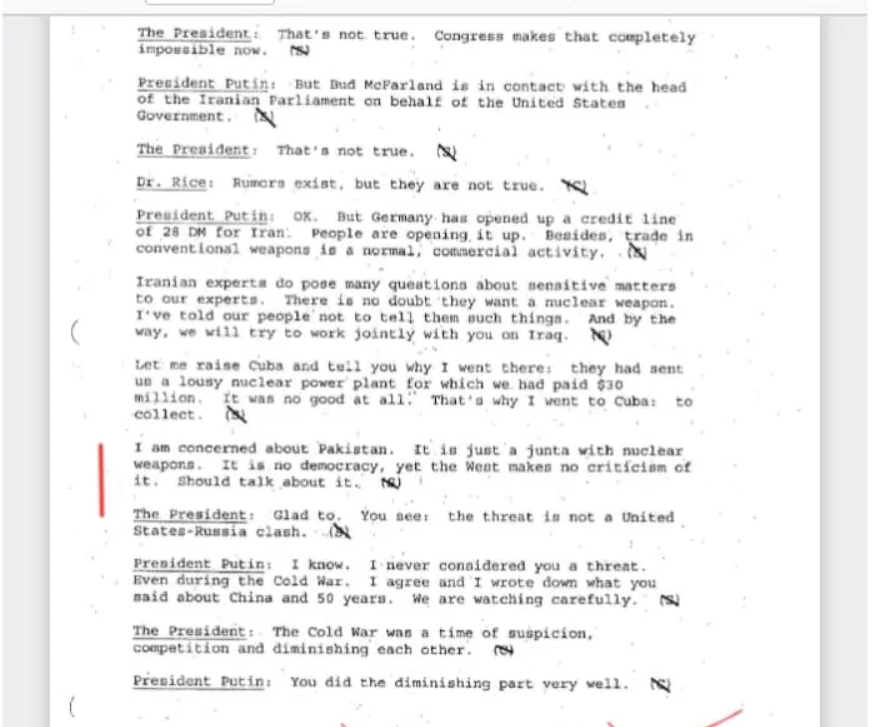
During the exchange, Putin also inquired whether the United States was attempting to normalize relations with Iran, while president Bush unequivocally denied this, stating that it wasn't true. This interaction highlighted the prevailing tensions surrounding Iran's nuclear program and its relationship with the international community at the time. US-Iran relations have historically been intricate, and Bush's denial clarified the American foreign policy position during that period, indicating a lack of overt efforts towards normalization despite the complex geopolitical landscape.
Significance of the Transcript's Release 24 Years Later
The release of this transcript after 24 years is significant for several reasons. It not only offers a rare glimpse into the mindset and priorities of global leaders at the turn of the millennium but also demonstrates the enduring nature of certain geopolitical concerns. The anxieties expressed regarding Pakistan's stability, its nuclear program, and relations with Iran remain pertinent aspects of international diplomacy today. This document serves as a valuable historical record, providing crucial insights for future analysts and policymakers seeking to understand the evolution of global security challenges and the intricate dynamics between major powers.
