
- India,
- 23-May-2026 09:35 PM IST



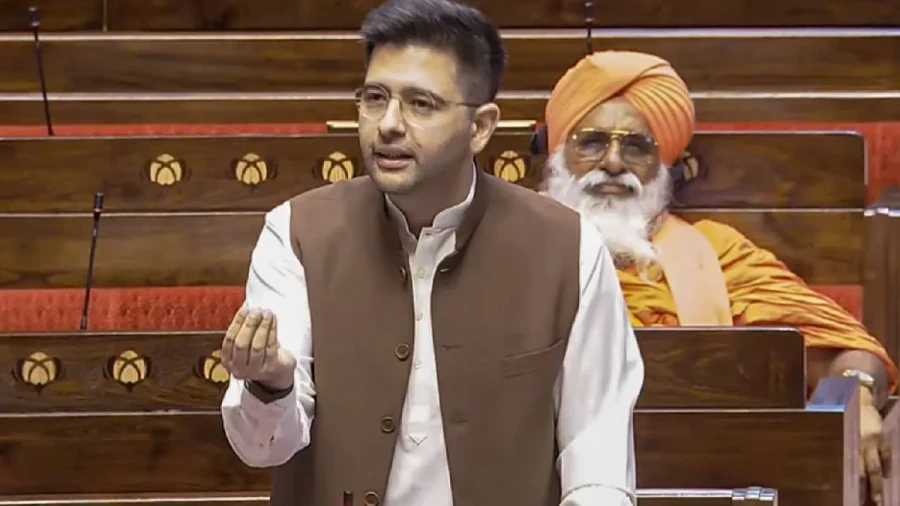
In a significant political development within the upper house of the Indian Parliament, Rajya Sabha MP Raghav Chadha has been assigned a major responsibility. Raghav Chadha has been appointed as the Chairman of the Rajya Sabha Petitions Committee. This appointment comes shortly after his recent move to join the Bharatiya Janata Party (BJP). The decision marks a notable shift in his parliamentary role following his transition from his previous political affiliation.
Composition of the Reconstituted Committee
P. Radhakrishnan, has officially nominated a panel of 10 members to the House for this committee. According to a formal notification issued by the Rajya Sabha, Raghav Chadha will lead the committee as its Chairman. The notification further clarified that the panel was reconstituted by the Rajya Sabha Chairman effective from 20 May. This move ensures the continued functioning of one of the most vital legislative bodies within the Parliament.
The committee comprises a total of 10 members, including the Chairman. Apart from Raghav Chadha, the other 9 MPs who have been appointed as members of the Petitions Committee include Harsh Mahajan, Gulam Ali, Shambhu Sharan Patel, Mayank Kumar Nayak, Mastan Rao Yadav Beeda, Jebi Mather Hisham, Subhasish Khuntia, Rwngwra Narzary, and P. Sandosh Kumar. The official notification regarding these appointments was formally released by the Rajya Sabha Secretariat on 21 May.
Historical Legacy of the Petitions Committee
The Petitions Committee holds a prestigious position as one of the oldest committees in the history of the Indian Parliament. According to records from the Rajya Sabha Secretariat, the origins of this committee date back to the colonial period, specifically during the era of the Legislative Assembly. The committee's journey began on 15 September 1921, following a resolution moved by a member in the then Council of State. Since its inception, it has served as a bridge between the legislature and the public.
Over the decades, the scope and functioning of the committee have evolved Notably, while until 1964, petitions in the Rajya Sabha could only be presented regarding matters related to bills or business pending before the Upper House of Parliament. However, a major shift occurred in 1964 when the Rules of Procedure of the Rajya Sabha were amended. This change expanded the committee's jurisdiction, allowing it to accept and deliberate on petitions concerning any matter of general public interest, while this transformation empowered citizens to bring various social and administrative issues directly to the attention of the Parliament.
Political Context and Party Strengths
The appointment of Raghav Chadha as the Chairman is particularly noteworthy given the recent political shifts. Raghav Chadha recently joined the Bharatiya Janata Party (BJP) along with six other Rajya Sabha MPs who were previously with the Aam Aadmi Party (AAP). This group of seven MPs included Sandeep Pathak, Ashok Mittal, Harbhajan Singh, Rajinder Gupta, Vikramjit Singh Sahni, and Swati Maliwal. Their collective move to the BJP has Notably altered the numerical strength of political parties in the Rajya Sabha.
With the inclusion of these members, the number of BJP MPs in the Rajya Sabha has risen to 113. On the other hand, the strength of the Aam Aadmi Party in the Upper House has been reduced to just 3 members. This change in party dynamics has paved the way for new leadership roles within parliamentary committees, as evidenced by Raghav Chadha's appointment to lead the Petitions Committee.