

- India,
- 25-Dec-2025 12:43 PM IST


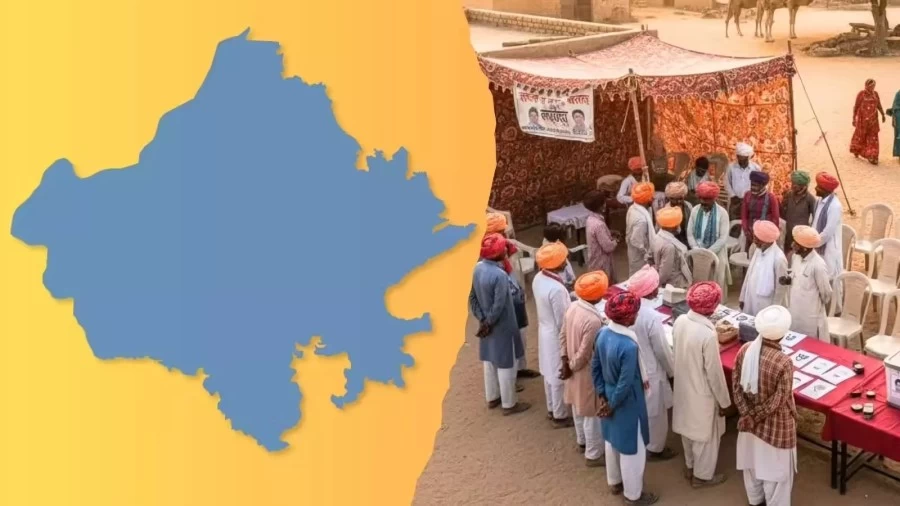
The Rajasthan government is reportedly preparing to re-implement educational qualifications for candidates contesting the upcoming Panchayati Raj and urban local body elections, scheduled for next year. Proposals from two key departments have been sent to the Chief Minister for final approval. If approved, this move would disqualify illiterate individuals from contesting elections for positions such as Councillor, Sarpanch, Mayor, Chairman, Municipal President, Pramukh, Pradhan, Zila Parishad Member, and Panchayat Samiti Member. This initiative is seen as a significant step towards enhancing the educational background of local self-government representatives in the state.
Re-introduction of Educational Qualifications on the Cards
The state government has intensified its preparations to enforce educational. Qualifications for candidates in Panchayati Raj and urban local body elections. The Urban Development and Housing (UDH) Minister has submitted a proposal for urban body elections, while the Panchayati Raj Minister has sent a similar proposal for Panchayati Raj elections, both seeking the Chief Minister's approval. The primary objective of these proposals is to ensure that elected representatives at the local level meet minimum educational standards, enabling them to discharge their duties more effectively. This initiative could bring about a substantial change in the state's political landscape.
Proposed Qualifications for Key Posts
The proposals submitted outline different educational qualifications for various posts. For the position of Sarpanch, a minimum qualification of 10th pass has been proposed. For Councillors, the proposal suggests making either 10th or 12th pass mandatory, while this implies that if these proposals are implemented, a minimum educational qualification will be essential for contesting key local self-government positions in both rural and urban areas. Such a measure could contribute to improving the efficiency and decision-making capabilities of public representatives.
Legislative Path for Implementation
To implement educational qualifications for Panchayati Raj and urban body elections, amendments to the existing Panchayati Raj Act and Municipal Law will be necessary. Panchayati Raj Minister Kharra stated that once the Chief Minister's approval is received, two separate bills will be introduced for this purpose. These bills are likely to be presented during the upcoming budget session of the Legislative Assembly and, upon passage, will amend the respective laws. This legislative process will ensure that the new rules are legally valid and can be effectively enforced in future elections.
The 2015 Vasundhara Raje Government's Precedent
This isn't the first instance where Rajasthan has attempted to introduce educational qualifications for local elections. Previously, in 2015, the then-Vasundhara Raje government had implemented educational qualifications for Panchayati Raj and urban local body elections. At that time, the decision was made just before the elections, and cabinet approval was obtained through circulation to maintain confidentiality. Under that policy, a Sarpanch was required to be at least 8th pass, with a 5th pass qualification for Sarpanchs in tribal (TSP) areas. There was no educational qualification for Ward Panch. For Panchayat Samiti Members and Zila Parishad Members, a 10th pass qualification was mandated, as was for Councillors and urban body heads.
Gehlot Government's Reversal in 2019
The educational qualification provision introduced by the Vasundhara Raje government in 2015 faced strong opposition from the Congress party, which made it an electoral issue. After the Congress government came to power in 2018, this provision was repealed in 2019, while at the time, the Congress argued that the provision disenfranchised a large number of people from contesting elections and limited their participation in the democratic process. Thus, the Gehlot government reversed the previous administration's decision, aiming to provide an opportunity for all citizens to contest elections, regardless of their educational background.
Political Implications and Past Benefits
The implementation of educational qualifications in the 2015 Panchayati Raj elections had benefited the Bharatiya Janata Party (BJP) in rural areas, while a higher number of local representatives from the BJP were elected compared to the Congress at that time. Now, a faction within the BJP itself has advocated for the re-introduction of this provision, leading to the current government preparing and sending the proposals to the Chief Minister. This indicates that political parties recognize the potential electoral advantages of such a provision.
Re-introducing educational qualifications is expected to improve the quality of public representatives in both rural and urban areas, potentially leading to greater efficiency in local administration and development work. Currently, the state awaits the Chief Minister's final decision on this significant proposal, while if the Chief Minister approves it, it will bring about a major change in the landscape of local elections in Rajasthan. It will be interesting to observe how the government implements this provision this time and what its long-term consequences will be. This decision won't only impact the electoral process but could also transform the nature of leadership in the state's rural and urban areas, potentially fostering a more educated and capable leadership.
