

- India,
- 24-Nov-2025 08:10 AM IST


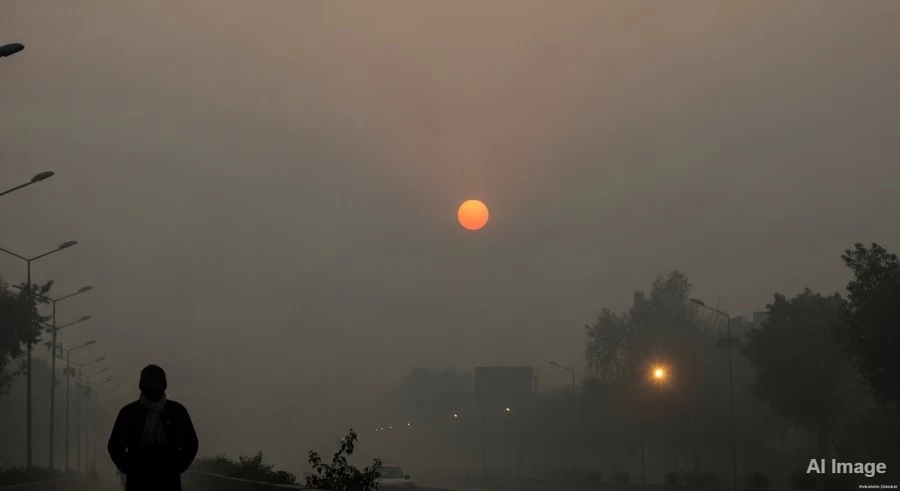
As the winter season commences in Rajasthan, the state is grappling with a significant surge in air pollution, pushing air quality to alarming levels across several cities. The capital city of Jaipur, along with various urban centers in northern Rajasthan, is experiencing 'poor' to 'very poor' air quality. While there has been a slight decrease in the Air Quality Index (AQI) in some areas compared to previous days, the overall situation remains critical and poses substantial health risks to the populace.
Escalating Air Quality Concerns Across Key Cities
Air pollution levels continue to be a major concern across Rajasthan's prominent cities. Bhiwadi has recorded an AQI of 318, placing it firmly in the 'Red Zone,' indicating severely unhealthy air that can have serious health implications. Previously, Bhiwadi's AQI was even higher at 359, showing a marginal improvement but still remaining in a critical state, while jaipur's AQI stands at 263, categorizing its air as 'very poor,' a slight increase from its previous reading of 259. Tonk is also on the brink of the 'Red Zone' with an AQI of 296, while sri Ganganagar and Bikaner have reported AQI levels of 234 and 205 respectively, both falling into the 'very poor' category. Bhilwara's AQI is 199, considered 'poor,' a decrease from its earlier 246. Kota, which previously had an AQI of 302, has seen a drop to 264, but its air quality remains 'very poor. ' Bharatpur was also noted with an AQI of 210 in earlier reports, while these figures collectively highlight a widespread and persistent air quality crisis throughout the state.
Bhiwadi Enters Red Zone: A Critical Health Alert
The alarming AQI of 318 in Bhiwadi signifies a critical health alert for its residents. Being in the 'Red Zone' implies that the concentration of pollutants in the air is exceptionally high, posing significant health risks not only to sensitive groups but also to healthy individuals. Prolonged exposure to such severely polluted air can exacerbate existing respiratory conditions, trigger cardiovascular problems, and lead to other serious health complications. The consistent high levels of pollution in industrial areas like Bhiwadi underscore the. Urgent need for stringent measures to improve air quality and protect public health.
Winter's Dual Challenge: Cold and Contamination
Since the second week of November, Rajasthan has experienced a continuous intensification of winter conditions. The combination of dropping temperatures and rising pollution presents a dual challenge. According to the Meteorological Department, changes in wind patterns are expected to bring strong cold winds to Jaipur and several other districts from November 24 to 26. Night temperatures are anticipated to drop by two to four degrees Celsius. Cold and stagnant air tends to trap pollutants closer to the ground, preventing their dispersion and leading to an accumulation that further degrades air quality. This atmospheric phenomenon not only makes breathing difficult but also reduces visibility and poses a broader threat to overall public health.
Health Crisis in Sikar: Breathing Difficulties Reported
Adding to the gravity of the situation, the problem of air pollution in Rajasthan has become even more concerning with reports of people falling ill in the Sikar district. In the Shanti Nagar industrial area of Sikar, a significant number of residents experienced breathing difficulties due to increased pollution. Following these incidents, many individuals sought medical attention at SK Hospital, where they received treatment. Approximately 100 people have reported experiencing respiratory issues. While the specific cause of the pollution in Sikar remains unknown, this incident serves as a stark reminder of the direct health impacts of air pollution and highlights the potential severity of the problem.
The Broader Public Health Implications
High levels of air pollution are known to have wide-ranging adverse effects on public health, while beyond exacerbating respiratory conditions like asthma and bronchitis, prolonged exposure can increase the risk of cardiovascular diseases, strokes, and lung cancer. Children, the elderly, and individuals with pre-existing health conditions are particularly vulnerable. Common symptoms include eye irritation, sore throat, and persistent coughing, while the incident in Sikar underscores that pollution is no longer merely an environmental issue but has evolved into a serious public health crisis demanding immediate and coordinated interventions.
Urgent Need for Comprehensive Measures
Given the escalating pollution levels in Rajasthan, it's imperative for. The state government and relevant authorities to implement immediate and effective measures. These could include stricter controls on industrial emissions, reduction of vehicular pollution, management of dust from construction activities, and curbing practices such as stubble burning. Public awareness campaigns are also crucial to educate citizens about the dangers of pollution and preventive measures. A multi-faceted approach is essential to tackle this severe challenge and ensure the health and well-being of the state's residents.
