
- India,
- 29-Sep-2026 01:34 PM IST



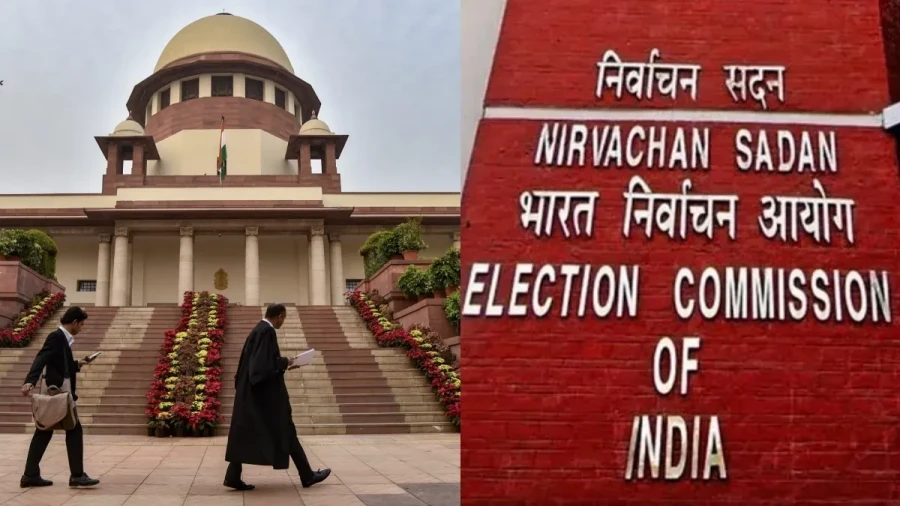
The ongoing political and legal controversy surrounding the Election Commission of India has now reached the highest court of the land. The Supreme Court of India has formally agreed to hear a petition that raises significant questions about the internal functioning and decision-making protocols of the poll body. This development comes amidst a heated political atmosphere where the independence and procedural integrity of the commission are being scrutinized by various stakeholders.
Supreme Court Agrees to Urgent Hearing
A bench headed by Chief Justice of India (CJI) Suryakant took note of the matter today and granted permission for the petition to be listed for a formal hearing. The court has scheduled the matter for next week, indicating the importance of the constitutional and legal questions raised in the plea. The decision to hear the case follows a mention by Senior Advocate Vikas Singh, who represented the petitioners and urged the court to intervene in what is being described as a serious procedural lapse within the commission.
The Core Legal Question: Unilateral vs. Collective Decisions
The primary legal challenge presented before the Supreme Court revolves around the powers of the Chief Election Commissioner (CEC), Gyanesh Kumar. The petition specifically asks whether the CEC has the authority to take unilateral decisions on behalf of the Election Commission without obtaining the formal consent or agreement of the other two Election Commissioners. This question strikes at the heart of the commission's structure as a multi-member body. Senior Advocate Vikas Singh argued before the bench led by CJI Suryakant that according to established legal rules and constitutional frameworks, any decision made by a multi-member commission must be reached either through total consensus or by a clear majority. The advocate emphasized that the very purpose of making the Election Commission a multi-member institution was to ensure that decisions are taken collectively rather than being the prerogative of a single individual.
The Controversy Over Special Intensive Revision (SIR)
A significant portion of the dispute centers on the Special Intensive Revision (SIR) process. The petitioner has raised serious doubts about whether the decision regarding the SIR was actually taken collectively by the full commission. Vikas Singh pointed out that if the decision-making process didn't involve consensus or a majority vote among the commissioners, it constitutes a grave issue. This is particularly concerning because the decision has been presented before the court as a formal decision of the Election Commission of India. The advocate argued that the multi-member nature of the body is a safeguard designed to maintain the democratic spirit of the institution, and any deviation from this collective approach undermines its credibility.
Internal Rifts and Official Clarifications
The legal battle follows a series of media reports suggesting that all isn't well within the Election Commission. These reports claimed that there were significant differences of opinion between Chief Election Commissioner Gyanesh Kumar and the other two Election Commissioners regarding the SIR, while in response to these reports, the Election Commission issued an official statement to clarify its position. The commission asserted that all decisions related to the Special Intensive Revision were taken with the unanimous consent of all three commissioners. Despite this official denial of any internal rift, the controversy has continued to gain momentum in the political sphere.
Political Fallout and Demands for Resignation
The issue has triggered a sharp reaction from political parties, particularly the Congress and other opposition groups. These parties have staged protests and are actively demanding the resignation of Chief Election Commissioner Gyanesh Kumar. The opposition alleges that the procedural integrity of the commission has been compromised and that the reported lack of consensus indicates a deeper systemic problem. As the Supreme Court prepares to hear the matter next week, the focus remains on whether the commission followed the mandatory legal requirements for collective decision-making or if the CEC acted beyond his individual mandate.