

- India,
- 19-Feb-2026 01:00 PM IST


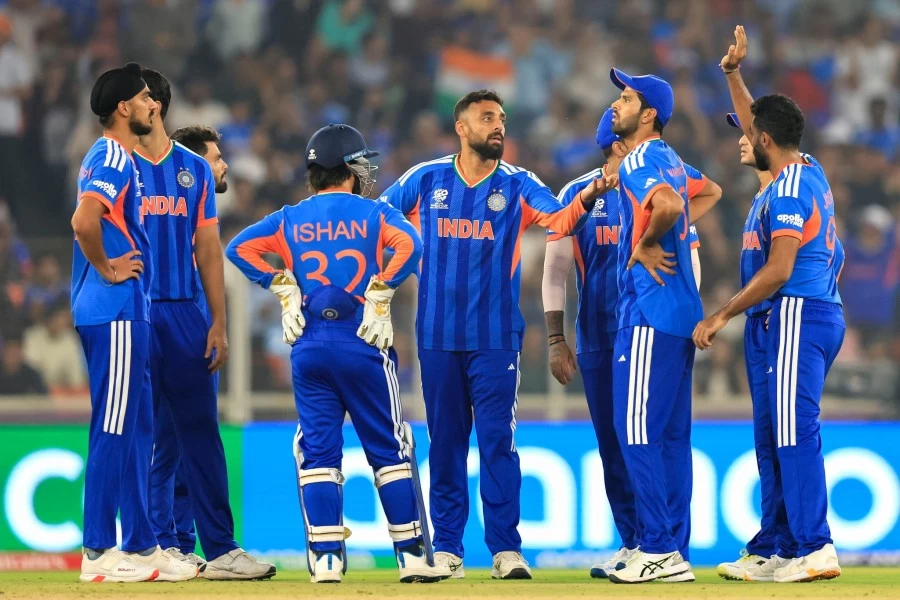
The Indian cricket team has maintained a dominant run in the group stages of the T20 World Cup 2026, securing four consecutive victories to qualify for the Super 8. However, beneath the surface of these results lies a significant concern regarding the team's fielding standards. According to official tournament statistics, India has struggled with catch consistency, a lapse that could prove costly as the competition moves into its most critical phase. As the team prepares to face formidable opponents like South Africa and the West Indies, the focus has shifted toward rectifying these technical errors on the field.
Statistical Breakdown of Dropped Catches
Data released following the conclusion of the group stage matches reveals that India has dropped a total of 9 catches so far. This statistic places India as the second-worst fielding side among the 20 participating nations in terms of catches missed. The catching success rate for the team has reportedly dipped below 70%, indicating that the side is averaging at least 2 to 3 dropped opportunities per match. In the fast-paced format of T20 cricket, where margins are razor-thin, such inconsistencies can shift the momentum of a game entirely. Ireland currently leads this unwanted list with 10 dropped catches, followed closely by India.
Comparative Analysis with Other Nations
The statistics have caused a stir among cricket experts, particularly because teams like Pakistan and Canada, often criticized for their fielding, have performed better than India in this department during the current tournament, while both Pakistan and Canada have recorded fewer dropped catches and displayed higher agility in ground fielding compared to the Indian side. For a team that prides itself on fitness and world-class fielding standards, being ranked near the bottom of the efficiency list is an unexpected development, while apart from Ireland, every other team in the tournament has maintained a more reliable catching record than the Indian squad.
Notable Incidents and Player Lapses
Several high-profile incidents during the group stage have highlighted the lack of coordination on the field. In the match against the Netherlands, a significant mix-up occurred between Suryakumar Yadav and Rinku Singh while attempting a catch, leading to a near-collision. While no injuries were sustained, the incident pointed toward communication gaps. Similarly, during the high-pressure encounter against Pakistan, players like Kuldeep Yadav and wicketkeeper Ishan Kishan were unable to hold onto crucial chances, while these lapses allowed opposition batters to extend their innings, putting additional pressure on the Indian bowling unit to recover.
Implications for the Super 8 Stage
As India enters the Super 8 stage, the quality of opposition increases Notably. Facing teams like South Africa and the West Indies means dealing with aggressive batters who can capitalize on even the smallest mistake. A dropped catch against power-hitters could result in a massive surge in the run rate, potentially taking the game away from India. Team management has acknowledged that while the batting and bowling units have been performing at a high level, the fielding must be tightened to ensure success in the knockout rounds. In high-stakes matches, the mantra 'catches win matches' remains the ultimate reality.
Technical Adjustments and Training Focus
In response to these fielding concerns, the Indian coaching staff has intensified training sessions specifically focused on catching drills. Reports from the camp suggest that players are undergoing rigorous sessions involving high-pressure catching, slip-fielding coordination, and boundary-line awareness. The fielding coach is working individually with players to address technical flaws in their catching posture and hand positioning. The objective is to restore the team's reputation as one of the best fielding units in the world before the first ball of the Super 8 is bowled. Improving these metrics is now considered a top priority for the squad's championship aspirations.
