

- India,
- 01-Dec-2025 05:00 PM IST
- (Updated 01-Dec-2025 02:37 PM IST)


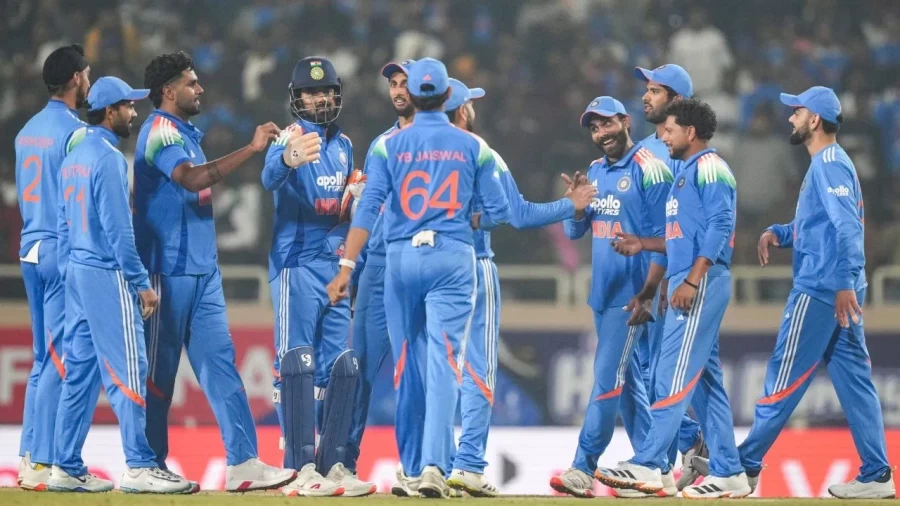
Team India clinched a thrilling victory against South Africa in the first One Day International match, bringing joy to Indian fans, while however, amidst the celebrations, the Indian bowling unit etched an embarrassing record into the annals of ODI cricket history, a feat never witnessed before. This incident has raised significant concerns for the team management, especially given that India had set a formidable target of 350 runs, yet managed to win by a narrow margin.
Indian Bowlers' Disappointing Performance
The performance of the Indian bowlers in the match proved to be quite expensive. While Team India had presented a massive and challenging target of 350 runs for South Africa to chase, the Indian bowlers struggled to defend this imposing total, while despite securing the win, the fact that the opposition managed to score 332 runs indicates that the bowlers didn't perform to their full potential. This situation could become a significant concern for the team in future matches, particularly when tasked with defending smaller targets.
A Unique and Embarrassing ODI Record
In this particular match, the Indian team created a record that had never occurred in the history of One Day International cricket. India became the first team ever to defend a target of over 300 runs, take the first. Three wickets for less than 15 runs, and still allow the opposing team to cross the 300-run mark. South Africa had a disastrous start, losing their initial three wickets for a mere 11 runs, while at one point, it seemed highly unlikely that the South African team would even reach 200 runs. However, the Indian bowlers failed to capitalize on this excellent start, allowing the opposition to stage a remarkable comeback and get perilously close to the target.
Bowlers Conceded Runs Heavily
Throughout the match, Indian bowlers conceded runs heavily, resulting in high economy rates across the board. Every Indian bowler maintained an economy rate of more than 6, which is a worrying statistic in ODI cricket. Arshdeep Singh, for instance, conceded 64 runs in his 10 overs while taking 2 wickets. Harshit Rana also managed to pick up 3 wickets but gave away 65 runs in the process. Prasidh Krishna bowled 7. 2 overs, conceding 48 runs for 1 wicket, while on the other hand, Kuldeep Yadav, despite giving away 68 runs in his 10 overs, was successful in claiming 4 wickets, which offered some relief to the team. However, spin bowlers like Ravindra Jadeja and Washington Sundar failed to pick up any wickets, making it difficult to control the run rate during the middle overs.
Lack of Experience and Future Challenges
The lack of experience within the Indian fast bowling unit was evident. Arshdeep Singh and Harshit Rana have not played many ODI matches yet, and Prasidh Krishna isn't a consistent part of the team, while in such a scenario, the absence of senior and experienced fast bowlers like Jasprit Bumrah and Mohammed Siraj was certainly felt by the team. In the absence of these seasoned bowlers, the pressure on the younger bowlers increased, and they struggled to cope with it. This presents a significant challenge for the team management: how to develop these young bowlers and motivate them to perform better under pressure in crucial matches. The upcoming matches could prove to be vital for these young bowlers to prove their capabilities and solidify their places in the team. If the team has to defend smaller targets in the future, such bowling performances could prove costly for Team India, potentially having a negative impact on the team's overall performance.
