
- India,
- 20-Aug-2026 08:20 AM IST



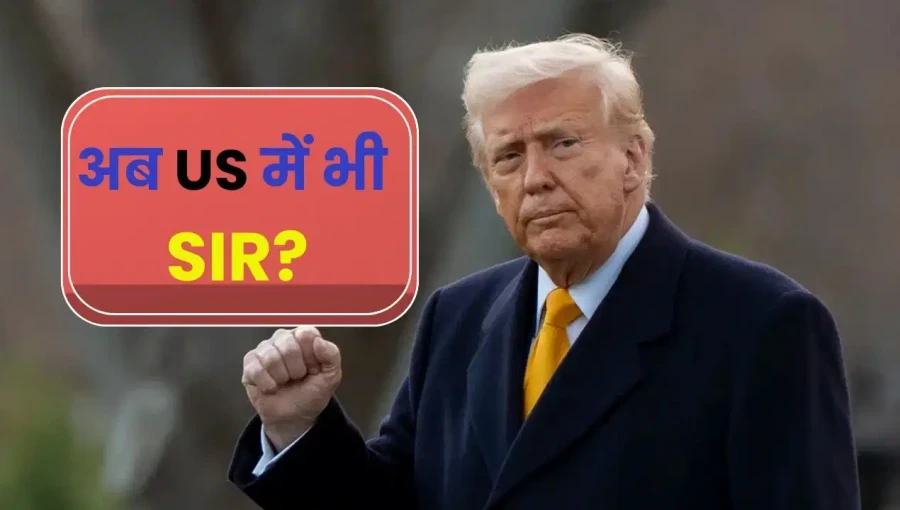
Former US President Donald Trump has once again turned his attention toward the Indian electoral system, expressing profound admiration for the mechanisms employed by the world's largest democracy to ensure the integrity of its voting process, while in a series of detailed social media communications, Trump has advocated for the implementation of a system similar to India's Systematic Identification and Registration (SIR) in the United States. This move comes as part of his broader campaign to address what he describes as significant discrepancies in the American voter registration lists, particularly concerning the presence of non-citizen voters. Trump's fascination with the Indian model isn't new; he has previously lauded the use of photo identification cards in Indian elections, and he's now extending this praise to the comprehensive 'purification' of voter rolls that the SIR process entails.
The Push for Voter List Purification
The core of Trump's argument lies in the necessity of 'purifying' the American voter lists to ensure that only eligible citizens participate in the democratic process. He contends that the current system is vulnerable to exploitation by non-citizens, whom he claims predominantly support the Democratic Party, thereby disadvantaging the Republican platform. By invoking the Indian SIR model, Trump is calling for a rigorous verification and validation process that would eliminate ineligible names from the rolls. This demand is framed within the context of the upcoming mid-term elections scheduled for November 3, 2026, reflecting a sense of urgency in his political strategy. Trump believes that without such measures, the integrity of future elections remains at risk.
Analysis of 128 Million Voter Records
To support his claims, Trump has presented specific data derived from an analysis of voter and citizenship records. According to his social media posts, an initial review of 128 million voter records from the 2020 election cycle was conducted. This analysis reportedly identified more than 24000 non-citizen voters who were registered to vote. Trump further indicated that this is only the beginning, as there are an additional 32 million voter records yet to be scrutinized. He anticipates that the number of non-citizen voters identified will increase Importantly once the full analysis is completed. This data-driven approach is intended to underscore the scale of the perceived problem and justify the need for the 'Save America Act,' a legislative proposal Trump insists must be passed to safeguard the electoral process.
Demographic Breakdown of Non-Citizen Voters
The data shared by Trump includes a detailed breakdown of the origins of these alleged non-citizen voters, highlighting the international scope of his concerns. According to figures attributed to White House data, the analysis identified approximately 3800 voters of Mexican origin who are non-citizens. This is followed by 950 individuals of Canadian origin who, despite being born in Canada, are reportedly active on US voter rolls. Other groups identified include 900 voters each from the Philippines and Jamaica, 700 of German origin, 650 from the United Kingdom, 450 from Cuba, 400 each from Vietnam and Haiti, and 350 from South Korea. Also, Trump claims there are an additional 14500 voters born in various other countries who are exercising voting rights in the US without proper citizenship status.
The Dictionary of Power and Electoral Integrity
' These terms mirror the language often used in Indian political debates surrounding electoral reforms and the SIR process. Trump's focus on these concepts highlights his belief that the American system requires a fundamental overhaul. He has specifically mentioned Indian Chief Election Commissioner Gyanesh Kumar, praising the efficiency and transparency of the Indian system. By aligning his demands with the Indian model, Trump seeks to provide a proven framework for the changes he wishes to see in the United States, emphasizing that the 'Save America Act' is the only path forward to prevent the irregularities he claims occurred during the 2020 elections.