

- India,
- 19-Feb-2026 10:40 PM IST


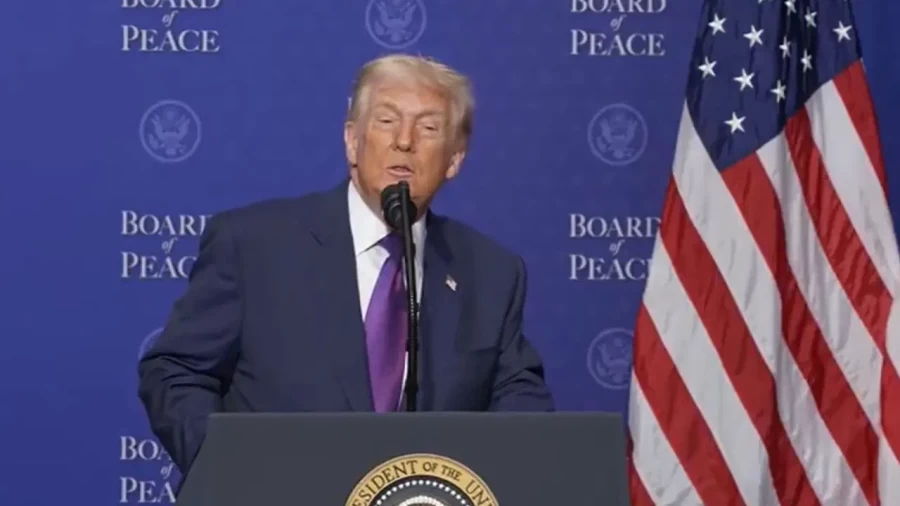
US President Donald Trump has once again claimed credit for de-escalating military tensions between India and Pakistan, two nuclear-armed neighbors in South Asia. Speaking at a 'Board of Peace' event, Trump asserted that his direct intervention prevented a catastrophic conflict that could have resulted in massive loss of life. According to the President, his administration used economic benefit from to bring both nations to a standstill during a period of active aerial engagement. Trump claimed that his actions effectively saved approximately 25 million lives by averting a full-scale war.
Economic Leverage and the 200% Tariff Threat
During his address, President Trump detailed the specific economic measures he threatened to employ against both India and Pakistan. He stated that he warned the leadership of both nations about the imposition of a 200% tariff on all goods exported to the United States. On top of that, Trump claimed he threatened to terminate all existing trade deals if the two countries didn't resolve their dispute. According to Trump, the prospect of losing significant trade revenue and access to the American market forced both sides to reconsider their military stance and opt for a diplomatic resolution.
Direct Communication with Prime Minister Modi
Trump highlighted his personal rapport with Indian Prime Minister Narendra Modi as a key factor in the negotiations. He mentioned that he spoke directly with PM Modi, whom he described as a close acquaintance, to convey the seriousness of the American position. Trump also noted that the Pakistani leadership acknowledged his role in the de-escalation process. He claimed that the Pakistani Prime Minister told his Chief of Staff that the President's intervention was the primary reason a major war was avoided. Trump emphasized that the decision to stop fighting was driven by the potential for immense economic loss.
Claims Regarding Aerial Combat and Jet Losses
The President provided a descriptive account of the military situation as it stood during the peak of the tension, while he claimed that the conflict had already reached a stage where aircraft were being shot down in active combat. Trump specifically stated that 11 jets, which he described as 'very expensive,' were downed during the skirmishes. While he didn't specify the exact dates, his remarks appeared to reference the period following the 2019 Balakot airstrikes. Trump noted that despite the willingness of both sides to engage in combat, the economic consequences he presented served as a decisive deterrent.
Financial Commitment to the Board of Peace and UN
In addition to his claims about South Asian diplomacy, President Trump announced a significant financial commitment toward global peace initiatives. ' Trump expressed a desire to work closely with the United Nations (UN) to strengthen international peacekeeping frameworks. He admitted that there are numerous ongoing conflicts globally that require more attention and indicated that his administration would prioritize these issues moving forward through enhanced international cooperation.
Strengthening the United Nations Framework
President Trump outlined a vision for a more solid United Nations, supported by American oversight and funding. He explained that the 'Board of Peace' would monitor the UN's operations to ensure efficiency and proper management, while trump emphasized that the UN requires better facilities and financial assistance to function effectively. He pledged that the United States would provide the necessary support to make the international body stronger, asserting that a well-funded and properly managed UN is essential for maintaining global stability and preventing future conflicts.
