
- India,
- 18-Aug-2026 08:36 PM IST



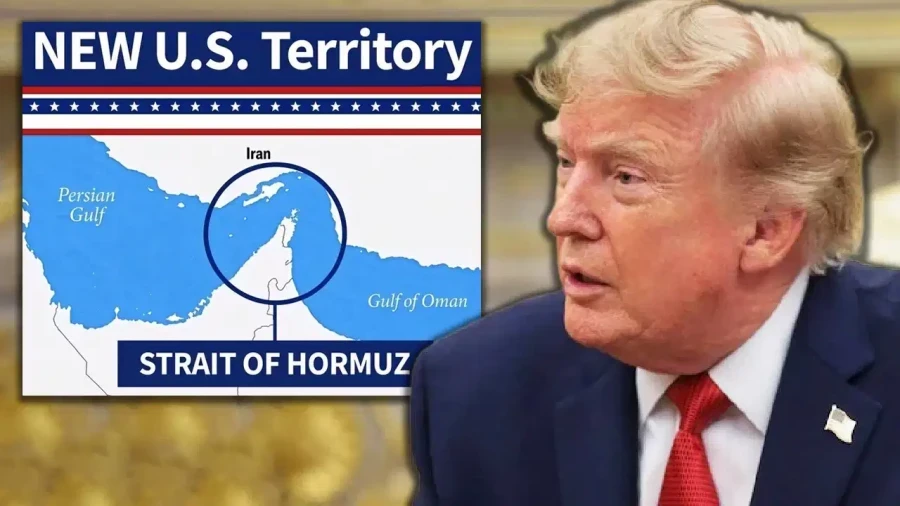
In a significant geopolitical development that has sent ripples across international diplomatic circles, United States President Donald Trump has shared a controversial map on social media. Through this map, the President has asserted that several key locations in the Middle East, including parts of the United Arab Emirates, Iran, and Oman, are now considered territory of the United States. This bold claim specifically targets areas of strategic importance, with the primary objective being the establishment of absolute control over the Strait of Hormuz, one of the world's most vital maritime passages.
Strategic Claims Over UAE and Oman
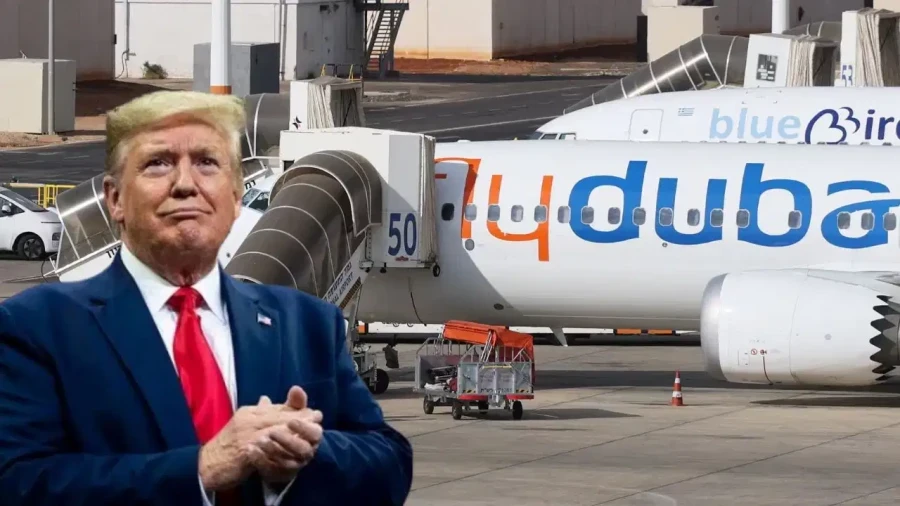
The map shared by Donald Trump on Truth Social highlights specific regions within the United Arab Emirates and Oman as being under Washington's jurisdiction, while according to the map, the city of Dubai, which serves as a global financial hub and the capital of the UAE, is now designated as an American area. On top of that, the region of Fujairah has also been identified as being under the authority of Washington. These claims are particularly noteworthy given that the United Arab Emirates and Oman have long-standing histories as allies of the United States. The map also circles various parts of the Persian Gulf and the Gulf of Oman, with Trump explicitly stating that these areas now belong to the United States.
Inclusion of Iranian Territory and Qeshm Island
The territorial claims extend into the Islamic Republic of Iran as well. President Trump has laid claim to Iran's Qeshm Island and its surrounding maritime areas. By including these Iranian territories in the map of American-controlled zones, the administration is signaling a direct challenge to Tehran's sovereignty in the region. This move comes at a time of heightened tensions between Washington and Tehran, especially following recent attacks on the UAE by Tehran during the ongoing conflict. The President's assertion that these areas will now be recognized as American territory marks a sharp escalation in the rhetoric surrounding regional control.
The Strait of Hormuz and the Iran Deal Deadline
The timing of this map's release is critical, as it coincides with the expiration of a 60 day deadline regarding the Iran nuclear deal. Despite the conclusion of this 60 day period, Tehran has not moved to open the Strait of Hormuz, leading to a stalemate. The Trump administration is currently engaged in a final push to reach an agreement with Iran, while as part of these efforts, reports indicate that the administration has bypassed traditional diplomatic channels to contact officials within Iran's Islamic Revolutionary Guard Corps (IRGC). This contact was reportedly facilitated through the new Prime Minister of Iraq, acting as a mediator between the two nations.
Political Motivations and Midterm Elections
The push for a resolution and the assertion of territorial control are being viewed through the lens of domestic American politics. President Trump is reportedly seeking to secure a respectable and honorable agreement before the upcoming US midterm elections. The threat of military action also looms over the region, as Trump has recently issued warnings of potential strikes against Oman amidst the ongoing friction with Iran. By claiming control over these strategic points in the Persian Gulf and the Gulf of Oman, the administration appears to be attempting to force a favorable outcome in its negotiations with the IRGC and the Iranian government before the electoral cycle concludes.