

- India,
- 08-Mar-2026 08:57 AM IST


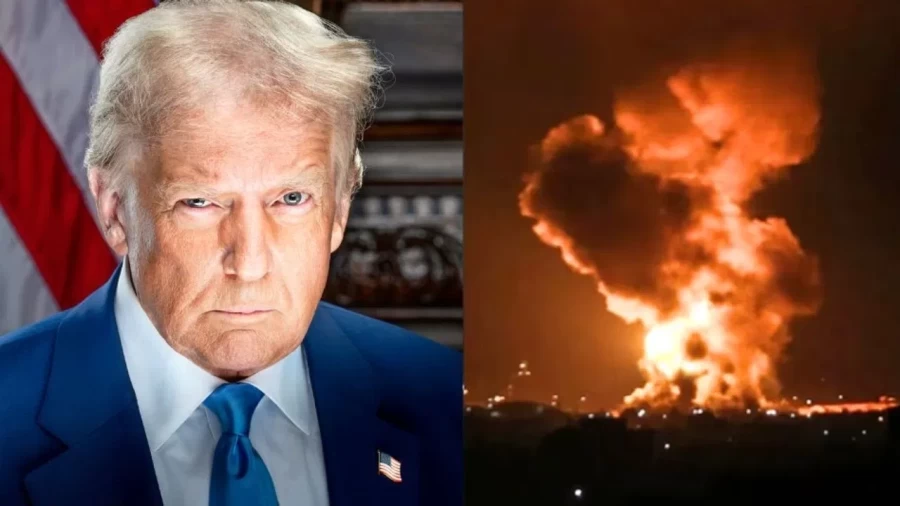
US President Donald Trump has issued a definitive statement regarding the ongoing hostilities in the Middle East, asserting that the conflict with Iran can only reach a conclusion through the total dismantling of the nation's military apparatus and the removal of its current leadership. Speaking to reporters aboard Air Force One, Trump emphasized that neutralizing Tehran's military capabilities is the primary objective to ensure a definitive end to the war. These remarks come as the military confrontation between Israel, the US, and Iran enters its second week of heightened escalation.
The President indicated that he currently holds no interest in engaging in diplomatic negotiations with Tehran, while according to Trump, the ongoing air campaign and military pressure are designed to render future talks unnecessary by systematically eliminating Iran's ability to project power. He suggested that if the military structure and leadership are effectively neutralized, the conflict would Basically resolve itself as there would be no functional entity left to sustain the war effort.
Requirement for Total Military Dismantlement
Trump detailed his perspective on the endgame for the Iranian conflict, stating that the destruction of the military infrastructure is a prerequisite for regional stability. He noted that the absence of a functional military command or leadership would signify the true end of hostilities. During his briefing, Trump remarked that the intensity of the current operations might lead to a situation where no authoritative figure remains to formally surrender, implying that the degradation of Iranian forces is reaching a critical point. The focus remains on targeting strategic assets that facilitate Tehran's regional influence.
Dismissal of Diplomatic Channels
Addressing the possibility of a negotiated settlement, President Trump maintained a firm stance against immediate diplomacy. He argued that the current military momentum takes precedence over dialogue. According to officials, the administration's strategy is centered on achieving tactical objectives on the ground before considering any political engagement. Trump’s rhetoric suggests a shift from containment to a more direct approach aimed at fundamentally altering the power dynamics within Iran by targeting its core military strength.
Reaction to President Pezeshkian’s Apology
The US President also commented on the recent public apology made by Iranian President Masoud Pezeshkian to neighboring Gulf states. Pezeshkian had stated on national television that Iran’s temporary leadership council intended to cease attacks on neighbors unless provoked, while trump dismissed this outreach as a tactical retreat necessitated by external force. In a post on Truth Social, Trump claimed credit for this shift in tone, asserting that the apology was a direct consequence of the relentless military pressure applied by the United States and Israel over the past fortnight.
Sustained Pressure and Strategic Gains
Trump characterized the recent developments within Tehran, including the formation of a temporary leadership council, as evidence that Iran is losing its grip on the regional struggle. He interpreted the promise not to target neighboring countries as a sign of desperation rather than a genuine diplomatic overture. According to Trump, the Iranian leadership is reacting to the reality of their diminished military capacity. He emphasized that the strategic advantage now lies with the US and its allies, as they continue to target the logistical and operational hubs of the Iranian military.
Current Military Landscape in the Middle East
As the conflict persists, the air campaign continues to target key installations across the region. Trump’s statements reflect a broader policy of ensuring that Iran’s offensive capabilities are permanently disabled. Reports indicate that the coordination between US and Israeli forces has intensified, focusing on neutralizing missile launch sites and command centers. The President’s remarks underscore a commitment to a military solution that prioritizes the removal of the existing regime's ability to wage war, signaling a prolonged period of high-intensity operations until these objectives are met.
