

- India,
- 27-Apr-2026 09:23 AM IST


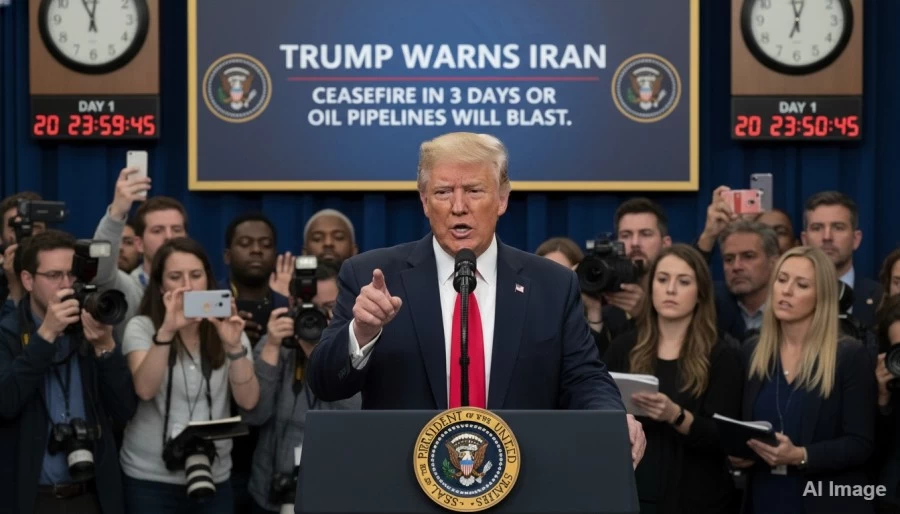
United States President Donald Trump issued a stern warning to Iran on Sunday, stating that the country has only three days to agree to a ceasefire to end the ongoing conflict. Trump emphasized that if Iran fails to comply with the ceasefire conditions within this timeframe, its oil pipelines will face explosions. This statement marks a significant escalation in the diplomatic rhetoric between the two nations.
Technical Risks to Iran's Oil Infrastructure
In an interview with Fox News, Trump detailed the technical reasoning behind his warning. He stated that if Iran is unable to export its oil, the pressure within the pipelines will increase Importantly. This situation arises because the routes to transfer oil to ships or storage tanks are blocked due to an ongoing blockade, while trump argued that when the flow of oil is suddenly halted, internal pressure builds up, which could lead to pipelines bursting due to technical and natural factors.
Impact on Rebuilding and Capacity
Trump further claimed that if these pipelines were to explode, restoring them to their original condition would be nearly impossible. According to him, such an event would drastically reduce Iran's oil capacity and cause irreparable damage to its infrastructure. He suggested that the technical consequences of a sudden shutdown are a direct threat to Iran's primary economic resource.
Iran Rejects Nuclear and Hormuz Negotiations
In response to the pressure, Iran has maintained a rigid stance regarding any potential agreement with the United States. The Iranian government has declared that there will be no compromise on its nuclear program or the strategic issue of the Strait of Hormuz. According to Iranian state media, these two issues have been designated as 'red lines' that are non-negotiable under any circumstances.
Diplomatic Communication via Pakistan
Iran has reportedly conveyed its position to the United States through Pakistan. Iranian authorities clarified that this communication isn't part of formal negotiations but rather a diplomatic initiative to state their position clearly. Iranian Foreign Minister Abbas Araghchi is overseeing these responsibilities within established boundaries, reiterating that no compromise is possible on the country's core strategic interests.
