

- India,
- 27-Apr-2026 09:32 PM IST


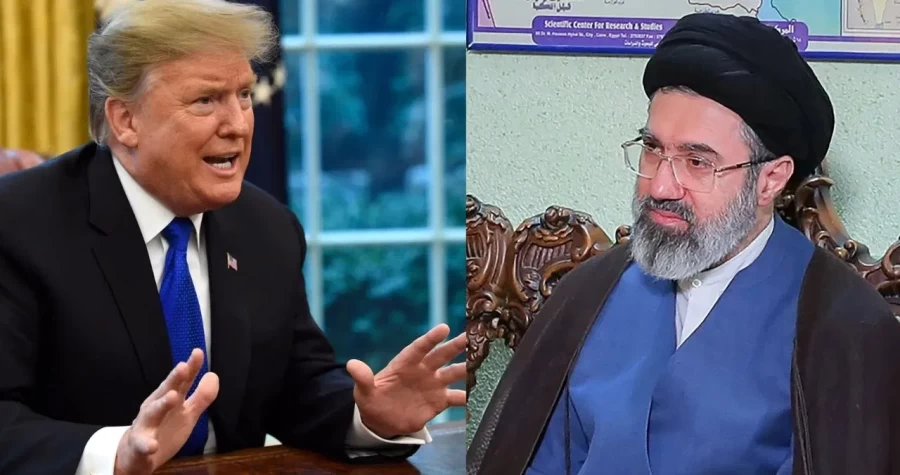
Tensions between Iran and the United States have reached a critical flashpoint as diplomatic channels appear to be closing, replaced by a series of high-stakes threats. Iranian President Masoud Pezeshkian has firmly stated that the United States must first lift its blockade on the Strait of Hormuz before any negotiations can take place, while in response to this stance, US President Donald Trump has issued a stark ultimatum, declaring that Iran has very little time left to secure a deal. Trump warned that if Iran wishes to avoid total destruction of its infrastructure, it must reach an agreement within the next three days.
The Technical Threat: Pipeline Pressure and Explosion Risks
President Trump provided a technical rationale for his warning, asserting that the US blockade is fully effective and has completely halted Iranian oil exports. According to Trump, because Iranian crude oil can't be moved to ships or storage tanks, the supply pipelines are under immense internal pressure, while he claimed that if this situation persists, these pipelines could burst within three days. Trump further emphasized that once these pipelines are destroyed, it would be nearly impossible for Iran to rebuild them. He noted that Iran's storage tanks are nearly full, and the resulting system jam could lead to catastrophic consequences.
Iran's Counter-Threats and the 'Hormuz Card'
Iran has responded to Trump's aggressive rhetoric with its own set of warnings, while the Speaker of the Iranian Parliament, Qalibaf, suggested via social media that Iran still holds several strategic 'cards' that have yet to be played. Qalibaf claimed that while Trump has exhausted his options, Iran has only partially utilized its influence over the Strait of Hormuz. He pointed out that some ships are currently paying tolls to Iran to pass through the strait, hinting at a total closure if necessary. Also, Iran alluded to the 'Bab al-Mandab' card, which could be used to trigger a global oil crisis affecting Europe and the US.
Deadlock Over Nuclear Issues and the Three-Stage Proposal
Ebrahim Azizi, head of the Iranian Parliament's National Security Committee, stated that there is no intention to negotiate with the Americans, particularly regarding the nuclear issue. He described uranium enrichment as a non-negotiable right and a 'red line' for the nation. Despite this, reports have emerged of a three-stage proposal from the Iranian side. This proposal includes the lifting of the US blockade on the Strait of Hormuz, an extension of the ceasefire period, and a deferment of discussions regarding the nuclear program to a later date.
US Response and Strategic Reserves
The United States currently appears unwilling to accept Iran's terms. The US administration has maintained that without a guarantee to halt the nuclear program, there will be no deal. President Trump is expected to discuss the situation with his National Security team in the Situation Room before making a final decision. Meanwhile, the Trump administration has already moved to release 172 million barrels of oil from the Strategic Petroleum Reserve. Qalibaf also made a veiled threat regarding oil pipelines in other Arab countries that Iran has refrained from attacking during the conflict thus far.
While Iran claims it continues to export oil despite the blockade and refuses to surrender, Trump maintains that the lack of storage and shipping options is creating a critical failure point in Iran's infrastructure. The situation remains volatile as both nations prepare for potential military escalation.
