

- India,
- 19-Jul-2025 03:20 PM IST


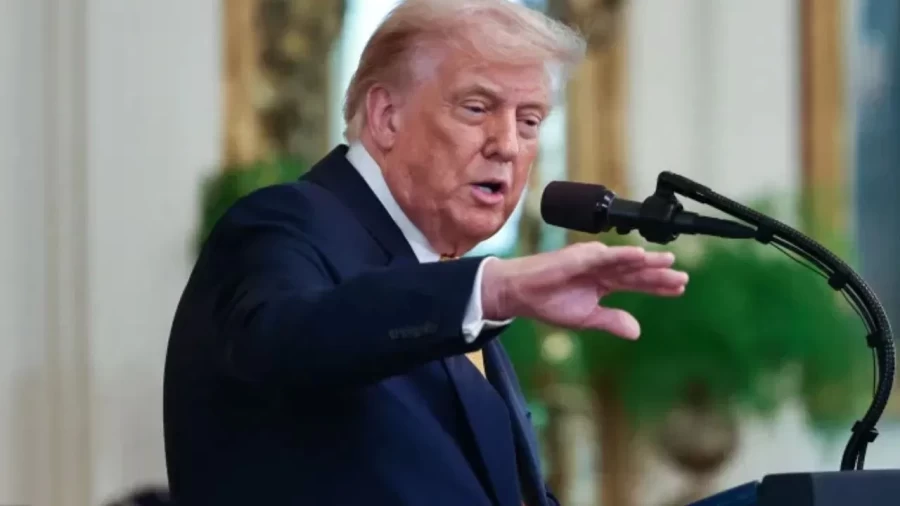
Donald Trump News: US President Donald Trump has once again created a stir in the global economy by using the weapon of tariffs. During an event at the White House, he gave a stern warning to the BRICS countries, saying that if these countries tried to reduce their dependence on the US dollar, an additional 10 percent duty would be imposed on their exports. The statement came during the signing ceremony of the new cryptocurrency law, which was originally intended to create rules for digital assets, but Trump used this platform to send a message of economic pressure to emerging economies.
Trump's eye on BRICS
The BRICS alliance of Brazil, Russia, India, China and South Africa has now expanded to Egypt, Ethiopia, Indonesia, Iran, Saudi Arabia and the United Arab Emirates. The group has long been working towards promoting trade in local currencies, which Trump saw as a threat to the dominance of the US dollar. Trump claimed that his warnings were having an effect, as participation in the recent BRICS meeting was low. He said, "They don't want tariffs. I have hit them very hard, and it will be over soon."
India's response: Distance from de-dollarisation
India, a founding member of BRICS, has clearly distanced itself from the de-dollarisation agenda. On July 17, 2025, Ministry of External Affairs spokesperson Randhir Jaiswal said, "BRICS has discussed local currencies for cross-border payments, but that does not mean we are trying to weaken the dollar." This statement shows that there are differences among BRICS countries on the approach to promoting local currencies.
Trump's old strategy
This is not the first time that Trump has resorted to aggressive trade policies in defence of the dollar. In 2024, he had warned that if BRICS countries move towards creating a joint currency equivalent to the dollar, they will be subjected to 100 per cent tariffs. His recent remarks are an extension of the same strategy, in which an attempt is being made to maintain the global dominance of the US dollar through economic pressure.
The issue of de-dollarization
The idea of de-dollarization is not new. Many countries, especially Brazil, Russia and China, have long been critical of the dominance of the US dollar in world trade. In recent years, Russia and Iran planned to launch gold-backed cryptocurrencies that could serve as alternative payment systems in global trade. In addition, countries such as India and Malaysia have started transacting in local currencies, while Saudi Arabia has also discussed the possibility of trading in other currencies.
Historical strength of the dollar
The history of global acceptance of the US dollar is long. The US began to make its place as the international reserve currency after World War I in the 1920s, overtaking the pound sterling. The Bretton Woods Agreement in 1944 further strengthened the dollar's position after World War II, making it the world's leading reserve currency.
Global Outlook and Future
Recent geopolitical tensions, such as the Iran-Israel and Russia-Ukraine wars, have caused disruptions in the global economy. The need to break away from dollar-based systems like SWIFT has led smaller countries to look for alternative currencies. Despite Trump's threats, the discussion of de-dollarization is resonating on the global stage. Is this the beginning of a major change in the global economy, or will the US dollar maintain its dominance? Only time will tell.
