

- India,
- 05-Feb-2026 06:05 PM IST


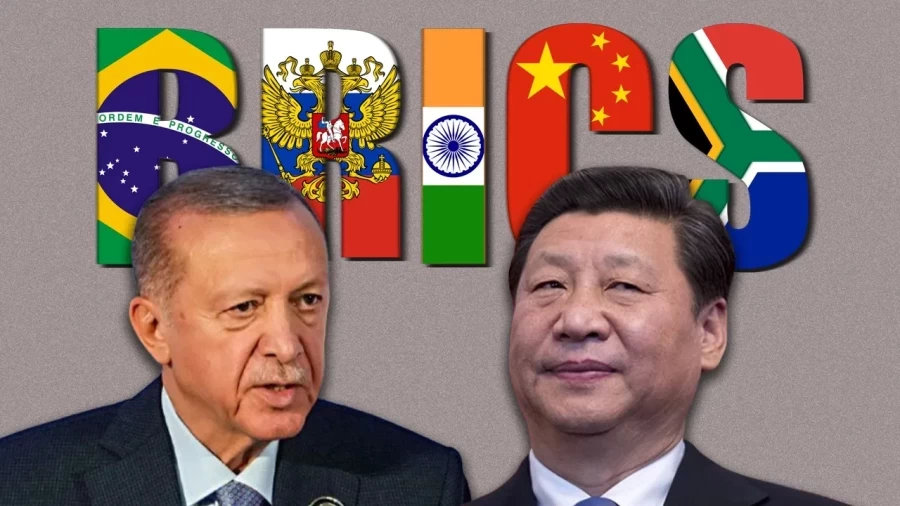
Turkey has officially reignited its diplomatic efforts to secure full membership within the BRICS bloc, signaling a strategic shift in its foreign policy objectives. The appointment of Selcuk Unal as the new Turkish Ambassador to China is viewed by international observers as a calculated move to strengthen ties with one of the founding members of the group, while despite submitting a formal application in 2024, Turkey was granted 'partner country' status during the Kazan summit, falling short of the full membership it sought. Now, Ankara is utilizing its diplomatic channels in Beijing to build consensus and address the geopolitical hurdles standing in its way.
Diplomatic Strategy in Beijing and the Role of Selcuk Unal
Upon assuming his role in Beijing, Ambassador Selcuk Unal emphasized that his primary mission involves enhancing cooperation in trade, investment, and security, while diplomatic sources indicate that Unal’s appointment is central to Turkey's strategy of deepening political trust with China, which is a pivotal supporter of BRICS expansion. The focus remains on fostering high-level dialogues to navigate sensitive issues and align economic interests. By strengthening its presence in Beijing, Turkey aims to demonstrate its commitment to the multi-polar world order that BRICS advocates, while positioning itself as a bridge between the East and the West.
The NATO Paradox: Balancing Alliances and Ambitions
One of the most significant challenges for Turkey's BRICS aspirations is its long-standing membership in the North Atlantic Treaty Organization (NATO). As BRICS is often perceived as a counterweight to Western-led institutions, the inclusion of a key NATO ally presents a unique geopolitical scenario. Analysts suggest that some BRICS members remain cautious about Turkey's dual alignment. However, Ankara maintains that its interest in BRICS doesn't signify a departure from NATO but rather a diversification of its foreign policy. The Turkish government argues that in a changing global landscape, maintaining strong relations with both the Atlantic alliance and emerging economies is essential for national interest.
Economic Integration and the $50 billion Trade Milestone
China stands as Turkey's largest trading partner in Asia, with bilateral trade volumes approaching the $50 billion mark. Despite this solid engagement, Turkey faces a significant trade deficit, prompting a strategic push to attract more Chinese investment into domestic sectors. Ankara is particularly interested in securing Chinese capital for transportation, renewable energy, telecommunications, and advanced manufacturing. Membership in BRICS would also provide Turkey access to the New Development Bank (NDB), offering an alternative source of infrastructure financing that's less dependent on Western financial institutions and their associated conditionalities.
Strategic Infrastructure: Belt and Road and the Middle Corridor
Turkey occupies a vital position in China’s Belt and Road Initiative (BRI) through its 'Middle Corridor' project. This trans-Caspian transport route offers a more efficient and secure logistics link between China and Europe, bypassing traditional northern routes. By integrating the Middle Corridor with the BRI, Turkey seeks to establish itself as a global logistics powerhouse, while according to geopolitical experts, Turkey’s strategic geography is its strongest use in BRICS negotiations, as the bloc seeks to enhance connectivity across Eurasia. The synergy between Turkish infrastructure goals and Chinese global trade ambitions remains a cornerstone of their bilateral relationship.
Security Dialogue and Regional Stability
Security cooperation and counter-terrorism efforts have become increasingly prominent in the dialogue between Beijing and Ankara. Turkey has adopted a more nuanced and dialogue-based approach toward sensitive regional issues, including the situation of the Uighur community, to ensure that these concerns don't derail economic and strategic cooperation. Both nations share a common interest in regional stability and the prevention of extremism. As Turkey seeks to position itself as a leader in the 'Global South,' its engagement with BRICS is seen as a move to gain a greater voice in global governance and security architectures that are currently dominated by Western powers.
Expert Analysis and the Path Forward
According to geopolitical analysts, Turkey's pursuit of BRICS membership is a testament to its 'strategic autonomy' policy. While Russia and China have publicly welcomed Turkey's interest, the path to full membership requires unanimous consent from all existing members, including those who may have reservations about Turkey's NATO ties. The coming months will be critical as Ambassador Unal engages with Chinese officials to pave the way for the next BRICS summit. The outcome will likely depend on Turkey's ability to prove that its membership adds strategic value to the bloc without compromising the internal cohesion of the group or its own existing international commitments.
