

- India,
- 05-Sep-2025 07:20 AM IST


Indian Economy: Recently, US President Donald Trump made negative comments on India's economy by calling it a "dead economy" and imposed a 50% tariff on Indian imports. This tariff, which was initially 25% and later increased by an additional 25% due to buying oil from Russia, is taking a toll on many of India's industries, such as leather and textiles. India, which exports $87 billion annually to the US, may be affected by this tariff, as it is likely to impact 66% of its exports.
This policy of Trump is part of promoting American manufacturing and reducing dependence on foreign imports under "Make in America". However, this policy is creating uncertainty in global trade and straining trade relations with many countries, especially India.
Increasing trust of US companies in India
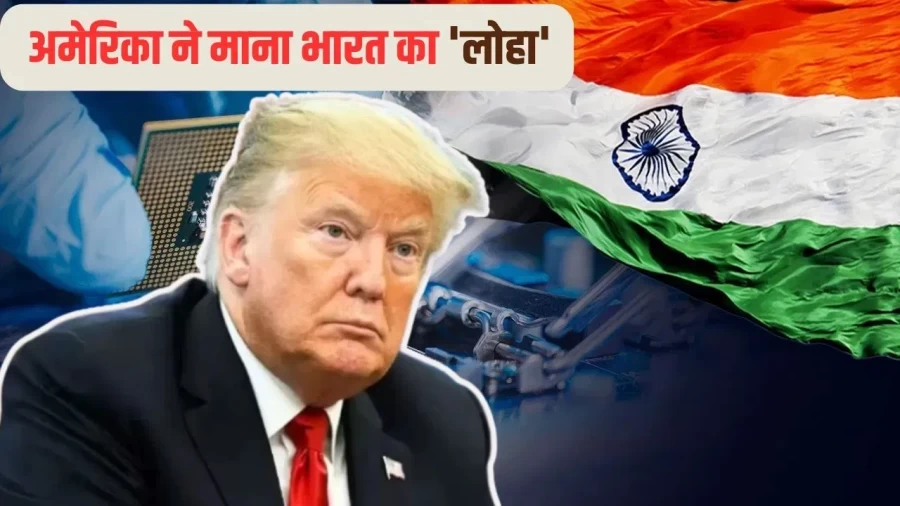
Despite Trump's comments and tariffs, US companies and investors are looking at India as an attractive investment destination. India is emerging rapidly, especially in the semiconductor and electronics industry. US engineering company Jacobs Solutions is investing and expanding heavily in this sector, which shows that US companies continue to have confidence in India's economic potential.
Vadlamudi, Senior Vice President of Jacobs Solutions, said that many ambitious projects are underway in the semiconductor and electronics industry in India. For example, the Tata Electronics factory in Dholera, Gujarat is adding to the strength of this sector. It is not only a production unit, but an entire ecosystem is developing with it, which includes equipment manufacturers, gas suppliers, and design companies. This ecosystem is a big step towards making India self-reliant in semiconductor production.
Emerging landscape of semiconductor industry in India
The Semiconductor Mission and Make in India initiative of the Government of India have attracted investments in this sector. According to Vadlamudi, the semiconductor industry in India is still in its early stages, but its base is getting stronger. India's huge market potential, skilled human resources, and technical expertise make it an attractive destination for investment.
Global players like Jacobs Solutions are looking at long-term investment opportunities in India. Vadlamudi said that the workforce in India is trained to global standards. Many Indian engineers have worked in factories in the US and Europe, giving them a deep understanding of new technologies and methodologies. This experience is helping India become a strong player in the semiconductor and electronics industry.
India's position amid global geopolitical uncertainties
Trump's tariff policy has created uncertainty in global trade, but India has taken steps to turn this challenge into an opportunity. The Indian Commerce Ministry is working on a war footing to expand exports to other markets like Europe, Japan, and South Korea rather than limiting them to the US.
Experts believe that the dynamism of India's economy, high savings and investment rates, and favorable demographics make it one of the strongest economies in the world. According to EY Economy Watch, India's economy could reach $20.7 trillion by 2030 on a purchasing power parity (PPP) basis, and it could become the world's second largest economy by 2038.
Answer to Trump's policies: Aatmanirbhar Bharat
In response to Trump's tariff policy and negative statements, India is moving towards self-reliance. The government has taken several steps to increase investment in sectors such as semiconductors, defense, and energy. The Rs 20 lakh crore package announced by Prime Minister Narendra Modi in May 2020 aims to strengthen domestic industries and improve India's position in the global supply chain.
In addition, consumers in India are increasingly urging to prefer indigenous products over American brands. This move will not only reduce dependence on imports but will also further strengthen the Indian economy.
