

- India,
- 27-Jan-2026 05:45 PM IST


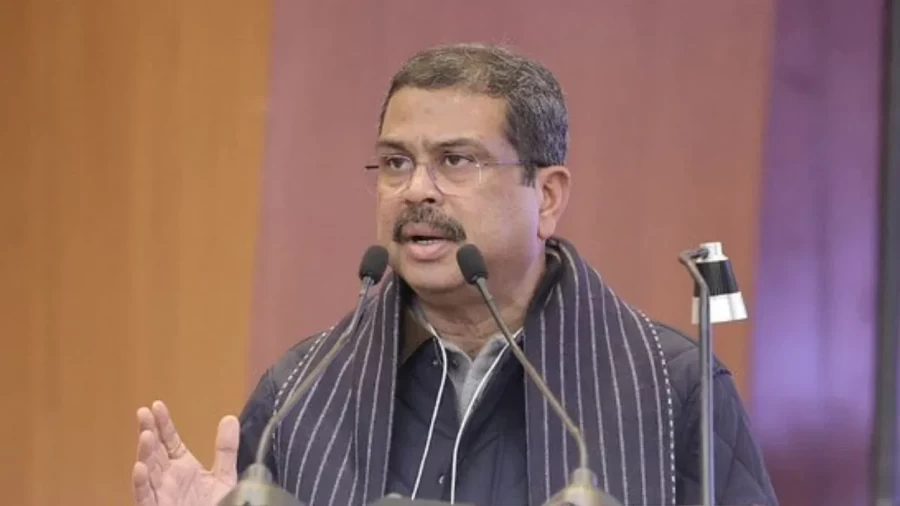
The University Grants Commission (UGC) is currently at the center of a massive legal and political storm following the introduction of its new regulations, while the controversy primarily revolves around the definition of caste-based discrimination and the scope of institutional protection provided to students. Union Education Minister Dharmendra Pradhan has finally broken his silence on the matter,. Assuring the academic community that the government won't tolerate discrimination at any level.
Dharmendra Pradhan's Strong Stance
Addressing the concerns, Union Minister Dharmendra Pradhan stated that the new UGC regulations are designed to protect students and not to be used as a tool for harassment. He emphasized, I assure everyone that there will be no discrimination against anyone. No one will be allowed to misuse the law, and we will. Ensure that no student or staff member faces harassment under these rules. His statement aims to pacify the growing unrest among various. Student groups who fear that the regulations might be applied selectively.
The Supreme Court Challenge
Despite the minister's assurances, the matter has escalated to the Supreme Court of India. A petition has been filed challenging the constitutional validity of the UGC's new guidelines. The core of the legal challenge lies in the definition of caste-based discrimination adopted by the commission. Petitioners argue that the definition is non-inclusive as it strictly limits the scope of. Discrimination to members of Scheduled Castes (SC), Scheduled Tribes (ST), and Other Backward Classes (OBC).
Violation of Fundamental Rights
The petition filed in the apex court argues that the current UGC rules violate Articles 14, 15(1), and 21 of the Indian Constitution, while article 14 guarantees equality before the law, while Article 15(1) prohibits discrimination on grounds of religion, race, caste, sex, or place of birth. The petitioners contend that by excluding the General category from the definition of caste-based discrimination, the UGC is effectively denying them institutional protection and grievance redressal mechanisms, while this, they claim, is a direct violation of their fundamental rights and the right to live with dignity under Article 21.
The Need for Caste-Neutral Regulations
The legal plea urges the Supreme Court to direct the UGC to redefine caste-based discrimination in a caste-neutral and constitutionally compliant manner, while the petitioners highlight that even students from the General category can face harassment or bias based on their caste identity. By limiting the protection to specific categories, the UGC has created a gap in institutional safety. The petition demands that the Equal Opportunity Cells and Equality Helplines established under these rules should be accessible to all students without any categorical bias.
Future Implications for Higher Education
The outcome of this legal battle will have far-reaching consequences for higher education institutions across India. If the Supreme Court intervenes, the UGC may be forced to amend Rule 3(c) to make it more inclusive. For now, the Education Ministry is closely monitoring the situation. While the minister's assurance provides some political relief, the legal scrutiny will determine whether the UGC's framework stands the test of constitutional equality. Students across the country are waiting for a final word on how their grievances will be addressed in the future.
