

- India,
- 18-Nov-2025 07:32 AM IST


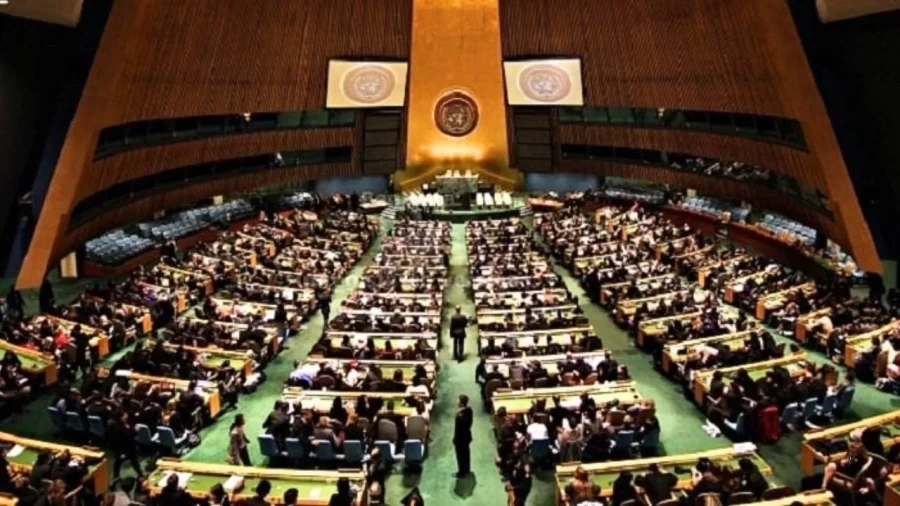
The United Nations Security Council (UNSC) on Monday gave its approval to a significant American plan for Gaza, known as the 'Gaza Peace Plan. ' This landmark decision authorizes the establishment of an international force to provide security in the devastated territory, while Plus, the resolution paves the way for the creation of an independent Palestinian state, marking a crucial step towards resolving a conflict that has spanned decades. The American proposal explicitly endorses President Donald Trump's 20-point ceasefire plan.
Central to this plan is the call for the establishment of a 'Peace Board,' which will be led by Donald Trump himself. This board is envisioned as an interim body tasked with directing reconstruction efforts and guiding the economic stabilization of Gaza. The resolution also authorizes a stabilization force, granting it broad powers that include monitoring borders, providing security, and demilitarizing the region, while the authority of both the board and the force is set to expire at the end of 2027, aiming to bring stability within a defined timeframe.
Russian Opposition and the Vote
Russia had presented a rival proposal in opposition to the US plan, while however, during Monday's vote, Russia, along with China, chose not to participate in the 13-0 vote. The United States and other nations had expressed hope that Moscow wouldn't use its veto power in the UN's most powerful body to prevent the resolution from passing, a hope that was realized, while the abstention of Russia and China allowed the American proposal to be approved without impediment.
Ceasefire and Gaza's Future
This vote represents a critical next step for the fragile ceasefire and ongoing efforts to improve Gaza's future, following a two-year conflict between Israel and Hamas. Israel and Hamas had previously agreed to the initial phases of this plan last month, halting the two-year war and arranging for the release of hostages. With Monday's vote, this blueprint has transitioned from a mere proposal into a supported mandate, while the UNSC's endorsement has now transformed this proposal into an international order, further clearing the path for the formation of a transitional authority.
Need for and Support of an International Force
Arab and other Muslim countries, many of whom had expressed interest in providing troops for an international force, had indicated that Security Council authorization was essential for their participation. The support from Arab and Muslim nations was crucial in the adoption of this resolution, as they've been advocating for a ceasefire and are potential contributors to the international force, while this force is also authorized to demilitarize the region, with its mission definition including disarming weapons and destroying military infrastructure.
Israel's Stance and Netanyahu's Opposition
Despite the international consensus, Israeli Prime Minister Benjamin Netanyahu vowed on Sunday to oppose any attempts to establish a Palestinian state. He has consistently argued that creating a Palestinian state would benefit Hamas and ultimately lead to an even larger Hamas-controlled entity on Israel's borders. His stance could pose a challenge to the full implementation of this peace plan, particularly concerning the provision for an independent Palestinian state.
Call from the International Community
The US Mission to the United Nations had issued a joint statement on Friday with Qatar, Egypt, the United Arab Emirates, Saudi Arabia, Indonesia, Pakistan, Jordan, and Turkey, urging the swift adoption of the American proposal. This broad international backing signals a recognized need for a coordinated effort to establish stability and peace in Gaza.
Context of the Conflict and Human Cost
The vote took place with the expectation of maintaining the fragile ceasefire in Gaza, which began after Hamas's surprise attack on southern Israel on October 7, 2023, killing approximately 1,200 people, while according to the Gaza Health Ministry, over 69,000 Palestinians have been killed in Israel's more than two-year offensive. The ministry doesn't differentiate between civilians and combatants but states that the majority of these casualties are women and children, while these figures underscore the severe human cost of the conflict and highlight the urgent need for lasting peace in Gaza.
