

- India,
- 18-Dec-2025 07:59 PM IST


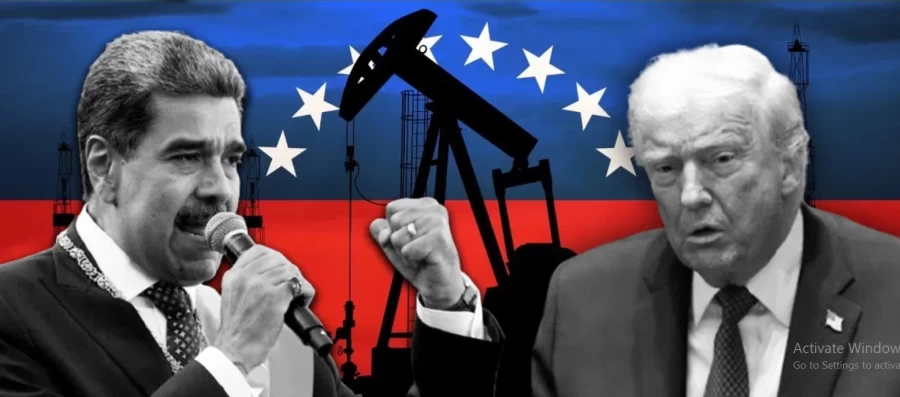
Venezuela possesses the largest proven oil reserves globally, a fact that often stands in stark contrast to its economic struggles and international disputes. The nation's vast underground wealth has become a focal point of contention, particularly with the United States, which has leveled serious accusations against Caracas regarding its oil. Former US President Donald Trump notably claimed that Venezuela's oil reserves rightfully belong to the United States and accused the South American nation of "oil theft," leading to a series of stringent export restrictions. This complex situation raises questions about historical claims, sovereignty, and the economic realities of a resource-rich country.
Venezuela's Immense Oil Wealth
Venezuela's oil reserves are unparalleled, estimated at approximately 303 billion barrels as of 2023. This colossal figure places it at the top of the global list, surpassing other oil giants like Saudi Arabia, Iran, Iraq, and Canada. The majority of these immense reserves are concentrated in the Orinoco Belt, a. Vast region spanning approximately 55,000 square kilometers in the eastern part of the country. Despite this extraordinary natural endowment, Venezuela's position as a global oil power is paradoxical. While it leads in reserves, its actual oil production and export volumes are considerably lower than those of major producers like the United States and Saudi Arabia, a disparity that underscores the challenges it faces in leveraging its subterranean riches.
US Accusations and Claims of Ownership
The United States, under the Trump administration, made assertive claims over Venezuela's oil, alleging that the South American nation had unlawfully seized what it considered American energy rights. President Trump explicitly stated that the US desired its oil back, accusing Venezuela of illegally possessing these resources. This strong stance led to concrete actions, including attempts to halt Venezuela's oil exports by sea, while these measures were met with fierce opposition from Venezuela, which formally lodged a complaint with the United Nations, asserting its sovereign rights over its natural resources and condemning what it viewed as economic aggression. The dispute highlights a fundamental disagreement over historical rights and national sovereignty.
Historical Roots of US Involvement
The American claim to Venezuelan oil has historical roots stretching back to the early 20th century. US companies initiated oil drilling operations in Venezuela during the 1900s, marking the beginning of significant foreign involvement in the country's nascent oil industry. A pivotal moment occurred in 1922 when Royal Dutch Shell made a monumental discovery of vast oil reserves near Maracaibo Lake, while this discovery spurred a wave of substantial investment from American companies, including industrial giants like Standard Oil. Through various agreements, these US firms played a crucial role in developing Venezuela's oil sector, transforming the nation into a primary oil supplier for the United States. This period established a deep economic link and a sense of entitlement among some American stakeholders regarding Venezuelan oil.
Nationalization and the Shift in Control
The landscape of Venezuela's oil industry underwent a dramatic transformation in the latter half of the 20th century. In 1960, Venezuela became a founding member of OPEC (Organization of the Petroleum Exporting Countries), signaling its intent to exert greater control over its oil resources, while the most significant shift came in 1976, when then-President Carlos Andrés Pérez nationalized the entire oil industry. This landmark decision led to the creation of Petróleos de Venezuela S. A, while (PDVSA), a state-owned company, effectively ending the direct control that foreign companies, including American ones, had previously exercised over Venezuela's oil assets. This act of nationalization was a declaration of economic sovereignty, but it also laid the groundwork for future disputes and challenges in managing the industry.
Decline in Production and Export Revenue
Despite possessing the world's largest oil reserves, Venezuela's revenue from oil exports remains remarkably low. In 2023, the country exported only $4. 05 billion worth of crude oil. This figure pales in comparison to other major oil-producing nations: Saudi Arabia exported $181 billion, the United States $125 billion, and Russia $122 billion in the same year. This drastic reduction in income is a significant concern. In the late 1990s and early 2000s, Venezuela routinely supplied the United States with 1. 5 to 2 million barrels of oil per day.
However, following Hugo Chávez's ascent to power in 1998, the. Government aggressively nationalized all remaining oil assets and seized foreign properties. This period was characterized by widespread mismanagement and a severe lack of investment in infrastructure and technology, leading to a continuous and steep decline in oil production capacity and, consequently, export volumes. The United States began imposing oil sanctions on Venezuela in 2005, marking a turning point in their bilateral relations. These sanctions were progressively tightened, particularly during the presidency of Nicolás Maduro in 2017 and 2019. The cumulative effect of these increasingly stringent measures was profound: Venezuela's oil exports to the United States virtually ceased. Forced to seek alternative markets, Venezuela redirected its oil sales primarily to countries such as China, India, and Cuba. These sanctions, intended to exert economic pressure, have further complicated Venezuela's ability to monetize its vast oil reserves and have contributed to its economic isolation from Western markets.
International Law and Sovereignty
From the perspective of international law, the ownership of natural resources within a nation's borders is unequivocally vested in that nation. This principle of sovereign control over natural wealth is a cornerstone of international jurisprudence. That's why, legally speaking, Venezuela's oil reserves are solely the property of Venezuela, and the United States has no legal claim to them. This legal clarity stands in contrast to the political and economic pressures exerted by the US, highlighting the ongoing tension between international legal norms and geopolitical interests in the global energy landscape, while the dispute remains a complex interplay of history, economics, and international relations.
