

- India,
- 19-Mar-2026 09:28 PM IST


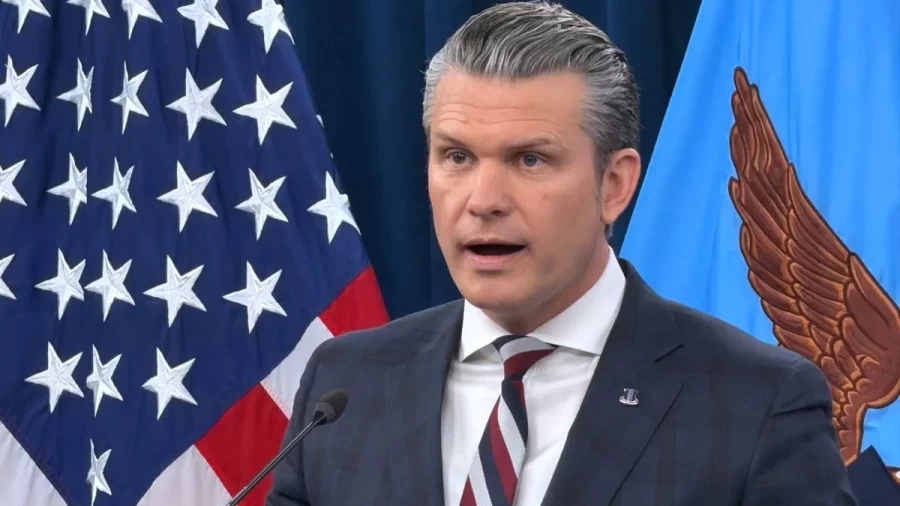
In a significant briefing at the Pentagon, US Defense Secretary Pete Hegseth announced that the United States military is prepared to launch a massive 'package strike' against Iran. This operation is part of the ongoing 'Operation Epic Fury,' which aims to dismantle Iran's strategic military capabilities. Hegseth asserted that the United States is winning the conflict on its own terms, emphasizing that the military's capacity to strike is increasing daily while Iran's ability to resist or retaliate is Notably diminishing. The Defense Secretary described the upcoming strikes as a decisive move to ensure regional and global security.
Operation Epic Fury and Strategic Military Objectives
Defense Secretary Pete Hegseth detailed the scale of the military campaign, stating that US forces have already targeted and neutralized more than 7,000 objectives within Iran. These targets include critical military infrastructure, missile storage facilities, and drone manufacturing units, while hegseth characterized the campaign as the use of 'heavy force with precision,' aimed at systematically hunting down and destroying threats. He noted that the 'package strikes' scheduled for tonight are designed to be even more impactful than previous operations, reinforcing the US military's dominance in the theater of war.
National Security and the Nuclear Proliferation Threat
During the briefing, Hegseth shared a personal anecdote involving his 13-year-old son to illustrate the necessity of the current military action. He stated that the sacrifices made by American service members are intended to prevent future generations from dealing with a nuclear-armed Iran. Hegseth emphasized that the Trump administration won't tolerate any regime that moves toward nuclear weapon capabilities. He criticized the Iranian leadership for diverting decades of state resources toward missiles, drones, and proxy groups instead of investing in the welfare of its citizens, justifying the methodical destruction of these military assets.
Regional Alliances and Gulf Nation Cooperation
Addressing the geopolitical landscape, Hegseth praised the support received from Gulf nations. He noted that Iran's aggressive actions against civilian infrastructure have unified regional partners with the United States. The Defense Secretary specifically acknowledged the cooperation of the United Arab Emirates (UAE), Qatar, Bahrain, Kuwait, and Saudi Arabia. He stated that these nations are standing alongside the US to defend against Iranian aggression. Hegseth further pointed out that Iran has historically provided sanctuary to various extremist groups, regardless of sectarian divides, posing a continuous threat to American interests in Iraq, Afghanistan, and beyond.
Military Funding and Operational Timeline
Regarding the financial aspects of the campaign, Hegseth mentioned a figure of approximately $200 billion, noting that significant funding is required to eliminate high-level threats and sustain long-term security operations. When questioned about the timeline for the conclusion of hostilities, Hegseth clarified that there is no fixed deadline. He stated that the decision rests with President Donald Trump to determine when the objectives for American security have been sufficiently met. Hegseth maintained that the military is 'completely on track' and will continue its operations until a decisive outcome is achieved.
Media Relations and Political Context
Hegseth concluded the briefing by addressing the role of the press and the domestic political environment. He accused certain segments of the media of harboring 'Trump Derangement Syndrome' (TDS) and wishing for the administration's failure. According to Hegseth, some outlets consistently downplay military progress and exaggerate costs to undermine the administration's efforts. Despite this, he expressed confidence that the American public recognizes the successes of the campaign. He called on international allies and the domestic press to acknowledge the strategic gains made under President Trump's leadership in the Middle East.
