

- India,
- 24-Feb-2026 10:23 AM IST


The United States government has officially terminated the collection of emergency tariffs previously imposed by President Donald Trump. This action follows a landmark ruling by the US Supreme Court, which deemed the use of the International Emergency Economic Powers Act (IEEPA) for such broad trade measures as unlawful, while uS Customs and Border Protection (CBP) confirmed in a statement that the cessation of these duties took effect at 12:01 AM Tuesday. The agency has instructed importers to remove all associated tariff codes from their cargo systems to align with the judicial mandate.
Financial Implications and Potential $175 Billion Refund
According to data from economists at the Penn Wharton Budget Model, the court's decision carries significant fiscal consequences for the US Treasury. 75 lakh crore) collected under the now-invalidated emergency measures. Reports from Reuters indicate that these IEEPA-based tariffs were generating over $500 million (₹4,500 crore) in daily revenue. With the tariffs struck down, corporations and trade entities are expected to initiate legal proceedings to recover the duties paid since the implementation of the emergency executive orders.
Presidential Response and Claims of Expanded Authority
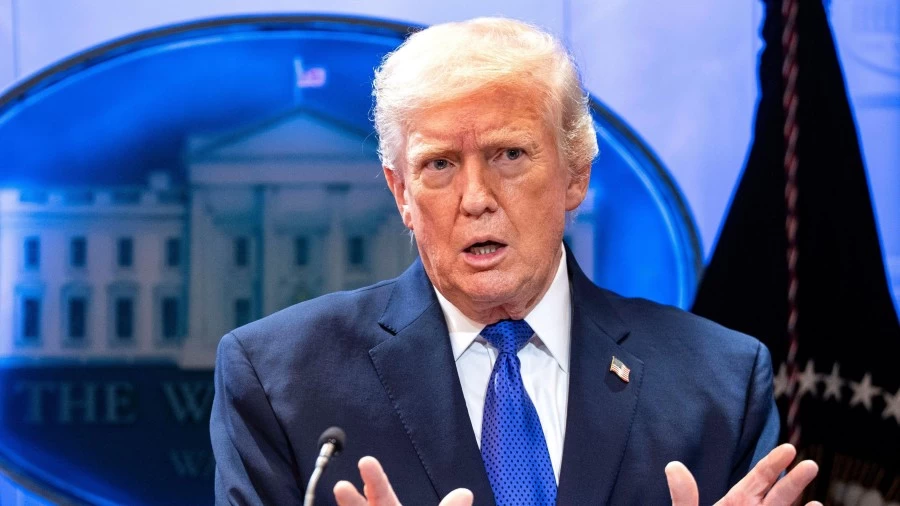
President Donald Trump responded to the judicial setback by asserting that the ruling inadvertently strengthens his executive position. Posting on his social media platform, Truth Social, the President criticized the court's decision as 'foolish' and stated that he would now work with other legal avenues with greater intensity. He warned that any nation attempting to exploit trade deals would face even higher tariffs. Trump emphasized that the ruling clarified his authority under alternative statutes, suggesting that he could employ licensing requirements and other regulatory tools to achieve his trade objectives against foreign competitors.
Distinction Between IEEPA and Sections 232 and 301
The suspension of tariff collection is strictly limited to those duties imposed under the 1977 IEEPA law. Other trade measures, specifically those enacted under Section 232 for national security and Section 301 for unfair trade practices, remain fully operational. Section 232, part of the 1962 Trade Expansion Act, allows for tariffs on goods like steel and aluminum if they're deemed a threat to domestic industry and security. Similarly, Section 301 of the 1974 Trade Act remains the primary tool for addressing intellectual property theft and discriminatory trade policies, particularly concerning imports from China.
Implementation of the New 15% Global Tariff
In the immediate aftermath of the Supreme Court ruling, the Trump administration announced a new 15% global tariff under Section 122 of the US trade law. This new duty applies to nearly all imported goods, including those from India. For Indian exporters, this marks another shift in the volatile trade landscape; tariffs on Indian goods have fluctuated Importantly over the past year, moving from highs of 50% down to 18%, and now settling at the 15% global baseline. Under Section 122, this tariff can remain in place for up to 150 days, after which congressional approval is required for any further extension.
Technical Directives for Importers and Cargo Systems
CBP has issued specific technical guidance to the trade community to ensure a smooth transition following the halt of emergency tariff collections. The agency is currently updating its automated cargo environments to reflect the removal of IEEPA-related codes. However, the department has not yet provided a definitive timeline for the processing of refunds or addressed the status of tariffs collected in the three-day window between the court's ruling and the official cessation of collection. CBP stated it would continue to communicate further updates through official trade messaging channels as the situation evolves.
