

- India,
- 24-Feb-2026 10:29 AM IST


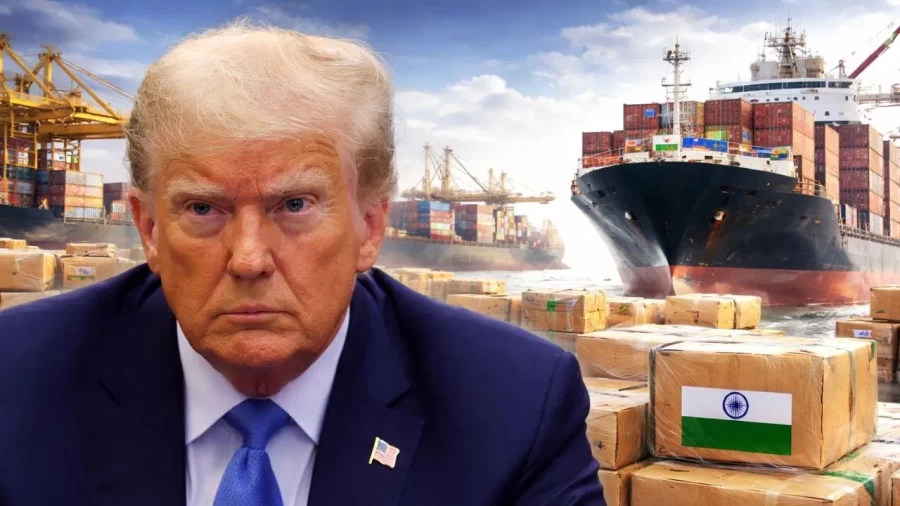
Indian exporters have temporarily suspended shipments to the United States following a period of intense volatility in US trade policy. Major sectors including textiles, gems and jewelry, and seafood have halted their supply chains as they navigate the implications of a newly announced 15% global tariff by President Donald Trump. The decision to pause operations reflects a cautious approach by Indian businesses who are waiting for official clarity on the new duty structures and trade regulations before committing to further shipments.
Legal Shifts and the Implementation of Section 122
The current trade disruption was triggered by a US Supreme Court ruling that struck down tariffs previously imposed under the International Emergency Economic Powers Act (IEEPA). This judicial decision effectively invalidated the legal basis for several existing trade agreements, while in a swift response, President Donald Trump invoked Section 122 of the Trade Act of 1974 to implement a new global tariff. While the initial rate was discussed at 10%, it was subsequently increased to 15% within a short timeframe. This rapid shift in policy has created a vacuum of information regarding the exact application of these duties at US ports of entry.
Impact on Seafood and Shrimp Export Operations
The seafood industry, particularly shrimp exports, faces a significant challenge due to this uncertainty. According to the Seafood Exporters Association of India, shrimp exporters have hit the brakes on shipments following instructions from US-based buyers. 4 billion in the last fiscal year. Exporters are currently monitoring the US Customs and Border Protection (CBP) website for official updates. Without a clear directive on the applicable duty rates, suppliers are concerned about the financial viability of goods currently in transit.
Gems and Jewelry Sector Suspends Supply for One Week
The gems and jewelry sector, which contributes nearly $10 billion in annual exports to the US, has also opted for a strategic pause. Industry representatives have indicated that shipments will remain suspended for at least one week as the market assesses the impact of the 15% tariff. While India maintains a dominant position in the global diamond export market, the lack of regulatory clarity has forced traders to adopt a wait-and-watch policy. Exporters believe that while the industry can eventually adapt to stable rates, the current state of flux makes it impossible to finalize pricing and delivery schedules with American retailers.
Challenges for the Textile Industry and Trade Benefits
The textile and apparel sector is witnessing a similar trend of caution. According to the Clothing Manufacturers Association of India, the new tariff rates have largely neutralized the competitive advantage that Indian exporters expected from recent trade discussions. Industry experts noted that while businesses can operate under difficult conditions, they can't function effectively amidst total uncertainty, while the 15% tariff has placed Indian exporters on the same footing as other global competitors, erasing previous preferential expectations and forcing a complete recalculation of profit margins and supply chain costs.
Awaiting Clarification from US Customs and Border Protection
The immediate future of Indian exports to the US now depends on the official clarification expected from the US Customs and Border Protection (CBP). Trade bodies have advised members to keep shipments at domestic ports until the CBP portal reflects the updated duty structures. There is a prevailing fear among the exporting community that goods arriving at US borders without clear documentation on the new tariffs could face delays or unexpected financial penalties. Indian government officials and export promotion councils are reportedly in communication with their US counterparts to seek a definitive timeline for the implementation of the new rules.
