
- India,
- 06-Jun-2026 08:52 AM IST



The geopolitical landscape in the Middle East has taken a volatile turn as tensions between the United States and Iran escalate following a series of military exchanges. The United States military has officially claimed that Iran dispatched 4 offensive drones toward the strategically vital Strait of Hormuz. In a swift response to what was perceived as an immediate threat to maritime security, the American forces intercepted and shot down all 4 unmanned aerial vehicles. This incident has triggered a chain of retaliatory actions, Importantly heightening the risk of a broader conflict in the Gulf region.
US Military Action and Radar Strikes
Following the destruction of the Iranian drones, the United States military didn't stop its operations. In a targeted move to degrade Iran's surveillance capabilities, American forces launched strikes against coastal radar installations located on Goruk and Qeshm islands. These islands serve as critical points for Iran's monitoring of the Strait of Hormuz. The US Central Command, known as CENTCOM, provided details of these operations through a formal statement, while according to CENTCOM, the 4 one-way attack drones were moving directly toward the Strait of Hormuz and posed a clear and present danger to the movement of international shipping vessels in the area.
The decision to neutralize the drones was based on the assessment that they represented an immediate threat to maritime traffic, while by destroying these drones in transit and subsequently targeting the coastal surveillance radar centers on Goruk and Qeshm, the US military aimed to prevent further escalations and protect the free flow of commerce. CENTCOM emphasized its readiness to respond to any further aggressive actions from Iran, stating that its personnel in the region remain on high alert to safeguard interests and maintain stability.
Iran Retaliates Against Kuwait and Bahrain
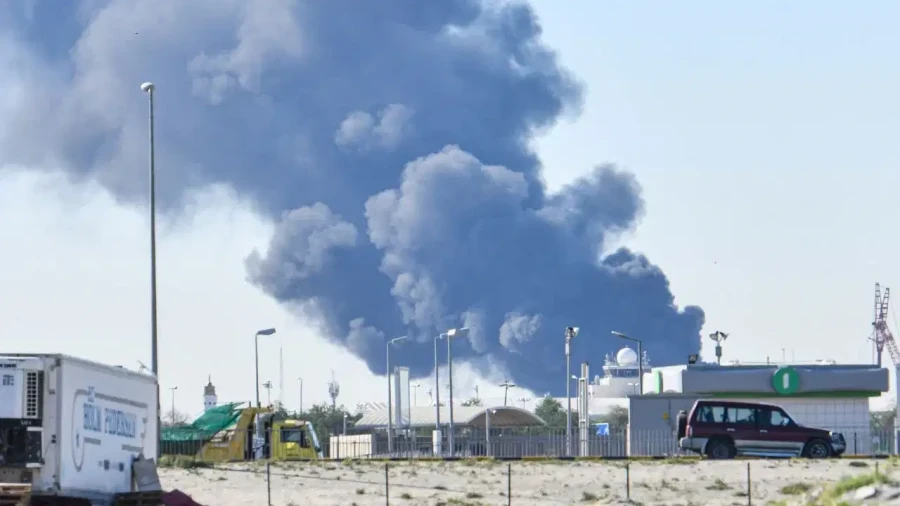
The Iranian response to the American military action was swift and expanded the scope of the conflict to neighboring nations. Expressing deep anger over the US strikes on its radar facilities, Iran launched a series of missile attacks targeting Kuwait and Bahrain. Reports indicate that more than 12 missiles were fired toward these two countries, causing widespread alarm. The sudden nature of these attacks has forced the military leadership in both Kuwait and Bahrain to issue urgent advisories to their citizens. The respective armies have urged people to remain indoors, exercise extreme caution, and follow safety protocols as the situation remains unpredictable.
Statements from CENTCOM and Iranian Media
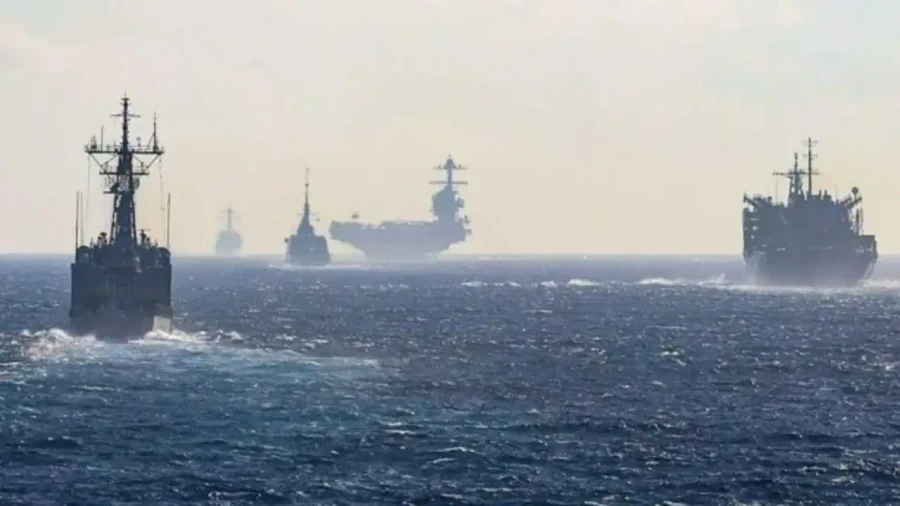
CENTCOM utilized the social media platform X to communicate the gravity of the situation. In their statement, they reiterated that the 4 Iranian one-way attack drones were shot down because they were a direct threat to regional maritime traffic. The subsequent action against the radar sites was described as a necessary measure to deter future attacks. On the other side, Iranian state-affiliated media has also confirmed military activities around the Strait of Hormuz, while the semi-official Mehr news agency reported that Iranian forces conducted several warning shots in the waters near the waterway on Saturday. According to the report, these warning shots were a direct response to the activities and new deployments of US Navy ships in the vicinity.
The current situation underscores the fragile nature of the relationship between Washington and Tehran, while while diplomatic channels and efforts to de-escalate are reportedly ongoing, the ground reality in the Gulf region remains extremely sensitive. The exchange of drone interceptions, radar strikes, and missile attacks on third-party nations like Kuwait and Bahrain indicates that any minor incident could potentially lead to a much larger confrontation, while both sides remain in a state of high military readiness as the international community watches the developments with concern.