

- India,
- 06-Mar-2026 02:54 PM IST


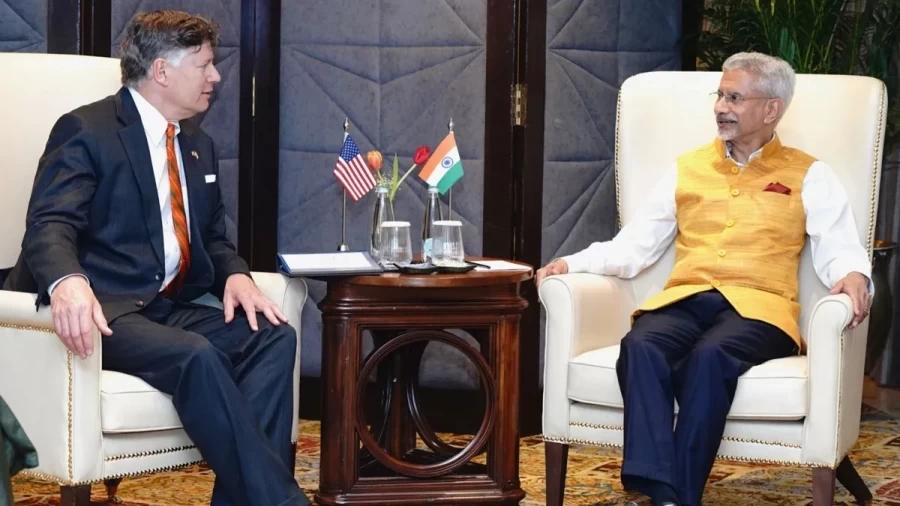
US Deputy Secretary of State Christopher Landau delivered a significant message regarding the ongoing trade negotiations between India and the United States during the Raisina Dialogue 2026 in New Delhi. According to Landau, Washington is committed to strengthening its economic ties with India but will maintain its national interests and the welfare of American citizens as its highest priority. He stated that the US doesn't intend to repeat the trade policy mistakes made with China two decades ago, ensuring that any future agreement is equitable and balanced for both nations. Landau emphasized that the US administration remains accountable to its citizens, just as the Indian government is to its own people.
Learning from Historical Trade Mistakes with China
During his address, Christopher Landau referenced the historical trade relationship between the US and China as a cautionary tale. He noted that Washington is now more vigilant in ensuring that the proposed Bilateral Trade Agreement (BTA) with India provides long-term benefits to the American economy. According to Landau, certain gaps in the agreements made with China 20 years ago had adverse effects on American workers. He clarified that the current administration is focused on ensuring that the BTA with India is built on the principles of reciprocity and fairness. This approach aims to create a sustainable economic framework that avoids the imbalances seen in previous international trade deals.
Redefining 'America First' as a Balanced Partnership
Landau addressed the 'America First' policy, clarifying that it doesn't signify global isolationism, while instead, he explained that the policy focuses on building win-win collaborations with key partners like India. ' He argued that strengthening relationships with countries that align with US economic and strategic interests is a core component of this objective. By identifying India as a vital partner, Landau suggested that mutual cooperation is the most effective way to achieve shared goals in the 21st century, moving away from unilateralism toward balanced bilateralism.
Current Status of the Trade Agreement and Tariff Reductions
The proposed US-India Bilateral Trade Agreement is reportedly nearing its final stages. Landau revealed that the negotiations are close to the 'finish line,' following the interim framework established in February 2026 during a meeting between President Donald Trump and Prime Minister Narendra Modi. This framework includes significant proposals for reciprocal tariff reductions, while for instance, discussions have involved lowering tariffs on certain Indian goods from 50% to approximately 18%. According to Landau, this agreement is expected to enhance market access and unlock vast potential for economic cooperation, marking a major milestone in the financial relationship between the two largest democracies.
India's Global Rise in the 21st Century
The US Deputy Secretary of State praised India's growing global influence, describing its rise as the most significant story of the 21st century. He noted that India's role in shaping global politics and the economy will be decisive in the coming decades. According to Landau, India's demographic advantages, economic potential, and vast resources position it as one of the most influential nations in the world, while he expressed confidence that the current century belongs to India and stated that the US is prepared to support India's developmental trajectory through deep-rooted strategic and economic engagement.
Strategic Cooperation in Energy and Defense Sectors
Amidst ongoing tensions in the Middle East, Landau highlighted the importance of energy security and positioned the US as a reliable alternative source for India's energy needs. According to Landau, the US is committed to deepening cooperation in critical sectors such as defense, energy, critical minerals, and Indo-Pacific security. He emphasized that these initiatives are in the mutual interest of both Washington and New Delhi. This strategic alignment is seen as a move to build not only economic prosperity but also a foundation of strategic trust that can withstand regional and global geopolitical shifts.
