

- India,
- 27-Apr-2026 02:18 PM IST


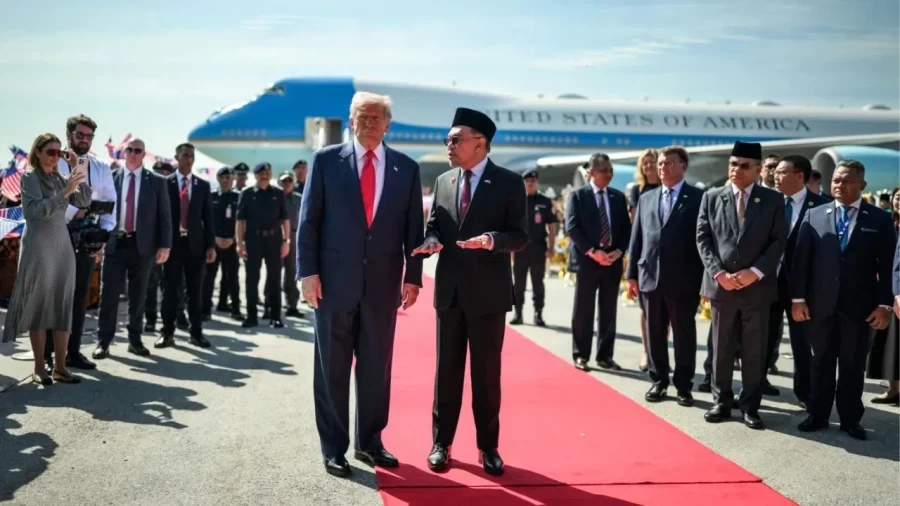
The United States has secured a new strategic partner in Asia for rare earth materials as Malaysia accelerates its processing capabilities. S. has entered into a preliminary agreement worth approximately $1 billion with Malaysia. This partnership is aimed at securing a stable supply of rare earth materials, which are critical for the Pentagon's production of advanced weaponry and defense systems.
Pentagon's $1 Billion Preliminary Agreement
According to a report by the Wall Street Journal, the Pentagon has finalized a preliminary deal with Malaysia valued at nearly $1 billion. These funds are designated for the extraction and further development of rare earth resources within Malaysia. S, while military's requirements for high-tech components are met without over-reliance on adversarial supply chains.
Malaysia's Emergence as a Key Global Player
The discovery of substantial rare earth deposits near Kuantan has positioned Malaysia as a vital player in the global market, while to facilitate the extraction process, Malaysia has partnered with an Australian firm. This company will manage the extraction and conduct surveys to identify additional deposits across the region. 7 lakh tons. Estimates suggest that Malaysia's total rare earth potential could range between 15 to 20 lakh tons.
Strategic Importance for Defense and Weaponry
S. has surged, particularly following regional conflicts like the Iran war. These materials are indispensable for manufacturing missiles, radar systems, and air defense mechanisms. S. has relied heavily on Chinese imports for these components. S. aims to build a resilient supply chain that supports its national security interests and technological advancement in the defense sector.
Breaking China's 90 Percent Market Monopoly
China currently maintains a near-monopoly on the global rare earth market, controlling approximately 90 percent of the total supply. S. strategy involves establishing Malaysia as a competitive alternative to break this dominance. Malaysia has committed to increasing its processing capacity to handle the large-scale extraction of these materials. This shift is expected to alter the geopolitical landscape of resource management in Asia.
S. and Malaysia represents a pivotal step in diversifying the global supply of critical minerals. S. with a necessary alternative to Chinese exports, ensuring the continued development of essential military technologies.
