

- India,
- 12-Dec-2025 02:18 PM IST


Geopolitical tensions between the United States and Venezuela have reached a critical juncture following the seizure of a Venezuelan oil tanker by the US Navy in the Caribbean Sea. This incident has Notably exacerbated the already strained relations between the two nations. While US President Donald Trump hailed the action as a major victory, Venezuelan President Nicolas Maduro vehemently condemned it as a blatant violation of sovereignty and an act of 'robbery' by the United States, while amidst this escalating crisis, Russian President Vladimir Putin has intervened, calling Maduro to express full support, a move that has sent ripples across the international stage and caused considerable unease within the Trump administration. The US Navy executed a commando operation in the Caribbean Sea two days prior, seizing a Venezuelan oil tanker. This action represents the latest strategy by the Trump administration to exert pressure on President Maduro, while president Trump publicly declared the seizure a significant triumph, framing it as a successful outcome of his administration's policies. In stark contrast, President Maduro denounced the act as a severe infringement on Venezuela's sovereignty and an 'act of international maritime piracy, while ' This incident has intensified the already heightened tensions between the two countries manifold, raising concerns about regional instability. The Venezuelan government explicitly labeled the seizure as 'open theft,' asserting it violated international law.
Putin's Intervention and Support for Maduro
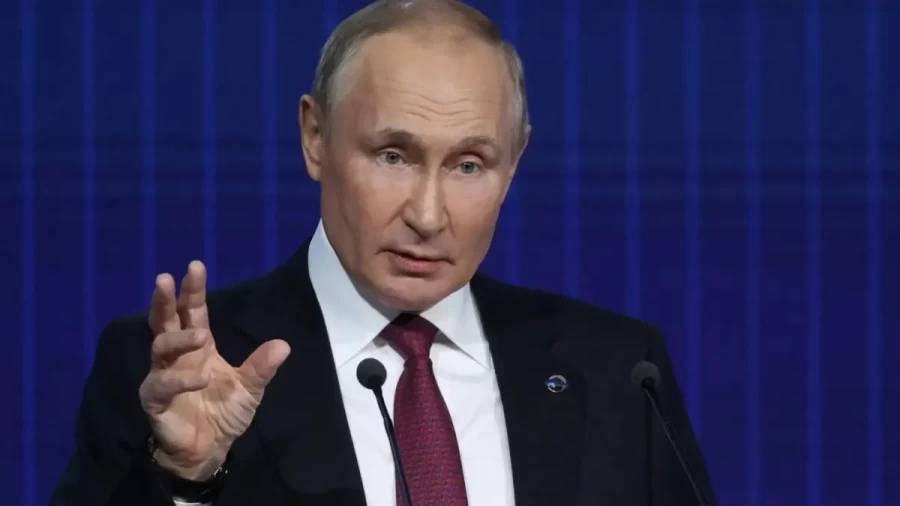
Russian President Vladimir Putin engaged in a phone conversation with Venezuelan leader Nicolas Maduro on Thursday, during which he conveyed “solidarity with the Venezuelan people. ” According to a statement released by the Kremlin, Putin reiterated his support for Maduro's policies aimed at “defending national interests and sovereignty in the face of growing external pressure. ” This crucial call came shortly after US forces seized the oil tanker off the Venezuelan. Coast, which was perceived as the Trump administration's latest tactic to increase pressure on the Maduro government. Putin's intervention clearly signals Russia's opposition to perceived US interference in Venezuela's internal affairs and its commitment to providing international backing to the Maduro administration.
US Accusations of Narco-Terrorism
The United States has leveled serious accusations of narco-terrorism against President Maduro. During testimony before Congress on Thursday, Homeland Security Secretary Kristi Noem directly linked the vessel's seizure to the Trump administration's broader anti-drug campaign in the region. The US has Importantly increased its military presence in the area, marking its largest deployment. In decades, and has conducted what it describes as lethal attacks on suspected drug-trafficking boats. However, Maduro has vehemently denied these allegations, asserting that the true objective of US military operations is to oust him from power. The Venezuelan government has characterized the tanker seizure as an “open act of theft and international maritime piracy,” arguing it constitutes a direct violation of Venezuela's sovereignty.
Russia's Unwavering Support and Historical Ties
The Venezuelan government stated that during the call, Putin reiterated his “absolute support” for Maduro. The statement further indicated that Putin assured Maduro that “direct communication will always remain open” between Moscow and Caracas, and that Russia would continue to support Venezuela in its “fight for its sovereignty, international law, and the establishment of peace throughout Latin America. ” Like his predecessor, the late President Hugo Chávez, Maduro has cultivated close ties with Russia. Russia has provided Venezuela with assistance ranging from COVID-19 vaccines to cryptocurrency design. Historically, Russia has extended significant aid to Venezuela on multiple occasions, while in 2018, amidst peak tensions with the US, Russia deployed two nuclear-capable Tu-160 bombers to an airport outside the Venezuelan capital. Last year, two Russian naval ships docked at Venezuela's La Guaira port after exercises in the Atlantic Ocean, an event Moscow described as “showing the flag in remote important areas.
Belarus's Role in Diplomatic Engagements
Meanwhile, diplomatic activities in support of Venezuela have also been observed in Belarus. President Alexander Lukashenka, an ally of Putin, met for a second time on Thursday with Jesus Rafael Salazar Velasquez, Venezuela's ambassador to Russia. While details of their discussion weren't disclosed, Belarus's state news agency, BelTA, quoted Lukashenka saying that the ambassador was to discuss “some issues” with Maduro following their initial meeting on November 25, and then return to Belarus for “some decision, while ” During the November meeting, Lukashenka had extended an invitation to Maduro to visit Belarus and expressed his own intention to visit Venezuela. This indicates a broader diplomatic effort to garner international support for Venezuela, involving Russia's allied nations. So, to wrap up, the escalating tensions between Venezuela and the United States, coupled with Russia's direct intervention and the diplomatic engagement of other nations, signal a significant shift in global geopolitics. This series of events underscores the intricate nature of international relations and the increasing confrontation among various global powers.
