

- India,
- 11-Dec-2025 09:29 AM IST


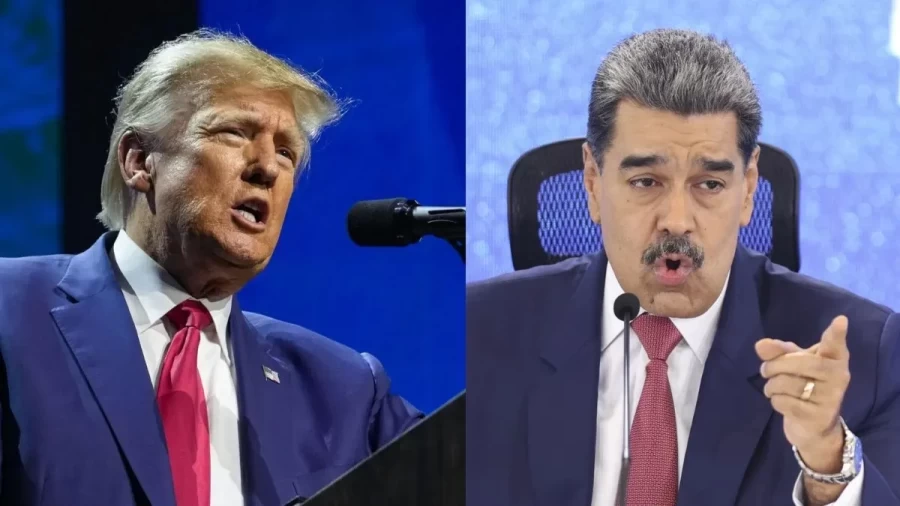
Relations between the United States and Venezuela have deteriorated sharply, pushing the two nations to the brink of a potential conflict. The recent announcement by US President Donald Trump regarding the seizure of a Venezuelan oil tanker near its coast has ignited a furious response from Caracas. This incident marks a significant escalation in the long-standing animosity between the two countries, particularly since the US accused Venezuelan President Nicolas Maduro of 'narco-terrorism.
US Action and Increased Military Presence
US President Donald Trump announced on Wednesday at the White House that the United States had seized an oil tanker off the coast of Venezuela, while he described it as 'a big tanker, very big, actually the biggest ever seized,' though he didn't provide additional details about the operation. This move is the latest in the Trump administration's efforts to increase pressure on the Maduro government. The use of US forces to take control of a commercial vessel is highly unusual and comes amidst a significant increase in American military presence in the region. The US has deployed its largest military presence in the Caribbean Sea in decades, aiming to exert pressure on Venezuela. On top of that, US forces have carried out a series of 'deadly strikes' on. Alleged drug trafficking boats in the Caribbean Sea and the Eastern Pacific Ocean.
Commando Operation to Seize the Tanker
The seizure of the oil tanker involved a sophisticated commando operation. An anonymous US official stated that the action was carried out under US law enforcement authority. Members of the Coast Guard were transported by helicopter from the aircraft carrier USS Gerald R. Ford to the oil tanker to take control. The USS Gerald R, while ford has been in the Caribbean Sea, joining a fleet of other warships, following a major show of force last month. Videos posted on social media by Attorney General Pam Bondi showed individuals rapidly rappelling down ropes from a helicopter hovering a few feet above the deck of one of the vessels involved in the operation. The video later showed Coast Guard members, with their weapons drawn, moving through the ship's superstructure. Bondi stated that the oil tanker had been sanctioned by the United States for many years due to its involvement in an illegal oil shipping network that supported foreign terrorist organizations.
Venezuela's Strong Condemnation and Accusations
The Venezuelan government reacted strongly to the US action. In a statement, Venezuela denounced the seizure as 'an act of outright theft and international maritime piracy. ' The Venezuelan government asserted that under these circumstances, the true reasons for the long-standing aggression against Venezuela have finally been revealed. They emphasized that it has always been about their natural resources, their oil, their energy, and the exclusive wealth of the Venezuelan people. US officials identified the seized tanker as the 'Skimmer,' previously known as the 'M/T Adessa. ' According to ship tracking data, the vessel departed Venezuela around December 2nd with approximately 2 million barrels of heavy crude oil, about half of which was destined for Cuba's state-managed oil importer, PDVSA (Petróleos de Venezuela SA).
Tanker's History and Sanctions Network
The seized tanker, now identified as the Skimmer, was previously known as the M/T Adessa, while the Adessa was sanctioned by the US in 2022 on allegations of being part of a sophisticated network of 'shadow tankers' involved in smuggling crude oil on behalf of Iran's Revolutionary Guard and the Lebanese Hezbollah militant group. The US Treasury Department stated at the time that the network was allegedly operated by a Switzerland-based Ukrainian oil trader. This seizure represents another blow to Venezuela's sanctioned oil business, while venezuela possesses the world's largest proven oil reserves and produces approximately 1 million barrels per day. PDVSA, the state-owned oil company, is the backbone of Venezuela's economy.
Impact of US Sanctions and Venezuelan Response
In 2020, when the first Trump administration expanded its 'maximum-pressure campaign' on Venezuela, imposing sanctions that threatened to cut. Off any individual or company doing business with the Maduro government from the US economy, Venezuela's reliance on intermediaries increased. Old allies like Russia and Iran have helped Venezuela circumvent these sanctions. These transactions typically involve complex networks of shadowy intermediaries, including numerous shell companies registered in jurisdictions known for their secrecy, while venezuelan President Nicolas Maduro has expressed outrage over the US action. In a statement, he declared that the country is 'ready to break the teeth of the North American empire if necessary. ' Meanwhile, the US alleges that buyers use so-called 'ghost tankers' that conceal their locations. And offload their valuable cargo in the middle of the ocean before reaching their final destination.
Rising Military Tensions and Future Prospects
Maduro didn't directly mention the seizure in a speech before a demonstration organized by the ruling party in Caracas, Venezuela's capital, but he insisted that the real objective of US military operations is to remove him from power, and That's why, he's also 'ready to break teeth. ' The seizure of the oil tanker occurred on the same day that the US military flew a pair of fighter jets over the Gulf of Venezuela, which appeared to be the closest approach of combat aircraft to the South American nation's airspace. Trump has threatened that ground attacks are imminent, though he didn't provide further details, while democrats, meanwhile, have criticized Trump's actions. This development is escalating the possibility of military confrontation between the two nations, which could have serious implications for regional stability.
BREAKING:
— Visegrád 24 (@visegrad24) December 10, 2025
U.S. soldiers have stormed and seized a sanctioned oil tanker off the Venezuelan coast.
It was used to transport sanctioned Venezuelan and Iranian oil. Trump says that the U.S. will keep the oil from the seized tanker. pic.twitter.com/5mRu9QkNw7
