
- India,
- 04-Nov-2026 09:02 PM IST



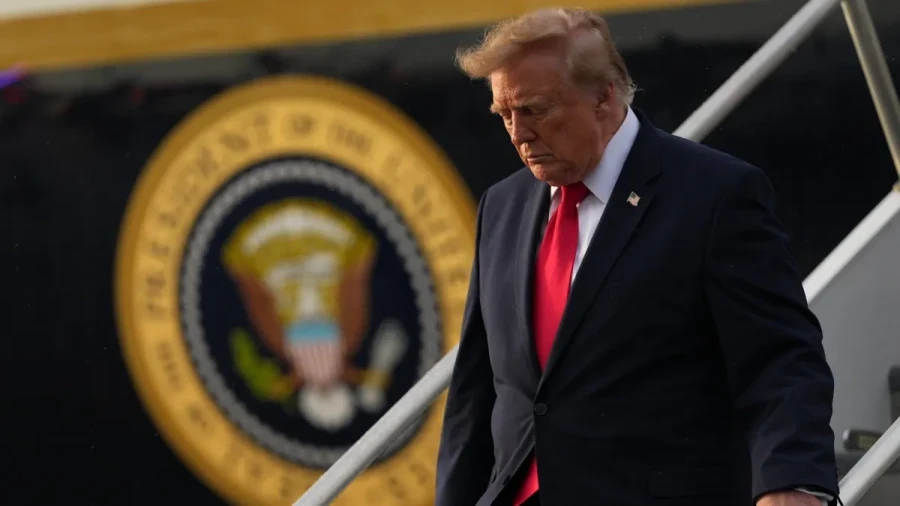
Midterm elections have concluded in the United States, resulting in a heavy defeat for incumbent President Donald Trump. The Republican Party has lost the midterm elections, while the Democrats have achieved a resounding victory. Midterms are held precisely midway through a four-year presidential term, marking the completion of two years, while the election process in the US is entirely distinct. Presidential votes aren't cast in these elections since the president's four-year term is already underway. Under the US election structure, midterm elections take place for both chambers of the parliament, known as Congress. This includes the House of Representatives, the lower chamber, where all four hundred and thirty-five seats face election because members serve two-year terms. Conversely, voting also occurs for the Senate, the upper chamber. Senate members serve six-year terms, with approximately one-third, roughly thirty-three to thirty-five seats, contested every two years.
Local elections and gubernatorial roles
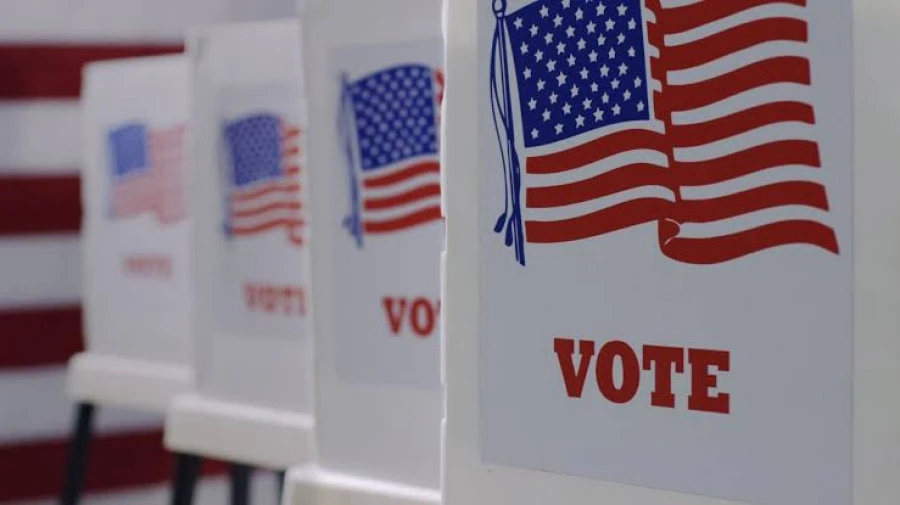
In numerous states, numbering around thirty-six, gubernatorial and local body elections are held simultaneously, while these elections serve as a public report card on the sitting president's performance during their initial two years in office. If the president's party loses its majority, passing new legislation becomes Notably more challenging for the administration. The US electoral system differs markedly from India. Unlike India, the US doesn't use Electronic Voting Machines. Instead, American citizens primarily cast their votes on paper ballots, and these ballots are tallied using electronic scanner machines. Vote counting across the United States doesn't occur at a single centralized location. Election administration rests entirely with local authorities, including counties, cities, and towns. Across the country, more than ten thousand local electoral jurisdictions deploy local teams and machines to conduct independent counts simultaneously.
The voting and counting mechanism
Voters fill in the oval or box next to their preferred candidate's name on a paper ballot using a pen. Subsequently, the ballot paper is inserted into an electronic scanner machine, which reads the markings and records the vote for the candidate. Large counting centers use high-speed machines capable of scanning thousands of ballots per hour. In certain smaller or specialized regions, manual hand counting of votes still takes place. In-person votes cast at polling stations on election day are counted first. These are followed by ballots cast prior to election day and mail-in ballots. Mail-in ballots require additional time for signature verification and authentication, while if any doubt arises regarding a voter's eligibility, a provisional ballot is issued, which is counted only after eligibility is confirmed. Machines used for vote counting are never connected to the internet to eliminate any risk of hacking, and specialized seals protect the security of these devices. Observers from both major political parties, the Democratic and Republican parties, remain present in counting rooms to maintain transparency. Original paper ballots are preserved so they can be re-examined during disputes, audits, or recounts.
Reasons for retaining paper ballots
Following the conclusion of voting, local election officials meticulously examine each ballot to ensure the total number of counted votes matches the total number of participating voters. Upon completion of local reviews, the state Secretary of State or State Canvassing Board officially certifies the results, a process ranging from several days to weeks depending on state regulations. Even within a technologically advanced superpower, paper ballots remain the primary voting method to guarantee security, transparency, and reliable audit trails, while currently, approximately ninety-eight percent of American voters cast their ballots using some form of paper ballot or verifiable paper trail. Cybersecurity experts and election officials maintain that computer software or electronic voting machines can potentially be hacked remotely or through altered coding. Conversely, a pen mark on paper can't be altered or deleted by cyberattacks or viruses originating from remote locations, making paper ballots entirely unhackable. In the event of election disputes, fraud allegations, or legal challenges, officials can manually recount physical paper ballots, while nearly all states mandate random audits where a percentage of paper ballots counted by electronic scanners are manually hand-counted to prove machine accuracy. The historical two thousand Bush versus Gore dispute in Florida, where punch-card ballots caused widespread confusion, and allegations of foreign interference in the two thousand sixteen election, prompted the transition away from purely digital systems. Also, since election day in the US falls on a Tuesday without a national holiday, millions vote weeks in advance through mail-in absentee ballots, making paper ballots legally and practically essential, while ultimately, the US election model operates on a hybrid principle of paper for voting and technology for counting, ensuring maximum security.