

- India,
- 13-Apr-2026 07:38 AM IST


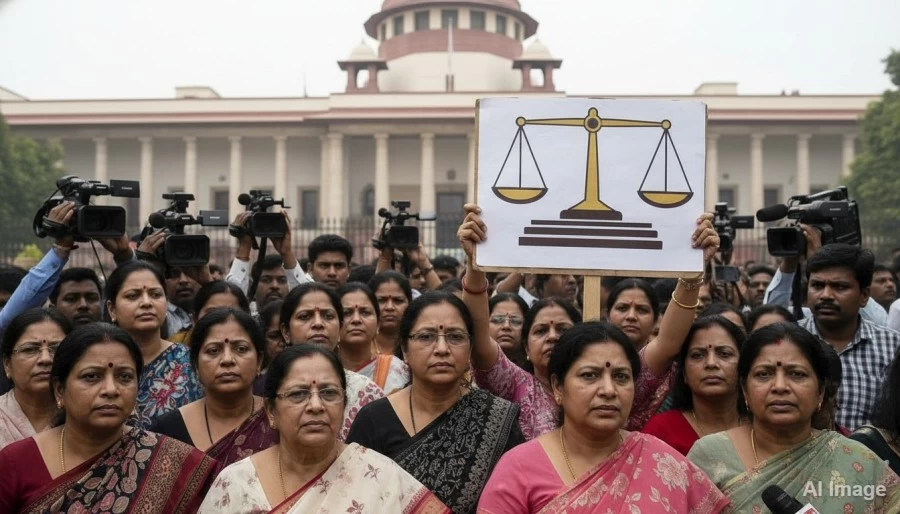
The Supreme Court of India is scheduled to hear a significant petition today, Monday, 13 April, regarding the implementation of the Nari Shakti Vandan Adhiniyam, which mandates 33% reservation for women in the Lok Sabha and state legislative assemblies. The petition, filed by Congress leader Jaya Thakur, seeks a judicial intervention to bypass the current statutory requirements of conducting a national census and a subsequent delimitation exercise before the law takes effect.
Details of the Legal Challenge
The petitioner, Jaya Thakur, has argued that the implementation of the women's reservation shouldn't be contingent upon the completion of the census and the delimitation process. According to the petition, since the number of seats in the legislatures is already fixed, there is no immediate necessity to wait for these administrative procedures, while the plea emphasizes that women constitute nearly half of the national population and remain Importantly underrepresented in legislative bodies, necessitating urgent action.
The Current Statutory Framework
Under the existing provisions of the Nari Shakti Vandan Adhiniyam, the 33% reservation is slated to be implemented only after the first census following the commencement of the Act is published, followed by a delimitation exercise to earmark specific seats for women. This timeline has been a point of contention among various political entities and activists who argue that such conditions could delay the actual rollout of the reservation for several years, potentially missing the upcoming electoral cycles.
The Judicial Bench and Previous Observations
A bench comprising Justice BV Nagarathna and Justice Ujjal Bhuyan will preside over the hearing, while in previous proceedings related to this matter in 2023, the Supreme Court had noted the complexity of striking down specific provisions of a duly passed law. The current hearing is viewed as critical as it coincides with the lead-up to a special session of Parliament, where the government may introduce legislative amendments or clarifications regarding the Act's implementation.
Political Developments and Special Session
Prime Minister Narendra Modi has recently communicated with leaders of various political parties, urging a consensus to ensure the smooth functioning of the reservation framework. The Prime Minister highlighted that increased female participation is essential for the nation's developmental goals. Meanwhile, the government has called for a special session of Parliament starting 16 April, which has sparked speculation about potential legislative moves to address the implementation timeline of the reservation law.
Opposition Stance and Procedural Concerns
The Indian National Congress has expressed reservations regarding the timing of the special session, citing the ongoing assembly elections in states like Tamil Nadu and West Bengal, while the party has suggested that any major legislative changes during this period could potentially conflict with the Model Code of Conduct. On top of that, the opposition has demanded a comprehensive meeting involving all political parties to discuss the delimitation process before proceeding with the implementation of the women's reservation law.
