
- India,
- 24-Jul-2026 07:42 PM IST



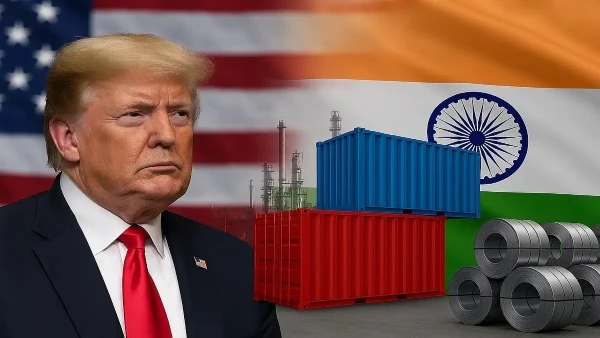
The United States government has officially announced the imposition of a 10 percent additional tariff on various goods imported from India. This significant trade action is rooted in growing concerns regarding forced labor practices within the production cycles of certain commodities. The decision follows an extensive review of the trade policies and labor standards of several international trading partners, while india has been categorized within a group of nations facing a relatively lower tariff rate of 10 percent compared to others, yet the implications for the domestic industry remain substantial.
Global Context of the Tariff Action
This new tariff regime isn't exclusive to India. The United States has extended similar measures to a wide array of countries across Asia and Latin America. Notable nations included in this list are Bangladesh, Pakistan, Sri Lanka, and even the United Kingdom, alongside several other Asian and Latin American countries. The move signals a tightening of US import regulations focused on ethical sourcing and the elimination of modern slavery from global commerce. By implementing these tariffs, the US aims to pressure trading partners to adopt more rigorous labor monitoring mechanisms.
Defining Forced Labor in International Trade
To understand the gravity of this situation, it's essential to define what constitutes forced labor. According to international standards, forced labor refers to any work or service extracted from a person under the threat of any penalty and for which the person has not offered themselves voluntarily, while if a worker wishes to leave their employment but is prevented from doing so through coercion or threats, it falls under the category of forced labor. The International Labour Organization (ILO) views such practices as a fundamental violation of human rights, where the consent of the worker isn't truly free but is obtained under pressure.
Distinguishing Low Wages from Forced Labor
It's important to note that not every job with low pay is classified as forced labor. In many developing nations, workers may receive low wages and work long hours, which is often a matter of labor rights and economic conditions rather than forced labor. For a situation to be legally defined as forced labor, there must be concrete evidence of coercion or control. For instance, if an individual voluntarily works for low pay and retains the freedom to resign at any time, it may not meet the legal threshold of forced labor. However, if the worker is threatened with non-payment, police action, violence, or the confiscation of their passport to prevent them from leaving, the situation changes into a serious legal and human rights violation.
Key Indicators of Forced Labor Practices
International monitoring agencies use several indicators to identify forced labor. These include the lack of freedom to leave the job, physical or verbal threats against the worker, and the fear of violence. Other critical signs involve the seizure of passports, identity cards, or other essential documents by the employer. Withholding wages, creating a cycle of excessive debt to bind the worker, and restricting the movement of employees are also major red flags. On top of that, charging exorbitant recruitment fees or involving children in hazardous and compulsory work are considered severe violations that bring a supply chain under suspicion.
The Trap of Debt Bondage
A common form of forced labor in international trade is debt bondage, while this often occurs when recruitment agents provide large loans to workers under the guise of securing employment abroad. Once the worker starts the job, they're informed that they can't leave until the debt is fully repaid. Often, a significant portion of their wages is deducted, and the debt is manipulated such that it becomes nearly impossible to clear even after years of labor. This economic trap is a primary concern for international trade regulators as it creates an environment of exploitation.
Document Seizure and Worker Freedom
In the context of migrant labor, the confiscation of passports is a major indicator of forced labor. Without their travel documents, workers find it nearly impossible to leave the country or seek alternative employment. While some companies claim to hold documents for safekeeping, international standards dictate that workers must have unrestricted access to their documents at all times, while when document retention is used to limit a worker's freedom of movement, it raises immediate alarms regarding forced labor practices.
Concerns Regarding Forced Child Labor
While child labor and forced labor are distinct issues, they're often interconnected. Not all child labor is forced, but when children are coerced into work through threats, debt, or trafficking, it represents a grave human rights violation, while the employment of children in dangerous factories, mines, farms, or illegal activities is a matter of extreme concern. When such practices are discovered within international supply chains, the accountability of both the companies involved and the host nations increases Notably.
Significance in the Global Supply Chain
In today's interconnected economy, a single product often passes through multiple countries before reaching the consumer, while for example, cotton grown in one country might be spun into yarn in another, sewn into a garment in a third, and finally exported to the US or Europe from a fourth country. This is known as the global supply chain. If forced labor is detected at any single stage of this process, the entire final product can become controversial. Buyer nations are increasingly questioning whether the rights of workers were respected throughout the entire manufacturing process.
The US Position and Section 301
The United States has long maintained a policy of restricting or taking action against imports produced with forced labor. The US argument is that such products are unfairly cheap because the workers are denied proper freedom, wages, and safety. This provides an unfair competitive advantage to companies that don't follow labor laws, while ethical companies face higher costs. Consequently, the US views forced labor as both a human rights issue and a fair trade issue. The current action against India and other nations is reportedly taken under Section 301 of the US Trade Act of 1974.
Impact on Indian Exporters and Industry
The 10 percent additional tariff is expected to make Indian goods more expensive in the American market. If the cost of products rises, US buyers may look for alternatives from other countries. Indian exporters might also face pressure to reduce their prices to remain competitive, which could Notably impact their profit margins. Sectors such as textiles, garments, leather, gems and jewelry, agricultural products, and certain engineering goods are likely to feel the impact. The actual effect will depend on the specific product, market demand, and the behavior of international buyers, while india faces the challenge of strengthening labor rights and ensuring supply chain transparency to mitigate these risks and build trust in the international market.