

- India,
- 05-Sep-2025 07:20 PM IST


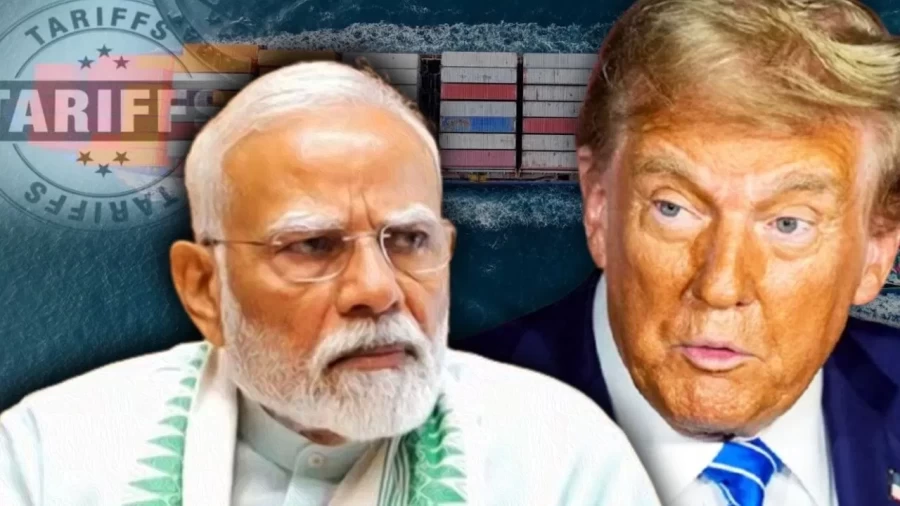
India-US Tariff War: The Indian government has recently made extensive changes in the Goods and Services Tax (GST) to provide relief to the general public. GST has been completely abolished on many products, while tax rates have been reduced on many others. This is expected to give direct economic benefits to the common people. However, now the government's focus is on another big issue - providing relief to Indian exporters affected by the 50 percent tariff imposed by US President Donald Trump. According to government sources, the central government may soon announce special schemes to help these exporters.
Impact of Trump's tariff
The US imposed a 25 percent tariff on Indian products in July 2025, which was later increased to 50 percent with an additional 25 percent tariff on the issue of oil purchases from Russia. This heavy tariff has had the greatest impact on labor-intensive sectors such as textiles, jewelry and jewelry, leather and footwear, agriculture, chemicals, engineering products, and marine exports. Exporters in these sectors are facing several challenges, such as order cancellations, payment delays, and supply disruptions. In particular, sectors such as textile and shrimp exports are expected to decline by up to 70-80%, putting millions of jobs at risk.
Government relief schemes
The Government of India has prepared a multi-pronged strategy to deal with this crisis. The government aims to not only provide immediate relief but also enhance long-term export potential. The proposed schemes include:
Solution to cash crisis: Schemes like the Emergency Credit Guarantee Scheme (ECLGS) are being considered for reintroduction to solve the cash flow problem for small and medium enterprises (MSMEs). This scheme had saved the MSME sector from bankruptcy during the Covid-19 pandemic.
Extending loan moratorium and payment timelines: Exporters are planning to extend loan repayment moratorium by up to one year and export payment timelines to ease pressure on working capital.
Exploring new markets: The government is encouraging exporters to increase exports to new markets such as Europe, Latin America, the Middle East, and China to reduce dependence on the US market. For this, more than 40 countries have been targeted, where demand for Indian products can be increased.
Export Promotion Mission: The government has announced an Export Promotion Mission (EPM) of ₹25,000 crore for 2025-2031. The mission aims to increase India's competitiveness in global trade and ensure the presence of Indian products in new markets.
E-commerce export hubs: The government is setting up new hubs to promote e-commerce exports, which will include easy return logistics, interstate operations, and GST refund facilities. This will be particularly beneficial for the MSME sector.
Long-term strategy and self-reliance
The government believes that Trump's tariffs are a temporary challenge that can be turned into an opportunity through long-term strategies. The Commerce Ministry is in active discussions with exporters to diversify exports and explore new markets. Additionally, the government is working on strengthening existing trade agreements and entering into new agreements (such as with the UK, Japan, and ASEAN countries).
Commerce and Industry Minister Piyush Goyal has made it clear that India will not succumb to any external pressure and all possible support will be provided to exporters. The government also believes that India's economy will remain resilient due to strong domestic consumption, and the impact of tariffs will be limited as exports account for only 10% of GDP.
Challenges and opportunities
Trump's tariffs have posed serious challenges to Indian exporters, especially in the textile, shrimp, and jewellery sectors. For example, shrimp farmers in Andhra Pradesh are facing order cancellations and price cuts. However, the government's schemes are a positive step towards mitigating these challenges and providing new opportunities to exporters.
Experts believe that GST cuts will boost domestic demand, but exporters will not get direct benefit as GST is not applicable on exports. Nevertheless, the government's relief schemes and export promotion missions can help exporters overcome this crisis.
