
- India,
- 13-Jul-2026 08:39 AM IST



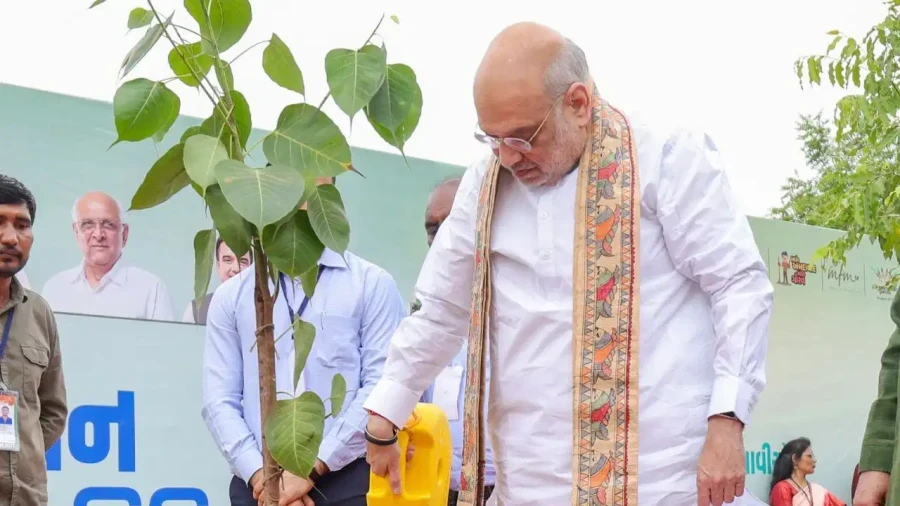
The city of Ahmedabad has achieved a historic milestone by securing a place in the Guinness World Records through a massive and rapid afforestation effort, while 61 lakh saplings were planted in the span of just one hour. This extraordinary feat took place in the Bhadaj area of the city, showcasing a remarkable display of community spirit and environmental dedication. The success of this initiative was driven by the participation of more than 25,000 volunteers, including citizens from all walks of life, who gathered to transform a 76,000 square meter plot into a future forest. To ensure the long-term health of this new green space, the AMC selected 35 different types of native tree species, which are better adapted to the local climate and soil conditions.
A Strategic Environmental Initiative
This record-breaking event is a key part of a much larger and more ambitious environmental roadmap for the region. 25 crore trees across the Gandhinagar Lok Sabha constituency and a specific target of 50 lakh trees within the limits of Ahmedabad city. The drive was held in the presence of Union Home and Cooperation Minister Amit Shah, who also serves as the Member of Parliament for the Gandhinagar constituency. The event was attended by a host of high-ranking officials, including the Chief Minister, Deputy Chief Minister, and the State BJP President, while also in attendance were the Minister for Urban Development and Urban Housing, the Mayor of Ahmedabad, the Chief Secretary, and the Municipal Commissioner, along with several other senior administrative officers. Their presence underscored the high level of governmental support for urban greening projects.
The Science of the Miyawaki Technique
The core of this achievement lies in the use of the Miyawaki technique, a method of afforestation developed by Japanese botanist Akira Miyawaki. These forests are often called pocket forests because they can be established in relatively small urban spaces. The technique involves planting a high density of diverse native species—typically three to five saplings per square meter. This dense planting strategy forces the young trees to compete for vital resources like sunlight, water, and soil nutrients. This natural competition acts as a catalyst, causing the trees to grow up to ten times faster and thirty times denser than those in traditional plantations. As a result, a Miyawaki forest can become a mature, self-sustaining ecosystem in just a few years, providing immediate benefits such as temperature reduction, noise buffering, and improved air quality.
Collaborative Effort for a Sustainable Future
The scale of this project required smooth coordination between various sectors of society. The 25,000-strong volunteer force included dedicated officials from the AMC, representatives from the local school board, and volunteers from the BAPS Swaminarayan Sanstha. Members of the real estate body CREDAI, police personnel, and NCC cadets also played a crucial role in the planting process. On top of that, numerous NGOs, educational institutions, and social organizations joined hands with ordinary citizens to make the record possible. The AMC has stated that this initiative isn't merely about setting a world record but is a fundamental step toward creating a cleaner, greener, and more resilient urban environment. By utilizing native species, the project aims to bolster local biodiversity, providing a sanctuary for birds and insects while ensuring a healthier living space for the residents of Ahmedabad for generations to come.