

- India,
- 07-Apr-2026 02:14 PM IST


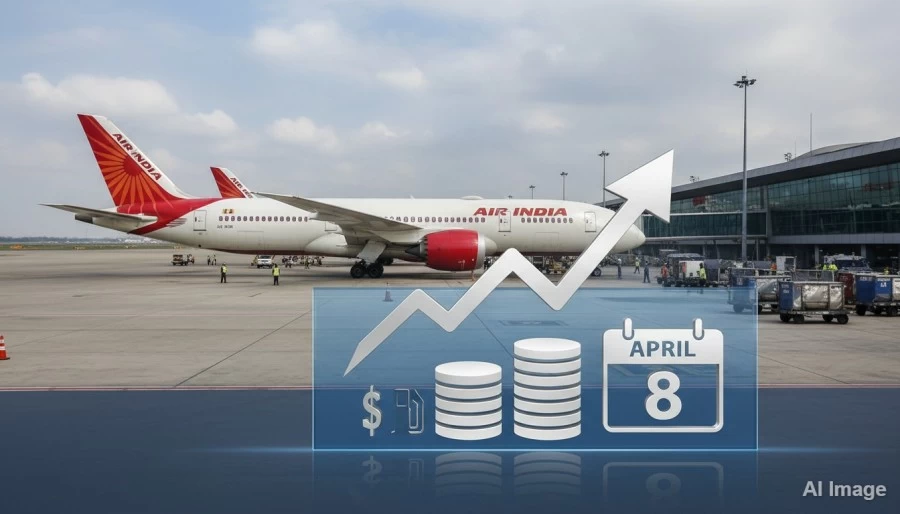
Air India, the premier airline under the Tata Group, has announced a significant hike in airfares by revising its fuel surcharge structure. Effective from April 8, the airline will implement new charges that will impact both domestic and international flight tickets. According to a statement released by Air India on April 7, the decision stems from the sharp escalation in global Aviation Turbine Fuel (ATF) prices. The airline noted that the rising cost of operations necessitated a partial pass-through of fuel expenses to passengers to maintain service viability amidst volatile energy markets.
New Distance-Based Domestic Surcharge Structure
In a shift from the previous flat-rate system, Air India has introduced a distance-based surcharge for all domestic routes. This change follows the government's decision to cap ATF price increases at a maximum of 25%. Under the new slab system, flights covering a distance of 0 to 500 km will attract a surcharge of ₹299. For distances between 501 and 1,000 km, the charge is set at ₹399, while travel between 1,001 and 1,500 km will cost an additional ₹549. Longer routes spanning 1,501 to 2,000 km will see a surcharge of ₹749, and any travel exceeding 2,000 km will incur a maximum surcharge of ₹899.
Impact on International Flight Operations
The revision isn't limited to domestic sectors; Air India has indicated that international routes will also witness an adjustment in fuel surcharges. While the specific distance-based slabs for international travel vary by region and destination, the airline confirmed that ticket prices across its global network are expected to rise, while this adjustment reflects the increased costs of refueling at international hubs and the overall surge in global aviation fuel benchmarks. Passengers planning international travel during the upcoming peak seasons will likely face higher out-of-pocket expenses due to these revised levies.
Surge in Global Aviation Turbine Fuel Prices
The primary driver behind this price hike is the unprecedented rally in global jet fuel prices. 19 per barrel. 40 per barrel. Since fuel typically accounts for 30% to 40% of an airline's total operating expenditure, such a drastic doubling of costs has placed immense financial pressure on carriers, leading to the current fare adjustments.
Guidelines for Pre-booked Tickets and Re-issuances
To address potential concerns among travelers, Air India has clarified the applicability of the new charges for existing bookings. Tickets that have already been issued before the April 8 deadline won't be subject to the new fuel surcharge. However, the airline specified an important exception: if a passenger requests a change in their travel date or itinerary that requires a re-calculation of the fare, the new surcharge rates will be applied. This policy ensures that while early bookers are protected, any modifications to travel plans will reflect the current market-linked pricing structure.
Influence of Crude Oil and Crack Spreads
The spike in ATF prices is attributed to two major factors in the energy market. Firstly, the consistent rise in international crude oil prices has directly impacted the cost of refined petroleum products. ' The crack spread is the difference between the price of crude oil and the price of the refined products extracted from it. The combination of high crude costs and expanded refinery margins has driven aviation fuel to record highs, forcing airlines to recalibrate their pricing strategies to manage the increased financial burden.
