

- India,
- 06-Apr-2026 09:33 PM IST


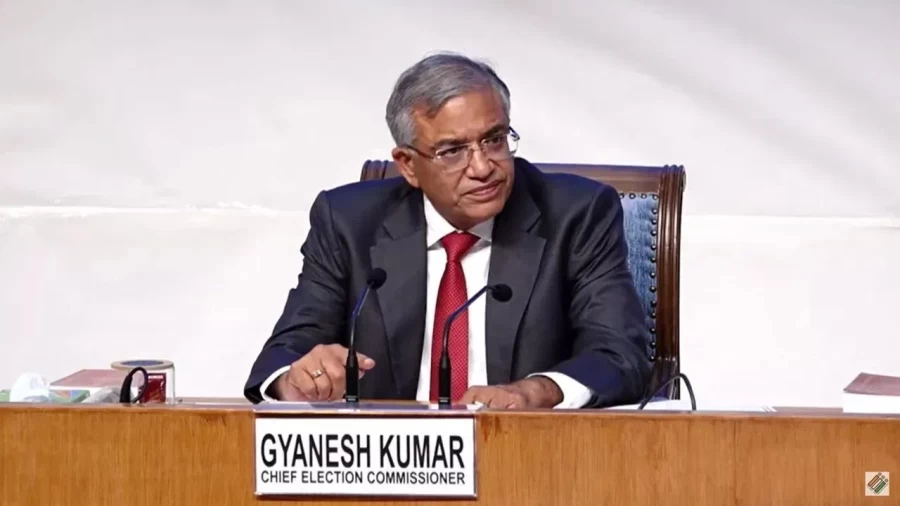
The Chairman of the Rajya Sabha has formally rejected the impeachment motion initiated by opposition parties against Chief Election Commissioner (CEC) Gyanesh Kumar. The motion, led by the Trinamool Congress (TMC) and supported by several other opposition groups, sought the removal of the CEC from his constitutional office. Exercising authority under Section 3 of the Judges Inquiry Act 1968, the Chairman declined to admit the motion for further proceedings in the upper house of Parliament.
The notice for impeachment was submitted on March 12, bearing the signatures of 63 Members of Parliament from the Rajya Sabha and 130 from the Lok Sabha. According to parliamentary rules, a motion to remove a CEC requires the support of at least 100 Lok Sabha members or 50 Rajya Sabha members to be considered. While the numerical requirement for filing was met, the Chairman determined that the motion didn't warrant admission based on the merits of the allegations provided.
Rejection Under the Judges Inquiry Act 1968
The rejection of the motion was based on the statutory powers vested in the Chairman under the Judges Inquiry Act 1968. According to officials, the Chairman evaluated the notice and concluded that the grounds presented weren't sufficient to initiate a formal inquiry. The Act empowers the presiding officer of either house to admit or refuse a motion after considering the materials available, while in this instance, the Chairman decided that the motion lacked the necessary evidentiary weight to proceed to the next stage of investigation.
Nature of Allegations Levelled by the Opposition
The opposition's notice contained several serious allegations against the Chief Election Commissioner, while the TMC-led initiative listed seven primary charges, including claims of partisanship towards a specific political party and the deliberate obstruction of investigations into electoral fraud. On top of that, the notice alleged large-scale discrepancies in voter lists, specifically highlighting the removal of names in states like Bihar and West Bengal. This marked the first time in Indian history that an impeachment notice was formally moved against a sitting Chief Election Commissioner.
Constitutional Safeguards for the Election Commission
The position of the Chief Election Commissioner is protected under the Constitution of India to ensure the independence of the electoral process. Articles 124(4) and 124(5) of the Constitution stipulate that the CEC can only be removed in a manner identical to that of a Supreme Court judge. ' These safeguards are designed to prevent arbitrary removal and maintain the integrity of the Election Commission as an autonomous body.
Parliamentary Requirements for Impeachment
The process of removing a CEC involves a rigorous parliamentary procedure requiring a 'special majority' in both houses of Parliament. For the motion to succeed, it must be passed by a majority of the total membership of each house and by a majority of not less than 2/3rd of the members present and voting. Since the Rajya Sabha Chairman has rejected the motion at the admission stage, the constitutional process for the removal of CEC Gyanesh Kumar stands terminated without reaching the floor for debate.
