

- India,
- 06-Apr-2026 09:30 PM IST


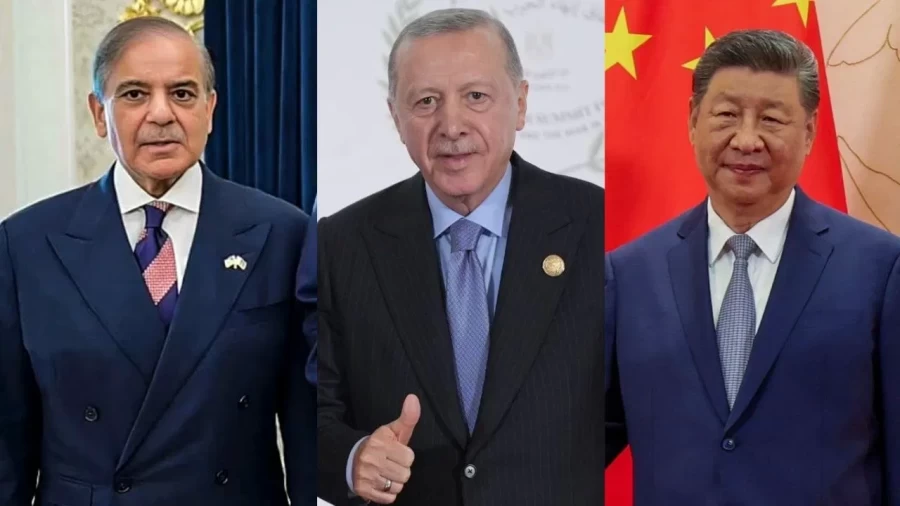
The military conflict between the US-Israel alliance and Iran has reached its 37th day since beginning on February 28. According to reports, the death toll has exceeded 3,500, and the closure of the Strait of Hormuz has pushed global oil prices beyond $100 per barrel. As US President Donald Trump's deadline for reopening the Strait expires today, several nations including Pakistan, Egypt, Turkey, China, and Saudi Arabia have accelerated diplomatic efforts to secure a ceasefire.
Pakistan's 'Islamabad Accord' Framework
According to a report by Reuters, Pakistan has developed a comprehensive peace framework titled the 'Islamabad Accord'. The proposal calls for an immediate ceasefire and the reopening of the Strait of Hormuz. It suggests a 15 to 20-day window following the ceasefire to finalize a permanent peace agreement. Pakistan's Army Chief Field Marshal Asim Munir has reportedly been in constant communication with US Vice President JD Vance and Iranian Foreign Minister Abbas Araghchi. Final face-to-face discussions are expected to take place in Islamabad, though Iran has yet to provide a formal response to this specific framework.
The US Two-Phase Peace Proposal
Axios reports that the US, Iran, and regional mediators are discussing a two-phase deal. The first phase involves a 45-day temporary ceasefire to halt hostilities. The second phase aims to establish a long-term roadmap for ending the war. Under this proposal, Iran would be required to provide guarantees against nuclear weapons development, while in exchange, the US would consider lifting economic sanctions and releasing frozen Iranian assets. On top of that, the proposal includes the creation of a regional framework to ensure the security of the Strait of Hormuz.
China's Economic Leverage and Diplomatic Role
China has emerged as a critical mediator due to its deep economic ties with Iran as its largest oil buyer. According to Pakistani sources, China is working alongside Pakistan and the US to push for temporary ceasefire proposals. Beijing has reportedly communicated to Tehran the necessity of ending the conflict to stabilize regional trade. Simultaneously, Egypt and Turkey have launched a joint peace initiative focusing on Arab regional concerns, which includes declaring the Strait of Hormuz a neutral waterway and providing security assurances to Iran against future strikes.
Iran's 10-Point Response and Conditions
According to the state news agency IRNA, Iran has prepared a 10-point response to the US ceasefire proposal. Tehran has reportedly rejected the idea of a temporary ceasefire, demanding a permanent settlement based on its own conditions. Iran's requirements include a total cessation of attacks across the region, guaranteed safe passage in the Strait of Hormuz, post-war reconstruction assistance, and the complete removal of economic sanctions. Iranian officials have stated that they won't engage in direct negotiations as long as military strikes by the US and Israel continue.
Saudi Arabia's Position and Economic Impact
While Saudi Arabia publicly supports peace efforts, reports suggest the kingdom is facing significant economic pressure due to the prolonged closure of the Strait of Hormuz. This economic strain has led Riyadh to signal its support for a ceasefire. Currently, the 'Islamabad Accord' is viewed as the most viable framework, having garnered support from both China and the US. However, the final implementation of any peace plan remains contingent on a formal agreement from Tehran, which continues to maintain a firm stance on its sovereign conditions.
