
- India,
- 21-Aug-2026 08:56 AM IST



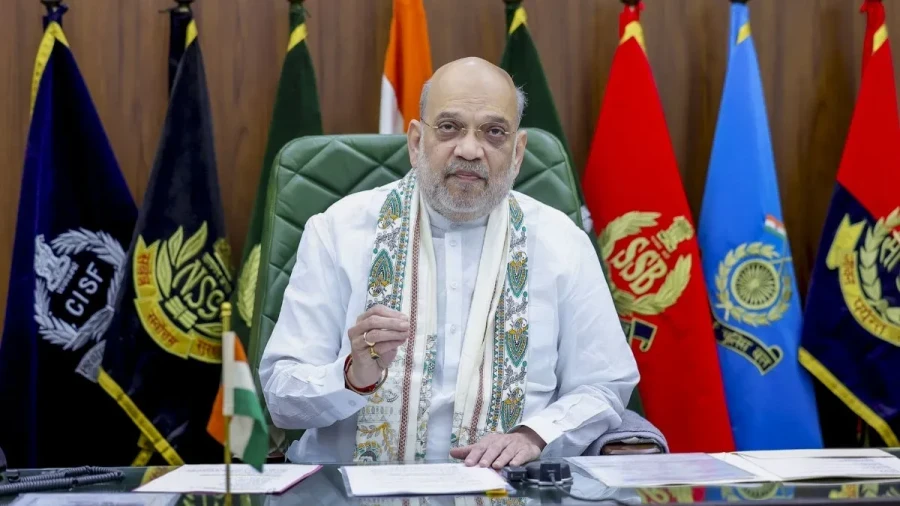
Union Home Minister Amit Shah has arrived in North Bengal for a significant three-day visit, marking his second trip to the region within a single month. The primary objective of this visit is to conduct a comprehensive review of the security apparatus along the eastern borders of India, with a specific focus on the strategically vital Siliguri corridor and the international borders shared with Nepal, Bhutan, and Bangladesh. The visit underscores the central government's heightened vigil over the eastern frontier, where security challenges range from illegal infiltration to the smuggling of arms and narcotics.
Strategic Importance of the Siliguri Corridor
The Siliguri corridor, often referred to as the Chicken's Neck, remains at the heart of the security agenda during this visit. This narrow strip of land serves as the critical terrestrial link connecting the rest of India with the northeastern states. Given its geographical sensitivity, being surrounded by the international borders of Nepal, Bhutan, and Bangladesh, any security lapse in this region could have far-reaching consequences. Experts suggest that a breach here wouldn't only affect West Bengal but could potentially disrupt military, civilian, and economic connectivity to the entire Northeast region. Consequently, the Home Minister's review aims to ensure that the defense and surveillance mechanisms in this corridor are impenetrable.
Multi-Layered Security and Agency Coordination
The security strategy being reviewed by Amit Shah is multi-layered, moving beyond just preventing infiltration. The focus has shifted towards a holistic approach that includes curbing the smuggling of goods, weapons, and drugs, as well as preventing human trafficking and cross-border crimes. A key component of this strategy is the early detection of any unusual activities in sensitive areas through enhanced technical surveillance. The Home Ministry's border management policy integrates physical infrastructure like fencing and roads with advanced technical systems and border outposts to create a unified security framework.
Schedule and High-Level Engagements
Upon his arrival at Bagdogra, the Home Minister proceeded to Sukna, while his itinerary includes a series of high-level engagements designed to assess ground realities and strengthen coordination between various agencies. On August 21, Amit Shah is scheduled to participate in programs related to border security projects at the Frontier Headquarters of the Sashastra Seema Bal (SSB). This will be followed by a high-level review meeting on August 22, involving senior officials from various security agencies and the state administration. These discussions are expected to focus on intelligence sharing and immediate coordination between central and state agencies to respond to border threats effectively.
Data on Eastern Border Security
The security landscape of eastern India is complex, spanning from Taksing in Arunachal Pradesh to Siliguri. The region involves three international borders—Nepal, Bhutan, and Bangladesh—and serves as the lifeline for eight states that depend on the Siliguri corridor for mainland connectivity, while 696 km of fencing already completed along the India-Bangladesh border. 696 km stretch and other sensitive zones.