

- India,
- 20-Jan-2026 09:18 AM IST


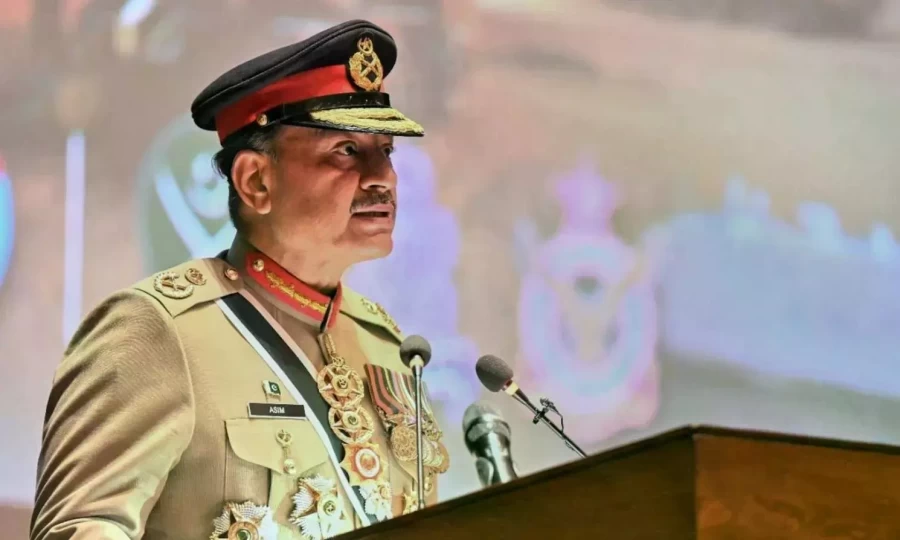
General Asim Munir, the powerful chief of the Pakistani military, has made a sensational claim regarding the nation's destiny and its foundational ideology, while during a high-profile event in Lahore, he asserted that the historical purpose for which Pakistan was created is finally on the verge of being realized. Munir's statements reflect a significant shift in the military's public discourse, leaning heavily towards religious identity and a hardline ideological stance that distinguishes him from his predecessors.
A Grand Proclamation in Lahore
The Army Chief made these remarks while attending the Walima reception of Junaid Safdar, the grandson of former Prime Minister Shehbaz Sharif, while the event was a gathering of Pakistan's political and military elite, including Nawaz Sharif and Maryam Nawaz. Munir told reporters that Allah has granted Pakistan a historic opportunity to achieve its founding goals. He reiterated that Pakistan was established in the name of Islam and currently holds a. Unique status among Islamic nations, a position he believes will only strengthen in the coming years.
A Departure from Traditional Military Leadership
Asim Munir is widely regarded as a different kind of Army Chief compared to those who came before him. While previous generals were often Western-trained professionals who maintained a degree of separation between religion and state affairs, Munir is a 'Hafiz-e-Quran'. His religious identity is a core part of his public persona. Having led both Military Intelligence and the ISI, he's the first officer to hold both roles before becoming chief. Under his command, the army is projecting itself not just as a national defense force, but as a guardian of Islamic values.
The Most Powerful Man in Pakistan
On December 4, 2025, General Munir was appointed as Pakistan's first Chief of Defence Forces (CDF) while retaining his position as the Chief of Army Staff (COAS), while this dual role is unprecedented in Pakistani history. Following the 27th Constitutional Amendment, which expanded military powers, Munir now has direct command over Pakistan's nuclear arsenal. This consolidation of power effectively makes him the most influential figure in the country, surpassing the civilian government in strategic decision-making.
Economic Claims and the Trump Factor
During his interaction, Munir claimed that Pakistan's international standing and economic health have seen marked improvements. These comments are being linked to his recent engagements with U. S. President Donald Trump, while reports suggest that Munir and Prime Minister Shehbaz Sharif have pitched Pakistan's untapped mineral wealth and oil resources to the U. S. administration, while while the extent of these resources remains unverified, Munir is using these diplomatic overtures to project a narrative of national resurgence and global recognition.
Hardline Stance on the Two-Nation Theory
General Munir has been a vocal proponent of the Two-Nation Theory, the ideological basis for Pakistan's separation from India. He has frequently stated that there is a fundamental difference between Muslims and Hindus, asserting they're two distinct nations. His rhetoric often targets internal dissent and external adversaries using religious terminology. For instance, insurgents in Balochistan and Khyber Pakhtunkhwa are labeled as 'Fitna al-Khawarij', framing them as misguided forces supported by India. He maintains that Pakistan's foundation is built on religious conviction,. A message he insists must be passed down to future generations.
