

- India,
- 24-Dec-2025 08:35 AM IST


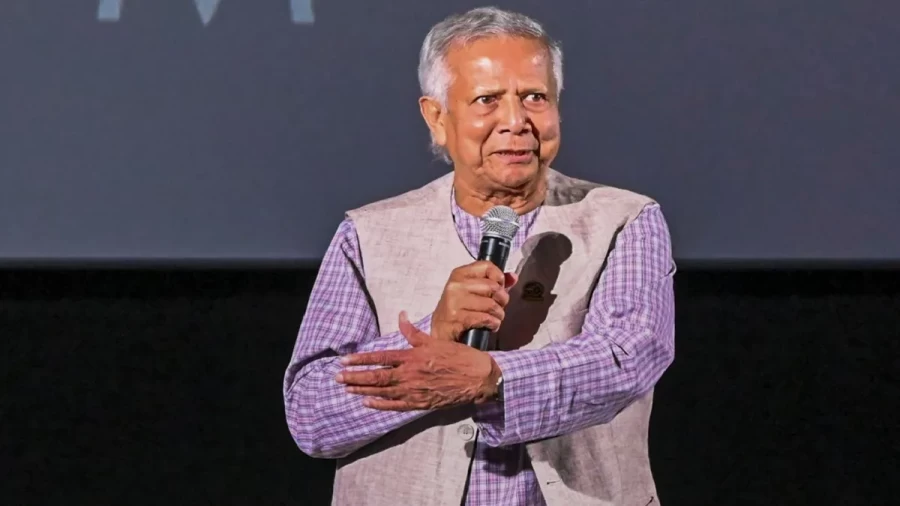
Bangladesh appears to be undergoing a significant recalibration of its diplomatic stance towards its influential neighbor, India. Salehuddin Ahmed, the esteemed finance advisor to Bangladesh's interim government, has made a notable declaration, asserting that Chief Advisor Mohammad Yunus is diligently and proactively working towards the betterment of relations with India. This pivotal statement emerges against a complex backdrop within Bangladesh, characterized by a discernible rise in anti-India sentiment, while recent times have witnessed disturbing incidents of violence, tragic killings of members of the Hindu community, widespread arson, and general unrest, all of which have contributed to a palpable increase in tensions between the two nations. The interim government's pronouncement, That's why, signals a deliberate effort to navigate these. Turbulent waters and steer the bilateral relationship towards a more constructive path.
Chief Advisor Yunus's Determined Efforts
During a press briefing held after a pivotal meeting of the Advisory Council Committee on Government Procurement, Finance Advisor Salehuddin Ahmed provided significant insights into the current administration's foreign policy objectives. Ahmed unequivocally confirmed that Chief Advisor Mohammad Yunus is personally and actively dedicated to the crucial task of enhancing and strengthening diplomatic relations with India. This commitment underscores a strategic shift in Bangladesh's approach to its powerful neighbor, indicating a desire to move beyond recent frictions. Plus, Ahmed disclosed that Chief Advisor Yunus has not merely expressed this intent but has actively engaged. In a series of discussions with various relevant stakeholders and parties concerning this sensitive and important matter.
These consultations are indicative of a comprehensive effort to lay the groundwork for improved bilateral ties. When pressed by journalists to clarify whether Chief Advisor Yunus had engaged in direct, face-to-face conversations with Indian officials, Ahmed offered a nuanced clarification. He stated that while direct official talks at that specific level had not yet transpired, Yunus had, nonetheless, proactively reached out to and established contact with individuals closely associated with the issue. This strategic outreach, even if indirect, signals a determined and concerted effort by the interim government to bridge any existing diplomatic gaps and foster a more cooperative environment between Dhaka and New Delhi.
Prioritizing Economic Imperatives Over Political Rhetoric
A cornerstone of the interim government's strategy, as articulated by Ahmed, is the firm belief that Bangladesh's trade policy must remain entirely uninfluenced by transient political considerations or prevailing sentiments, while he articulated a clear and pragmatic economic rationale, stating, "Our trade policy isn't influenced by political considerations. If importing rice from India proves cheaper than from Vietnam or other sources, then from an economic standpoint, it's prudent to purchase from India. " This statement powerfully underscores the interim government's pragmatic and economically rational approach, prioritizing national economic benefit and the welfare of its citizens above any political rhetoric or short-term emotional responses. This clear separation of economic decision-making from political fluctuations is intended to ensure stability. And predictability in trade relations, fostering an environment conducive to sustained growth and mutual prosperity.
A Tangible Step Towards Better Relations: The Rice Import Initiative
As a tangible and immediate demonstration of this policy, Ahmed highlighted a significant development: Bangladesh had just officially approved a proposal to procure a substantial quantity of 50,000 tons of rice from India. He explicitly characterized this decision as "a step towards building good relations," emphasizing its symbolic and practical importance in fostering goodwill. This particular import initiative isn't merely a diplomatic gesture but is also projected to be profoundly economically advantageous for Bangladesh. Ahmed elaborated that purchasing rice from Vietnam, which typically serves as a primary alternative source, would incur an additional cost of approximately 10 Taka (equivalent to about 0. 082 US dollars) per kilogram, while So, this strategic procurement from India not only addresses a critical domestic need for food security but also serves as a concrete diplomatic gesture, reinforcing the commitment to practical cooperation and mutual benefit.
Assessing the Current State of Bilateral Relations
Salehuddin Ahmed's candid statements arrive at a juncture when numerous political analysts and observers widely contend that the relationship between Dhaka and New Delhi has plummeted to its lowest ebb since Bangladesh's hard-won independence from Pakistan in 1971. This perception has been fueled by a series of concerning incidents, including the repeated summoning of ambassadors from. Both nations and the occurrence of significant protest demonstrations in both capitals, as well as in other key locations. These events have collectively contributed to an atmosphere of heightened tension and diplomatic strain.
However, in a move to temper these anxieties, Salehuddin Ahmed offered a more measured and nuanced assessment of the situation, while he suggested that the reality on the ground might not be as dire as it appears from external observations, remarking, "From the outside, it may seem like a lot is happening, but the situation isn't that bad. " This perspective aims to de-escalate the perceived crisis and encourage a more balanced view of the bilateral dynamic.
Addressing Anti-India Sentiments and External Influences
While acknowledging the inherent difficulty in entirely disregarding certain public statements that have contributed to the current climate, Ahmed firmly asserted that these isolated expressions don't genuinely represent the overarching national sentiment of Bangladesh. He further cautioned that such statements are, in fact, inadvertently creating complex and challenging circumstances for the nation itself, while addressing the pervasive concerns about the potential role of external forces in actively instigating and fanning anti-India sentiments within Bangladesh, he delivered a resolute statement. "We don't want any bitterness between the two countries," Ahmed declared, underscoring the interim government's fundamental desire for amicable relations.
He further warned, "If any external power is trying to create problems, it isn't in the interest of any country," highlighting the detrimental impact of such interference on regional stability. Ultimately, Ahmed reiterated the unwavering commitment of the interim government to diligently maintain harmonious and cooperative relations between the two neighboring nations, unequivocally stating that all economic decisions will be meticulously formulated and executed based purely on the paramount national interest of Bangladesh.
