

- India,
- 24-Feb-2026 01:59 PM IST


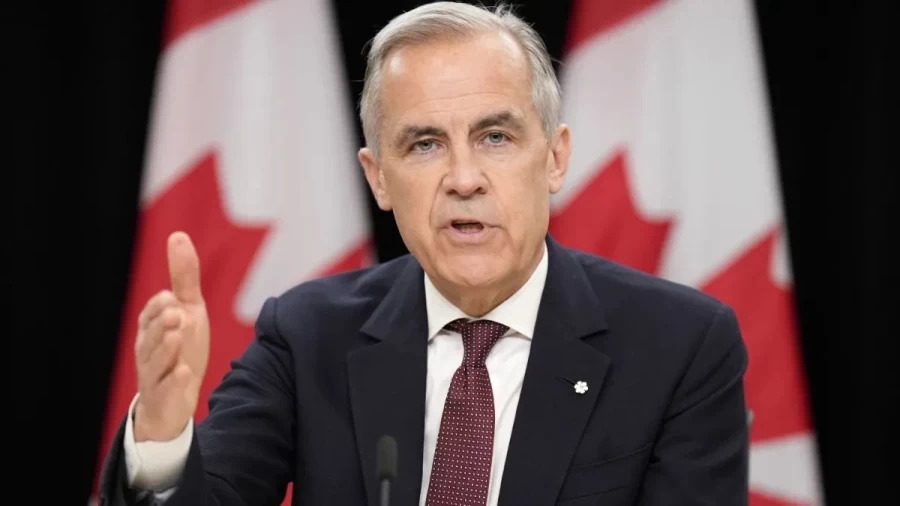
The Canadian government has initiated formal legal proceedings to revoke the citizenship of Tahawwur Hussain Rana, a Pakistani-born Canadian national and a key accused in the 2008 Mumbai terror attacks. This development emerges just ahead of Canadian Prime Minister Mark Carney's scheduled visit to India. According to official documents from Immigration, Refugees and Citizenship Canada (IRCC), authorities intend to strip Rana of the citizenship he acquired in 2001, citing evidence of fraudulent misrepresentation during his application process.
Rana, 64, was extradited from the United States to India in April 2025 and was subsequently taken into custody by the National Investigation Agency (NIA). He's currently facing trial in India for his alleged involvement in the 26/11 attacks that claimed 166 lives. The move by the Canadian government is being viewed as a significant diplomatic gesture aimed at resetting bilateral ties between Ottawa and New Delhi.
Background of Tahawwur Rana and Role in 26/11 Attacks
Tahawwur Hussain Rana is a Pakistani-born businessman who migrated to Canada and applied for citizenship in 1997. Investigations by global security agencies revealed that Rana was a close associate of David Coleman Headley, an American citizen and Lashkar-e-Taiba operative, while rana allegedly provided Headley with a legitimate cover by allowing him to use his immigration firm to conduct reconnaissance in Mumbai prior to the 2008 attacks. While Rana was previously convicted in the US for conspiring to attack a Danish newspaper, his role in the Mumbai massacre remains a central point of the Indian judicial proceedings.
Fraudulent Misrepresentation in Citizenship Application and IRCC Findings
The IRCC investigation found that Rana committed "serious and willful fraud" during his citizenship application in 2000. In his filings, Rana claimed that between 1997 and 2001, he had resided almost continuously in Canada, specifically in Ottawa and Toronto, and had only been absent from the country for six days. However, a probe by the Royal Canadian Mounted Police (RCMP) established that Rana spent nearly the entire period in Chicago, USA. In Chicago, he managed several business interests, including an immigration consultancy and a grocery store. Officials stated that this misrepresentation led decision-makers to believe he met residency requirements when he didn't.
Legal Proceedings in Federal Court and Defense Appeals
" On 31 May 2024, the IRCC formally notified Rana of the intent to revoke his status. Rana's immigration lawyer in Toronto has appealed the decision, arguing that the move is unfair and violates his client's rights. During a hearing last week, government lawyers requested the court's permission to withhold sensitive national security information from the public record. The Federal Court will make the final determination on the revocation.
Integrity of Canadian Citizenship Laws and Official Stance
Mary Rose Sabater, a spokesperson for the immigration department, stated that revoking citizenship based on misrepresentation is a vital tool for maintaining the integrity of the Canadian citizenship system, while the department emphasized that the decision is rooted in the violation of legal requirements during the application process rather than solely on the terrorism charges. Under the Citizenship Act, the government maintains the authority to strip individuals of their status if it's proven that the citizenship was obtained under false pretenses. The IRCC noted that such actions aren't taken lightly and follow a rigorous legal framework.
Impact on India-Canada Bilateral Relations and Security Cooperation
The timing of this action, coinciding with Prime Minister Mark Carney's visit to India, carries substantial diplomatic weight. Relations between India and Canada have faced challenges over the past few years regarding security concerns and the presence of extremist elements. By accelerating the revocation of Rana's citizenship, Canada is signaling a commitment to addressing India's long-standing security grievances. Diplomatic observers suggest that this move could serve as a foundation for enhanced counter-terrorism cooperation and a broader stabilization of the strategic partnership between the two nations.
