

- India,
- 20-Oct-2025 08:25 PM IST


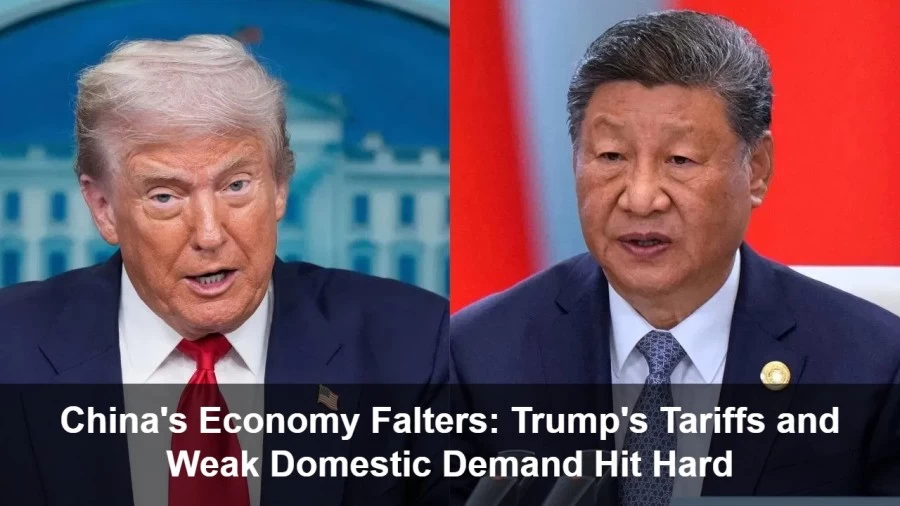
China's economy faces significant headwinds, with its Q3 growth hitting a one-year low amidst renewed US tariffs under Donald Trump and persistent structural imbalances. Weak domestic demand and an over-reliance on exports are emerging as pressing challenges for policymakers, according to a Reuters report. Gross Domestic Product (GDP) grew 4. 8% year-on-year in the third quarter. Quarter-on-quarter, the economy expanded by 1, while 1%, slightly exceeding expectations. However, consumer spending remains sluggish; retail sales in September rose just 3. 0%, marking a 10-month low. Fixed-asset investment from January to September declined 0, while 5% year-on-year, the first post-pandemic drop. This domestic slowdown is evident across various sectors, increasing pressure on businesses reliant on local demand.
Economic Indicators and Domestic Weakness
Export Dynamics and Trade Tensions
Manufacturing and exports have provided some support to growth. While exports to the US fell 27% year-on-year, trade with the European Union, Southeast Asia, and Africa saw increases of 14%, 15. 6%, and 56. 4% respectively. Despite this diversification, Chinese manufacturers are grappling with fierce global competition, often sacrificing profit margins to maintain market share. Uncertainty is further amplified by renewed trade tensions with Washington, with. President Trump threatening 100% tariffs on Chinese goods from November 1st.
Policy Outlook and Long-Term Strategy
Lin Song, Chief Economist for Greater China at ING, noted that while China is on track for its 5% annual growth target, the fundamental issues of low confidence leading to reduced consumption, investment, and falling property prices still need addressing, while property investment plummeted 13. 9% in the first nine months. Chinese leaders are currently discussing the 15th Five-Year Development Plan, expected to emphasize high-tech manufacturing amid escalating US tensions.
Mixed Industrial Signals
Industrial output in September rose 6. 5% year-on-year, up from 5. 2% in August, reflecting uneven growth. While the manufacturing sector shows some resilience, weak domestic consumption and declining property investment remain critical challenges to China's economic stability. Policymakers face a delicate task: sustaining headline GDP growth while tackling deep-seated structural weaknesses.
