
- India,
- 29-Nov-2026 08:56 AM IST



A significant development has emerged from the cricket field as Team India was forced to change a player midway through the Christchurch Test match. During the course of the third day's play in the Christchurch Test, the Indian team management took the crucial decision to replace one of their players. This major incident unfolded on the third day of the match in Christchurch just as New Zealand's second innings was about to commence, while following this unexpected change in the Indian team, intense discussions began regarding the reasons behind it and the regulations governing such situations.
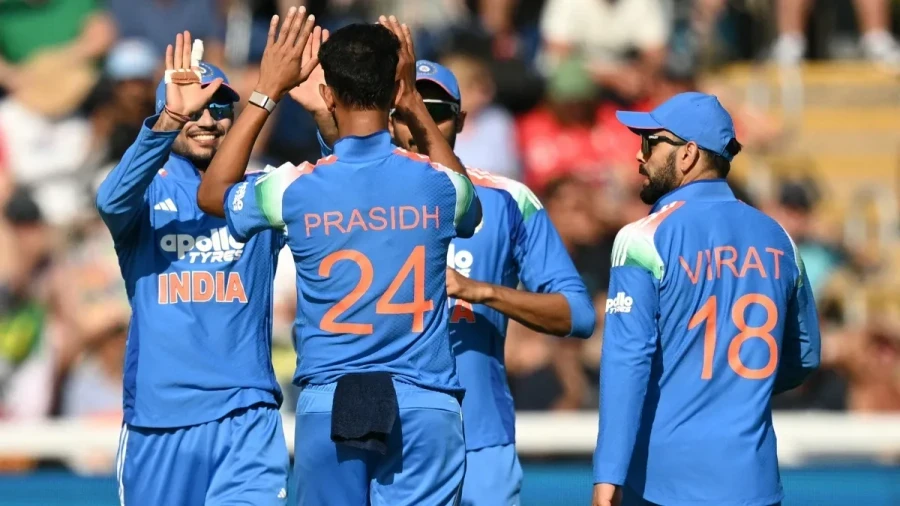
Under this major squad adjustment, pace bowler Prasidh Krishna has come into the playing XI as a replacement for Akash Deep. A natural question arose in everyone's mind regarding the exact reason that compelled Team India to replace Akash Deep with Prasidh Krishna. The Board of Control for Cricket in India has given its official stamp of approval to this entire development, while the Board of Control for Cricket in India, commonly known as the BCCI, shared this official update through its social media handles, confirming that Akash Deep has been replaced by Prasidh Krishna.
According to the official information provided by the BCCI, the primary reason behind this substitution was that Akash Deep suffered a concussion, while the board also clarified that Akash Deep has been kept under close observation by the team doctors to monitor his health and ensure proper recovery. This development immediately triggered questions regarding when and how Akash Deep sustained this concussion. The complete sequence of events unfolded during the course of the Indian batting innings.
This unfortunate incident took place during the 53rd over of the Indian innings in the Christchurch Test match. During this particular over, New Zealand fast bowler Kyle Jamieson bowled two sharp bouncers that directly struck Akash Deep on his helmet. The first of these bouncers forcefully hit the grille of his helmet. Just four deliveries later, another vicious bouncer from Kyle Jamieson arrived and struck squarely on the top of his helmet.
Following the impacts on the helmet, medical personnel rushed onto the field to attend to the batsman. The team physio conducted a thorough assessment of Akash Deep right out in the middle. The impact of the second blow was severe enough that his helmet was visibly damaged, requiring a replacement during the stoppage. Although he continued for a brief period, subsequent medical evaluation confirmed concussion symptoms, necessitating the substitution.
Before sustaining this injury on the field, Akash Deep had shown notable resilience with the bat during the first innings of this Christchurch Test. He faced a total of 52 deliveries in the first innings and contributed a useful knock of 29 runs. During this batting effort, he combined with Dhruv Jurel to forge a crucial partnership for the eighth wicket. Akash Deep and Dhruv Jurel put together a valuable stand of 46 runs for the eighth wicket, which played an important role in boosting the team total.
A critical question in this scenario relates to what the regulations of the International Cricket Council state regarding such incidents. Team India replaced Akash Deep with Prasidh Krishna strictly in accordance with the ICC concussion substitute rule. According to the provisions of this specific rule, if a player suffers a concussion due to a head injury during a match, any team is permitted to make a like-for-like player replacement.
Team India followed precisely this protocol when making their decision. Since Akash Deep was a fast bowler, the team management acted within the boundaries of the ICC regulations to bring in another fast bowler, Prasidh Krishna, as his replacement, while thus, adhering strictly to the ICC concussion substitute rule, this substitution was executed in the Christchurch Test, enabling the match to proceed in accordance with official guidelines.
𝗨𝗽𝗱𝗮𝘁𝗲 Akash Deep got hit on his helmet while batting on Day 3 of the second Test against New Zealand in Christchurch. Prasidh Krishna has replaced him as a concussion substitute. The BCCI Medical Team is monitoring him. #TeamIndia | #NZvIND
— BCCI (@BCCI) November 29, 2026