
- India,
- 16-Oct-2026 06:10 PM IST



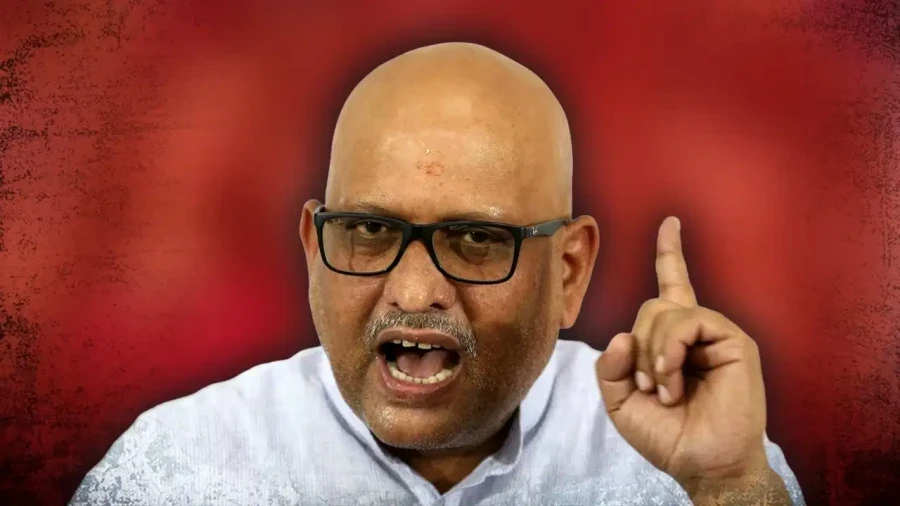
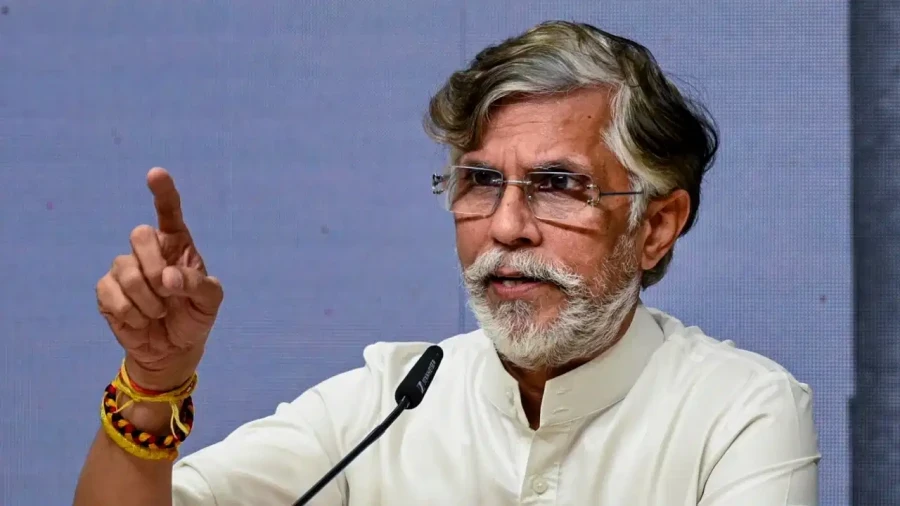
Congress Rajya Sabha MP and former media in-charge Pawan Khera launched a direct political counterattack against Defence Minister Rajnath Singh over his recent remarks concerning regime change. Addressing a press conference at the Congress headquarters in Delhi on Friday, Khera maintained that working towards changing an incumbent government through democratic elections is the primary role and constitutional right of any opposition, rather than a conspiracy.
Khera asserted that the party openly takes pride in seeking regime change through electoral means, while he underlined that the intention of the opposition is always to replace the sitting government via popular mandate. The reaction came in response to Rajnath Singh's allegations that opposition protests were designed to engineer an unconstitutional overthrow in India mirroring recent events in Bangladesh.
Rebuttal to Allegations of Conspiracy
During the press briefing, Pawan Khera questioned the defence minister's sudden intervention to shield the ruling dispensation, while khera stated that the ruling party appears to have lost touch with democratic practices. He argued that when the entire opposition is openly declaring its resolve to unseat the current government, there is no clandestine conspiracy involved. He reiterated that seeking government change through the ballot box is an established democratic right.
Pawan Khera noted that the party is currently running the Vote Chor Gaddi Chhod campaign across the country, while according to him, this message is being openly stated nationwide. He said, "We're running the Vote Chor Gaddi Chhod campaign. The entire country is saying this openly. We ourselves are repeating that we've to defeat this government and change this system, while so, why did Rajnath Singh come forward? We say with pride that we will change the government. We will continue this going forward and will certainly bring change.
Historical Precedents and Past Protests
To substantiate his arguments, the Congress leader invoked political history, recalling that a completely democratic regime change took place in India in the year 1977. He further reminded the ruling party that Prime Minister Narendra Modi had also spoken about regime change in the year 2013.
Khera pointed out that during the nationwide demonstrations in 2012 and 2013, the Bharatiya Janata Party actively cheered on public movements. He stated that the BJP found those anti-government agitations acceptable at the time and acted as their cheerleader, but is now intolerant of democratic dissent and opposition campaigns.
Critique of Focus on the Past and Distant Future
Targeting the narrative of the ruling establishment, Pawan Khera remarked that leaders of the ruling party constantly dwell on a fictionalized past to assign blame to the Congress, while diverting present-day attention towards far-off targets like the year 2047. He took a sharp dig at the defence minister, remarking that Rajnath Singh had surpassed the target year of 2047 and reached as far as the year 2050.
Mocking the approach of the government, Khera remarked, "Are sahab, today you're pushing the country into a ditch and showing us tomorrow. First take the country out of today's problems.
Background of the Regime Change Controversy
The controversy originated after remarks were made by Neha Bora, the president of the All India Students Association. In an address directed towards students in Bangladesh, she had referenced regime change, asserting that India's Gen-Z movement drew inspiration from Bangladeshi youth for the restoration of democracy and human rights.
Following Neha Bora's statement, the BJP intensified its criticism, leading Defence Minister Rajnath Singh to target the opposition. Rajnath Singh had alleged that certain opposition leaders were conspiring to bring about a Bangladesh-style regime change in India. The defence minister asserted that their agitation wasn't actually for SIR, claiming instead that elements were attempting to spread anarchy across the nation, incite young citizens toward disorder, and capture political power through unrest.