
- India,
- 13-Oct-2026 08:09 PM IST



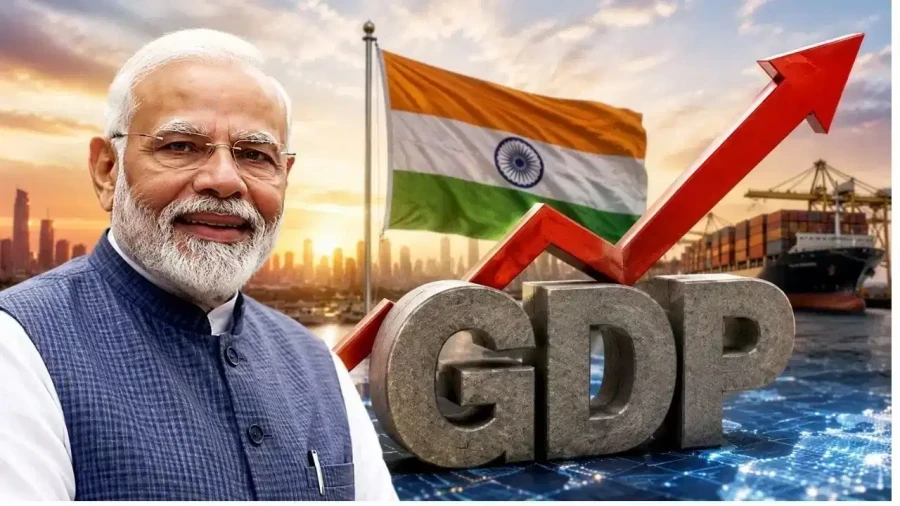
India's economic landscape is on the verge of a transformative shift as Prime Minister Narendra Modi's administration aggressively pursues a 'Free Trade' policy. This strategic pivot comes at a critical juncture when the United States is adopting a more protectionist stance, potentially turning a global trade challenge into a unique advantage for New Delhi. By diversifying its export markets and actively seeking to attract foreign investment through an expanded network of Free Trade Agreements (FTAs), India is positioning itself as a central hub in the evolving global trade ecosystem. According to a comprehensive report by Bloomberg, these trade initiatives could result in a massive windfall of 140 billion dollars for the Indian economy by the year 2035.
The Impact of US Protectionism and Global Trade Shifts
The global trade map is being redrawn following the return of President Donald Trump to the White House in January 2025.3 percent recorded in 2024.5 percent. Such high tariff rates are expected to reduce US imports by approximately 15 percent compared to previous administration levels, with threats of further hikes looming.
In response to these protectionist measures, other nations are diversifying their trade relationships. The European Union has updated agreements with Mercosur and Mexico and completed negotiations with Indonesia, India, and Australia. Similarly, the Association of Southeast Asian Nations (ASEAN) and China signed an upgraded free-trade agreement in October 2025. Canada has also been active, signing multiple agreements in 2025-26 and moving to accelerate or resume others.
India's Proactive FTA Strategy
India has not remained a bystander in this shifting environment. During 2025-26, agreements with the European Free Trade Association (EFTA), the United Kingdom, and Oman came into effect. These followed the successful implementation of deals with Australia and the United Arab Emirates in 2022. Plus, India has signed an FTA with New Zealand and concluded negotiations with the EU. New Delhi is also engaging with other partners, including the Eurasian Economic Union, and is seeking an agreement with the Gulf Cooperation Council (GCC).
The relationship with the US has seen its share of fluctuations. In the second half of 2025, India faced the highest additional tariffs among major US trading partners due to a 25 percent reciprocal tariff and a 25 percent additional charge linked to Russian oil purchases. However, tensions have since eased. While sector-specific tariffs remain, the US removed the 25 percent Russia-linked tariff and reduced reciprocal rates on India to 18 percent in February. 5 percent imposed on many other partners, paving the way for an interim agreement.
Economic Modeling and GDP Projections
Using a 'Computable General Equilibrium Model', Bloomberg analyzed how these trade agreements could reshape the Indian economy over the next decade. 6 percent. While this is expected to reduce Indian exports to the US by about one-fifth by 2035, the overall impact on the Indian economy is predicted to be limited, as less than 2 percent of India's total output depends on the US market.
The Bloomberg report modeled the FTAs using three primary factors: bilateral tariff changes, reduction in non-tariff measures (NTMs), and productivity gains from increased Foreign Direct Investment (FDI), while for instance, the EFTA deal is expected to bring 100 billion dollars in FDI over 15 years, with 35 billion dollars of that being additional investment. The New Zealand deal is projected to bring 20 billion dollars in FDI. 2 percent by 2035.7 percent, equivalent to approximately 140 billion dollars in 2025 constant US dollars. 1 percent, or about 170 billion dollars.
Domestic Reforms and Future Growth Engines
The full benefits of these FTAs depend on India's ability to maintain the pace of domestic reforms. Bloomberg analysts suggest an 'upside scenario' where domestic trends further amplify these gains. This includes reducing production costs through corporate tax cuts, subsidies, and infrastructure investment to lower logistics costs, while 5 percentage points to GDP by 2035.
Another critical factor is the utilization of India's massive agricultural workforce. Currently, over 40 percent of Indian workers are in agriculture, characterized by high under-employment. In contrast, Vietnam has seen its agricultural workforce drop from over 40 percent to about 25 percent, with productivity per worker rising to 60 percent higher than India's. If India achieves similar productivity gains and shifts workers to manufacturing and services, it could add over 1 percentage point to export growth and about 2 percentage points to GDP gains. By combining an ambitious industrial strategy with a bold trade agenda, India is creating a powerful new engine for long-term growth.