
- India,
- 24-Jun-2026 08:33 AM IST



The international energy market has witnessed a significant shift as crude oil prices have plummeted by 23 percent within a single month. This sharp decline has brought the prices of both Gulf and American crude to their lowest levels in approximately four months. Market experts suggest that this downward trend might continue in the coming days, providing a potential cushion for the global economy, while on Tuesday, the market concluded with another 1 percent drop in crude prices, marking a consistent streak of depreciation. This means that since the last time fuel prices were hiked in India, the prices of Gulf and American crude have fallen by more than 20 dollars per barrel. According to reports from Reuters, crude oil prices are now approaching pre-war levels, which is being viewed as a positive indicator for global economic stability.
Factors Driving the Decline in Oil Prices
The primary reason behind this cooling of prices is the reduction in tensions between the United States and Iran. In a significant move, the US has granted Iran a license to sell its oil for the next two months. Also, the possibilities of the Strait of Hormuz reopening have increased, and Gulf nations have expressed their consensus on increasing supply and production. This geopolitical easing led to a 3 percent drop in prices following news of a 60-day sanctions waiver for Iran and reports of reduced hostilities in Lebanon under a major agreement. On Tuesday, Oman and Iran agreed to continue discussions regarding the future management of navigation in the Strait of Hormuz. US Secretary of State Marco Rubio stated that under any final agreement with the US, Iran wouldn't be able to collect tolls on this vital waterway, as such an arrangement would violate international law.
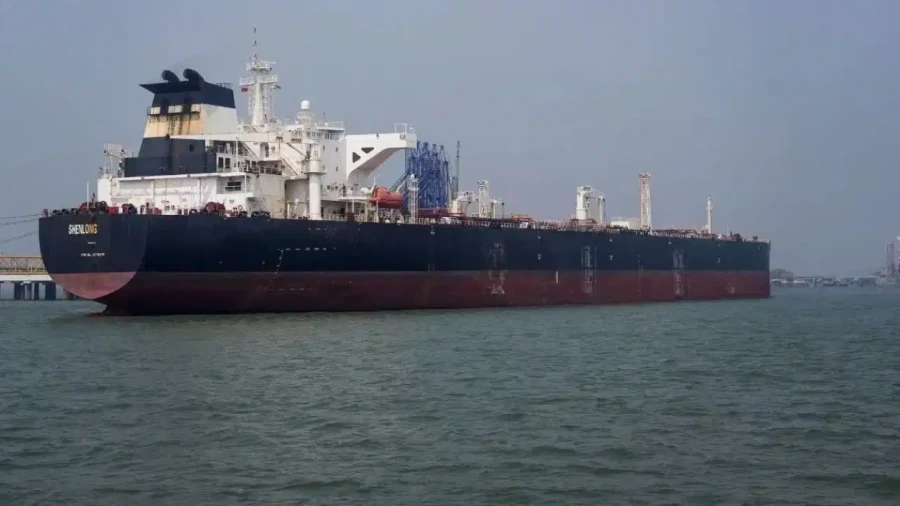
The Strait of Hormuz is a critical artery for global energy, carrying nearly one-fifth of the world's oil and LNG supply. According to the International Energy Agency, the closure of this strait for over three months resulted in the loss of millions of barrels of oil and gas. In the worst-case scenario, more than 14 million barrels per day (bpd) of oil production was halted, representing about 14 percent of global demand. Investors are now closely monitoring how quickly Middle Eastern producers can resume oil production and exports and whether more vessels will return to the region. A military source in Iran told the Fars news agency that a limited number of ships are being allowed to pass through the strait daily in coordination with the Revolutionary Guards Navy. Ship-tracking data revealed that three stranded supertankers passed through the strait on Tuesday, while seven empty LNG tankers linked to Qatar have entered in recent weeks. The UN shipping agency is also working on an evacuation plan to enable hundreds of ships with 11000 sailors trapped in the Gulf to transit the strait following the US-Iran ceasefire agreement.
Statistical Breakdown of the Price Crash
The data tells a compelling story of the market's retreat. 58 dollars per barrel on May 26.97 dollars per barrel during the trading session on June 24.61 dollars per barrel during this period. 75 dollars. Similarly, American crude, West Texas Intermediate (WTI), has seen a major correction. 36 dollars per barrel. 89 dollars per barrel, meaning it has also seen a decline of nearly 23 percent. WTI was last seen at the 70 dollar level on March 3, confirming that it's also at a four-month low.
Supply Dynamics and Strategic Reserves
While supply is increasing in some areas, the recovery isn't uniform. 1 million barrels per day (bpd) as more tankers queue at Gulf export terminals. However, data from the Joint Organizations Data Initiative showed that crude exports from Saudi Arabia, OPEC's largest exporter, fell to a record low in April for the second consecutive month. In the US, preliminary surveys from Reuters indicate that stocks of crude oil, gasoline, and diesel decreased last week. This follows a report from the Department of Energy stating that the US Strategic Petroleum Reserve has reached its lowest level since June 1983. Analysts at Gelber & Associates noted that while the liquidation of long positions by speculators has pulled prices down from their peaks, the historically low levels of the US Strategic Petroleum Reserve will provide a structural floor for the market in the coming weeks.
Impact on Indian Consumers: When Will Petrol and Diesel Get Cheaper?
Despite the massive drop in international crude prices, Indian consumers are still waiting for relief at the fuel pumps. 5 percent in May. The last price hike occurred on May 25, after which companies have kept prices frozen. In Delhi, petrol prices crossed the 100 rupee per liter mark after many years, leading to growing demands for a price cut. Experts believe that a reduction in petrol and diesel prices won't occur until the losses incurred by petroleum companies are recovered, while recently, Petroleum Minister Hardeep Singh Puri stated that once cheaper crude oil starts reaching Indian refineries, the benefits will be transferred to the general public. Currently, fuel prices in India have remained unchanged for about 30 days. 20 rupees per liter. 82 rupees. 55 rupees per liter.