

- India,
- 03-Apr-2026 05:19 PM IST


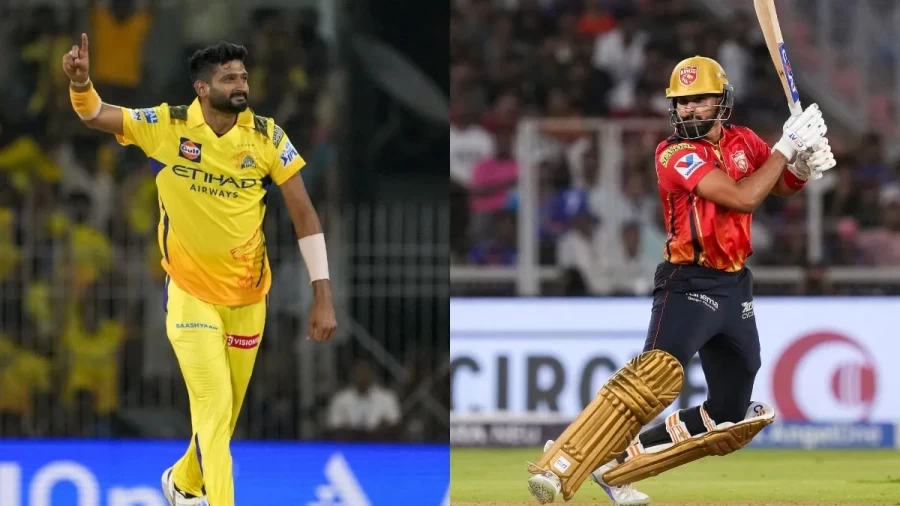
The seventh match of the Indian Premier League (IPL) 2026 is scheduled to take place at the MA Chidambaram Stadium, featuring a clash between Chennai Super Kings (CSK) and Punjab Kings (PBKS). Chennai Super Kings enter this fixture seeking their first victory of the season after a setback in their opening game. Conversely, Punjab Kings aim to maintain their winning momentum following a successful start to their campaign. A significant tactical subplot of this encounter is the individual rivalry between PBKS middle-order batter Shreyas Iyer and CSK's left-arm fast bowler Khaleel Ahmed.
Statistical Breakdown: Shreyas Iyer vs Khaleel Ahmed
According to official IPL performance metrics, Shreyas Iyer has historically struggled against the bowling of Khaleel Ahmed. In their 8 encounters to date, Iyer has faced 25 deliveries from Ahmed, managing to score only 33 runs. Khaleel Ahmed has successfully dismissed Iyer on 3 occasions during these matchups. 00, which is notably lower than his career average against other bowling types. The technical difficulty Iyer faces against left-arm pace, particularly the inward angle and swing generated by Ahmed, is expected to be a key area of exploitation for the CSK bowling unit during the powerplay and middle overs.
Chennai Super Kings' Bowling Arsenal and Tactical Adjustments
Chennai Super Kings' bowling strategy for this match will likely revolve around utilizing the conditions at Chepauk. Beyond Khaleel Ahmed, the squad features potent options like Matheesha Pathirana and Tushar Deshpande, while the spin department, led by Ravindra Jadeja and Maheesh Theekshana, remains a core strength for the franchise on the Chennai surface. The team management is expected to focus on early breakthroughs, targeting the Punjab Kings' top order comprising Prabhsimran Singh and Cooper Connolly. Following their performance in the previous match, the CSK bowlers are anticipated to implement more disciplined lines in the death overs to restrict the scoring rate.
Punjab Kings' Batting Depth and Key Performers
The Punjab Kings' batting lineup appears well-balanced for the 2026 season. Prabhsimran Singh provides an aggressive start at the top, while the middle order is anchored by Shreyas Iyer and Cooper Connolly. While Iyer's role is pivotal in stabilizing the innings, his historical record against Khaleel Ahmed may necessitate a strategic approach to his batting entry point. The team also possesses significant power-hitting capabilities in the lower-middle order, capable of accelerating the run rate in the final overs. The PBKS strategy will likely involve navigating the spin threat of CSK while looking to capitalize on any loose deliveries from the pacers.
Pitch Conditions and Environmental Factors at Chepauk
The MA Chidambaram Stadium, traditionally known for its spin-friendly tracks, has shown a shift towards being more conducive to batting in recent times. During the T20 World Cup 2026, the venue hosted several high-scoring encounters, suggesting that a competitive total will be required in this IPL fixture. The presence of dew in the evening is a critical environmental factor that often influences the captain's decision at the toss, while while the pitch may offer some initial movement for fast-medium bowlers, it's expected to settle into a batting-friendly surface as the match progresses, with spinners coming into play during the middle phase.
Current Standing and Form of Both Franchises in IPL 2026
As the IPL 2026 season progresses into its first week, Punjab Kings sit in a favorable position with a win already under their belt. This early success has provided the squad with confidence and a stable platform, while in contrast, Chennai Super Kings are under pressure to secure their first points of the tournament to avoid falling behind in the early standings. This match serves as a crucial opportunity for CSK to benefit from their home advantage and rectify the errors from their opening game. Punjab Kings are likely to field an unchanged XI to maintain consistency, while CSK might consider minor tactical adjustments based on the final pitch assessment.
