

- India,
- 03-Apr-2026 05:22 PM IST


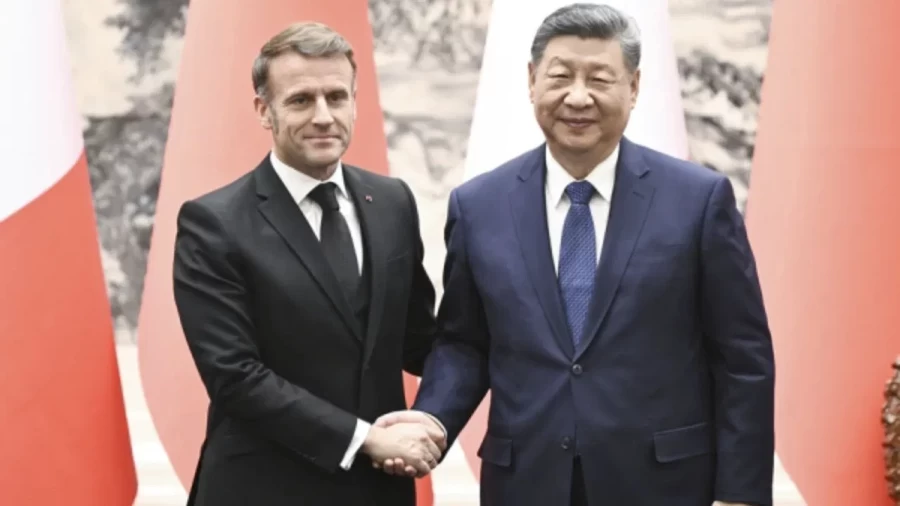
In a significant development at the United Nations Security Council (UNSC), France has aligned with Russia and China to veto a resolution proposed by Bahrain concerning the Strait of Hormuz. This move represents a major shift in global diplomatic dynamics, as it's the first time in 23 years that France has joined forces with Moscow and Beijing to oppose a position supported by the United States. The last such instance occurred in 2003 during the deliberations over the Iraq War, when the three nations collectively challenged the US-led intervention.
The veto by three of the five permanent members (P5) has effectively blocked the Bahraini proposal, which sought to increase international pressure on Iran amid ongoing regional tensions. According to officials, the resolution aimed to establish stricter monitoring and potential sanctions related to maritime activities in the strategic Strait of Hormuz. The alignment of France with Russia and China has altered the traditional 3-2 power balance within the P5, where France usually sides with the US and the UK.
The Bahraini Resolution and Council Proceedings
The resolution introduced by Bahrain was designed to address security concerns in the Strait of Hormuz, a critical chokepoint for global oil supplies, while the proposal had the full backing of the United States and the United Kingdom, who argued that Iran's actions in the region necessitated a formal UN response. However, during the voting session, Russia and China exercised their veto power, as expected. The surprise came when France also cast a negative vote, ensuring the resolution's failure. This collective veto provides Iran with significant diplomatic breathing room at a time of heightened military readiness.
Factors Behind France's Diplomatic Realignment
Several factors have contributed to France's decision to break away from the US position. Reports indicate that recent comments by US President Donald Trump regarding French President Emmanuel Macron have strained bilateral relations, while On top of that, French officials have expressed dissatisfaction over the lack of prior consultation by the US at the onset of the current conflict. France also reportedly rejected a request from the Trump administration to take a more active military role against Iran, choosing instead to maintain an independent foreign policy stance focused on de-escalation.
Strained Relations Between France and Israel
France's shift is also linked to its deteriorating relationship with Israel. In a series of recent moves, France has closed its airspace to all aircraft suspected of carrying military supplies to Israel, while Also, the French government has raised concerns regarding human rights violations in the region. In response, Israel has suspended several high-profile arms deals and defense contracts with Paris. This friction has pushed France to distance itself from the US-Israel strategic axis in the Middle East, seeking alternative diplomatic partnerships.
Economic Interests in the Strait of Hormuz
Economic considerations appear to have played a role in France's decision-making process. According to reports by Bloomberg, a French-owned container ship was recently allowed safe passage through the Strait of Hormuz by Iranian authorities, a rare occurrence during the current hostilities. Sources suggest that an informal understanding may have been reached between Paris and Tehran regarding the safety of French commercial vessels. Ensuring the uninterrupted flow of trade through this vital maritime route remains a top priority for the French government, influencing its stance at the UN.
Implications for the US and the NATO Alliance
The emergence of a France-Russia-China voting bloc in the UNSC poses a significant challenge to US influence in the Middle East. Experts from United Against Nuclear Iran (UANI) suggest that France has made a strategic choice to align with Russia and China on regional issues to safeguard its own interests. This development comes as President Donald Trump has signaled a potential review of the NATO alliance, even suggesting a possible withdrawal. The current diplomatic rift highlights growing divisions within Western alliances and a move toward a more multipolar world order.
