

- India,
- 03-Apr-2026 02:16 PM IST


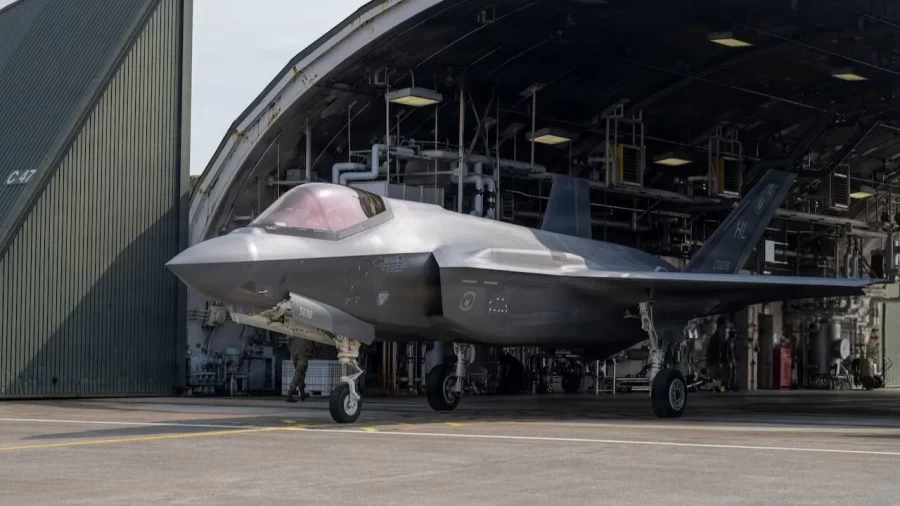
In a significant escalation of military claims in the Middle East, Iran has asserted that its defense forces successfully downed two United States F-35 Lightning II fighter jets within a span of 15 days. The F-35, a fifth-generation combat aircraft developed by Lockheed Martin, is widely regarded as the most advanced stealth fighter in the world, with an estimated cost of ₹1200 crore per unit. According to the Fars News Agency, these incidents have raised questions about the perceived invincibility of American stealth technology in contested airspaces.
Technical Superiority of the F-35 and US Military Prestige
The F-35 Lightning II is the cornerstone of modern US air power, designed to be nearly invisible to conventional radar. It integrates advanced electronic warfare capabilities, sensor fusion, and high-speed data links to provide pilots with unprecedented situational awareness. The aircraft's stealth is achieved through its unique shape and radar-absorbent materials, while for decades, the US has maintained a technological edge through these platforms, making the Iranian claim of destroying two such units a matter of intense international scrutiny and military debate.
Details of the Engagement Over Central Tehran
According to reports from the Fars News Agency, the most recent incident occurred when an F-35 was allegedly operating near or within Iranian airspace over Central Tehran. The Islamic Revolutionary Guard Corps (IRGC) has remained relatively tight-lipped regarding the specific weapon systems used, but local reports suggest that the aircraft was intercepted and transformed into a 'fireball' mid-air. While the US military has not officially confirmed a combat loss over Tehran, the circulation of alleged wreckage videos has fueled discussions regarding Iran's evolving anti-access/area-denial (A2/AD) capabilities.
The March 19 Incident and Pentagon Acknowledgement
The first of the two claimed incidents took place on March 19. According to reports attributed to US intelligence officials by CNN, an F-35 aircraft was forced to make an emergency landing after sustaining damage during an operation. While the pilot managed to land the jet safely, the US Department of Defense reportedly stated that the aircraft is now beyond repair and no longer fit for service. Iran claims this damage was the direct result of their defensive fire, which disrupted the aircraft's stability and internal systems, leading to its eventual decommissioning.
Influence of Chinese Tactical Strategies and Low-Cost Weapons
A report by the South China Morning Post has highlighted a potential tactical shift in how Iran targets stealth aircraft. It suggests that Iranian forces may have adopted strategies proposed by a Chinese engineer in a viral instructional video. 00 million views and includes Persian subtitles, demonstrates how low-cost assets such as infrared missiles, mobile launchers, and improvised sensors can be used to track and engage stealth jets. By focusing on the thermal signature (heat) of the aircraft rather than its radar cross-section, Iranian forces may have found a cost-effective method to bypass traditional stealth defenses.
Regional Implications and Future Military Outlook
The reported loss of F-35 assets, if fully verified as combat losses, represents a significant shift in the regional military balance. Military analysts suggest that Iran's focus on infrared tracking and decentralized air defense networks poses a credible threat to high-value aerial platforms. While the US government maintains that its aircraft remain the most capable in the world, the 19-March incident has prompted a review of operational protocols in the region. The IRGC continues to assert that its domestic missile programs are capable of countering any aerial intrusion, regardless of the target's technological sophistication.
