

- India,
- 24-Oct-2025 06:43 PM IST


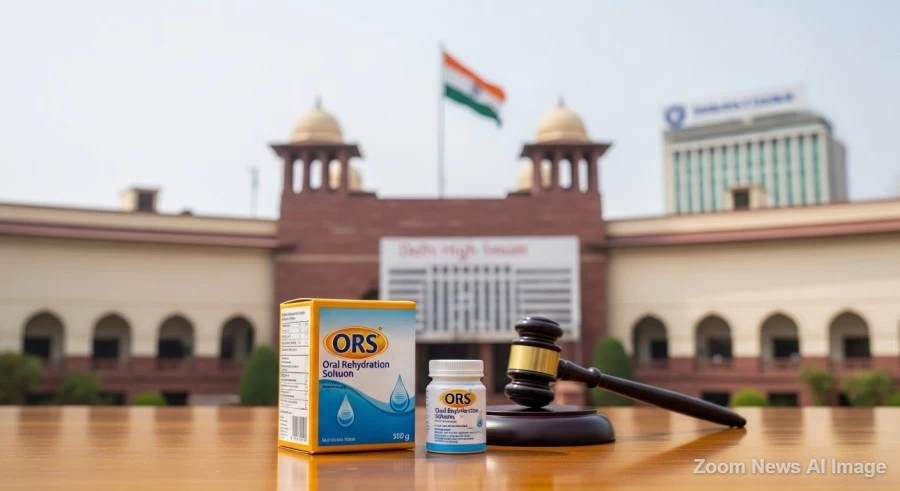
The Food Safety and Standards Authority of India (FSSAI) recently issued an order stating that no company could label its health drink as ORS (Oral Rehydration Solution) unless the product adhered to World Health Organization (WHO) parameters. However, the Delhi High Court has now put a stay on this order in a related case. On Friday, the Delhi High Court provided significant relief to JNTL Consumer Health India, a subsidiary of Johnson & Johnson. The court stayed the FSSAI order that prevented JNTL from labeling its health drink products as ORS, while fSSAI had previously mandated that only products containing ORS salts and formulas, and manufactured according to WHO standards, could use the ORS label on their packaging.
The Root of the ORS Controversy
Prior to the FSSAI order, many products were sold with 'ORS' written on their packets, despite being mere general health drinks. The 'ORS' label misled consumers, leading them to purchase these products, often for children, without realizing they lacked the genuine rehydration properties and often contained excessive sugar. Dr. Shivaranjani Santosh, a pediatrician from Hyderabad, spearheaded the movement against such misleading products. Her persistent efforts led to the FSSAI issuing the original order. However, the Delhi High Court has now temporarily stayed this order during the hearing of JNTL's case. **Why the ORS Dispute? Dr, while shivaranjani Santosh argued that many companies labeled their health drinks as ORS, but the ORS salts in them didn't meet WHO standards. Several such packets contained sugar levels exceeding the prescribed limits and included artificial sweeteners, which can be detrimental to health, while fSSAI highlighted that while ORS is meant to replenish body fluids, some brands had dangerously high sugar content. **What is ORS? ORS is consumed to replenish water and electrolytes, typically recommended by doctors for diarrhea and dehydration. According to WHO, a genuine ORS solution should contain 5-6 teaspoons of sugar and one teaspoon of salt in 1 liter of clean water. It shouldn't contain any artificial sweeteners or chemical colors.
Risks of High-Sugar ORS
Dr. Himanshu Bhadani from the Pediatric Department at AIIMS Delhi explains that while ORS is a lifesaver for children in cases of vomiting and diarrhea, the correct sugar level is crucial. Overly sweet ORS can be harmful, potentially increasing blood sugar, especially in diabetic patients. It can also lead to stomach pain, indigestion, and contribute to obesity in children with frequent consumption. He advises consumers to always buy reliable ORS packets that meet government standards and to check sugar content and expiry dates diligently.
