

- India,
- 17-Dec-2025 11:55 AM IST


Delhi is currently grappling with an escalating air pollution crisis, prompting the government to enforce stringent measures across the national capital. Among the key decisions are a mandate for 50% work from home for all government and private offices and a complete ban on construction activities. These steps have been taken in response to the persistently 'very poor' air quality, which poses a significant health risk to the city's residents.
Work From Home Mandate for Offices
The Delhi government has issued a crucial order making 50% work from home (WFH) mandatory for employees in all government and private offices. This decision aims to mitigate the rising air pollution levels by reducing vehicular emissions and controlling the number of people commuting daily. Under this directive, only half of the workforce will be permitted to. Attend offices physically, while the remaining staff will operate remotely from their homes. This rule is set to come into effect from December 18 across the national capital. On top of that, offices have been advised to implement flexible working hours to further alleviate congestion and reduce exposure during peak pollution times.
Exemptions for Essential Services
While the mandate is broad, the government has provided exemptions for certain essential services to ensure their uninterrupted functioning. Departments and personnel involved in critical services such as health, public transport, electricity, jail administration, and other vital operations aren't required to adhere to the work-from-home order. This exemption is crucial for maintaining public welfare and safety, allowing essential services. To continue operating without hindrance while the city collectively works towards combating pollution.
Complete Halt on Construction Activities and Worker Relief
Recognizing construction dust as a major contributor to air pollution, the Delhi government. Has also imposed a complete ban on all construction activities within the city. This measure is intended to Importantly reduce particulate matter in the air. To alleviate the financial burden on workers affected by this ban, the Labour Department has announced a relief package. All registered and verified construction workers will receive a compensation of ₹10,000. This amount is intended to offset the loss of work during the period of GRAP-4 (Graded Response Action Plan, Stage 4) restrictions and will be disbursed directly into their bank accounts, providing much-needed economic support during this challenging time.
Persistent 'Very Poor' Air Quality
Despite some marginal improvement observed on Wednesday morning, Delhi's air quality remains a serious concern. The overall Air Quality Index (AQI) was recorded at 328, which falls squarely into the 'very poor' category. According to the Central Pollution Control Board's (CPCB) 'Sameer' app, 30 out of 40 air quality monitoring stations reported AQI levels in the 'very poor' range. Bawana recorded the worst air quality, with an AQI of 376, highlighting localized hotspots of severe pollution.
Thick Layer of Smog and Impact on Visibility
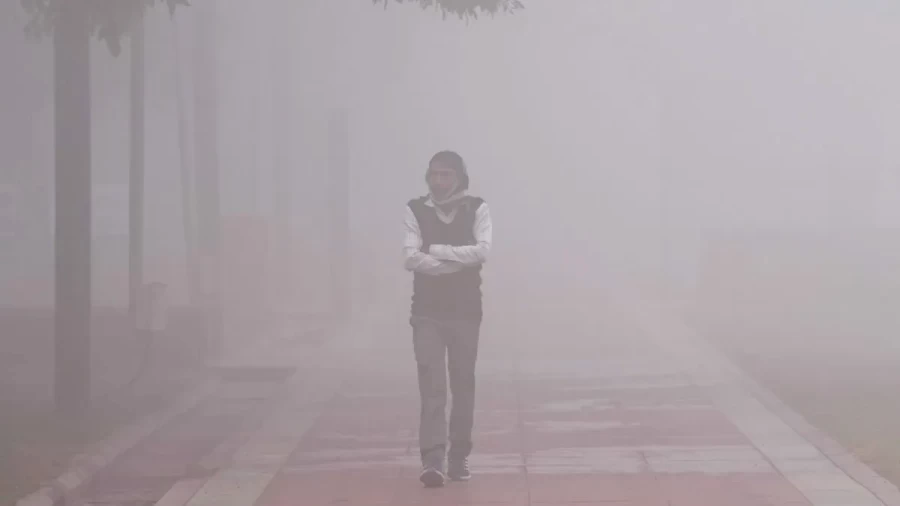
On Wednesday morning, a thick layer of smog enveloped several parts of the national capital, while prominent areas such as India Gate, Anand Vihar, IGI Airport, and ITO experienced dense haze, with AQI levels ranging between 340-360. This heavy smog Importantly reduced visibility, making commuting difficult and posing risks for drivers. The blanket of fog and haze in the early morning hours underscored the visible impact of air pollution, directly affecting the daily lives and routines of Delhi's residents.
GRAP-4 Implementation and Government's Proactive Stance
These stringent measures are part of the Graded Response Action Plan (GRAP-4), which is implemented when air pollution reaches its most severe levels, necessitating emergency actions, while the Delhi government's proactive stance reflects its commitment to safeguarding public health and improving environmental conditions. While acknowledging that such drastic steps may present challenges, the government has emphasized their necessity to ensure cleaner air for Delhi's inhabitants and to protect them from the long-term health impacts of severe air pollution.
